Salsify Amazon Integration Explained: Product Content Management, Catalog Optimization & E-Commerce Insights
E-commerce platforms depend on accurate, consistent, and detailed product information. Product titles, descriptions, images, specifications, attributes, and category details all contribute to how products are presented across digital marketplaces.
Managing this information becomes increasingly complex when an organization maintains a large catalog across multiple channels.
Salsify is a product experience management (PXM) platform that helps organizations organize, manage, enrich, and distribute product information. Its integration capabilities can support connections with digital commerce channels, including Amazon, depending on the available integration method and configuration.
Amazon provides a marketplace environment where product information is organized through catalog records, product identifiers, category-specific attributes, images, and other content requirements.
Understanding how Salsify and Amazon integration works helps explain the role of product content management, catalog optimization, data synchronization, and digital commerce operations.
What Is Salsify?
<AsyncImage query="Salsify product experience management platform interface product content dashboard" aspectRatio="16:9" width="100%" />
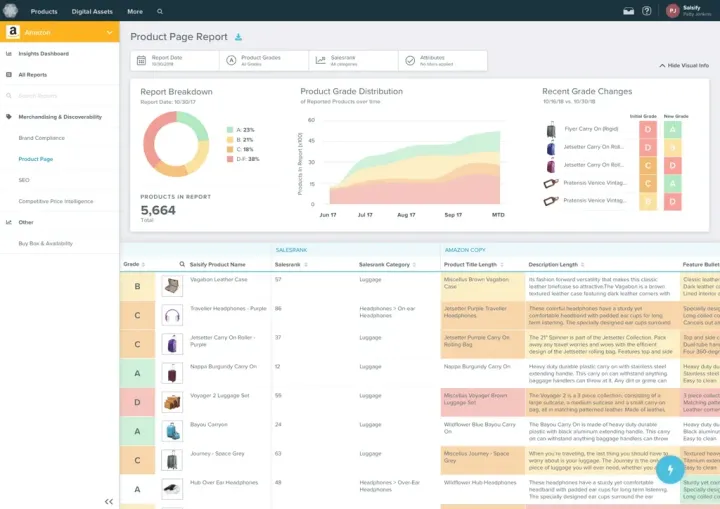
<Entity value="Salsify" category="software" disambig="Product experience management and product information management platform" /> is a product experience management platform designed to help organizations manage product information and coordinate product content across digital channels.
It provides capabilities for organizing product records, maintaining product attributes, managing digital assets, and preparing product information for different distribution channels.
Common capabilities include:
Product information management
Digital asset management
Product content enrichment
Product data validation
Workflow management
Content distribution
Product catalog organization
Channel-specific content preparation
The platform is relevant to organizations that manage extensive product catalogs and need consistent product information across different digital environments.
Understanding Amazon Product Catalog Management
<AsyncImage query="Amazon Seller Central product catalog inventory management interface" aspectRatio="16:9" width="100%" />
<Entity value="Amazon" category="company" disambig="E-commerce marketplace and technology company" /> maintains a product catalog containing information about items listed on its marketplace.
A product catalog record can include:
Product title
Brand information
Product description
Product images
Technical specifications
Category information
Product identifiers
Variations and attributes
Other category-specific details
Amazon uses product information requirements that vary by category and marketplace. Accurate catalog information helps maintain consistency and supports product discovery.
Organizations managing many product records may use product information management platforms to prepare and organize content before it is transferred to marketplace systems.
What Is Salsify Amazon Integration?
Salsify Amazon integration refers to the process of connecting product information managed in Salsify with Amazon's marketplace catalog environment.
The integration can help coordinate product data preparation, validation, and distribution between systems.
Depending on the organization's configuration and available connectors, workflows may include:
Maintaining product records in Salsify.
Organizing product attributes and digital assets.
Preparing channel-specific content.
Checking required information and data formats.
Transmitting supported product information to Amazon.
Reviewing processing results and identifying content issues.
Updating records when product information changes.
The exact integration process depends on the Salsify configuration, Amazon marketplace requirements, account permissions, and the technical connection method.
How Salsify and Amazon Integration Works
A typical integration involves several stages that connect product information management with marketplace catalog workflows.
1. Product Data Collection
Product information is gathered from internal databases, product management systems, spreadsheets, manufacturers' records, and other approved sources.
The collected information may include product names, specifications, identifiers, images, descriptions, and category details.
2. Product Information Organization
Product records are organized within Salsify.
Attributes can be structured into consistent fields so that product information is easier to manage, review, and maintain.
3. Content Enrichment
Product records may be enhanced with additional information, such as detailed specifications, descriptions, compatible product details, and relevant digital assets.
Content enrichment should maintain factual accuracy and avoid unsupported product claims.
4. Amazon Channel Mapping
Product attributes are mapped to the relevant Amazon catalog fields.
Different product categories can require different attributes. Correct mapping helps ensure that information is prepared in the expected structure.
5. Data Validation
The prepared product records are checked for missing information, incorrect formats, invalid values, and other content issues.
Validation can reduce errors before information is transmitted to the marketplace.
6. Content Distribution
Approved product information is transferred through the configured integration method.
Depending on the connection, this may involve supported connectors, marketplace feeds, APIs, or other integration workflows.
7. Processing and Status Review
After transmission, processing results are reviewed.
Errors may relate to missing attributes, incorrect identifiers, category requirements, image specifications, or marketplace policies.
8. Catalog Maintenance
Product information may need updates when specifications, packaging, images, descriptions, or other details change.
A structured content workflow helps coordinate these updates across connected channels.
Key Features of Salsify for Product Content Management
Salsify provides several capabilities that support product information workflows.
Product Information Management
Product information management helps maintain organized product records in a central environment.
It can support consistent product names, specifications, identifiers, attributes, and descriptions across multiple channels.
Digital Asset Management
Digital assets include product images, documents, videos, and other media files.
Managing these assets centrally can help teams maintain organized content and use appropriate files across different digital channels.
Product Content Enrichment
Product content enrichment involves improving the completeness and clarity of product information.
Examples include adding missing specifications, expanding factual descriptions, and organizing product attributes.
Workflow Management
Workflow capabilities can help coordinate product information review and approval.
Different teams may participate in content preparation, technical verification, image review, and final approval.
Channel-Specific Content Management
Different marketplaces have different content requirements.
Channel-specific workflows help prepare product information according to the structure and requirements of each destination.
Data Quality Management
Data quality processes help identify missing fields, inconsistent information, invalid values, and formatting issues.
Accurate source information remains essential for reliable product records.
Amazon Catalog Optimization
Catalog optimization focuses on making product information complete, accurate, structured, and relevant to the applicable marketplace requirements.
Product Title Structure
Product titles should identify the item clearly and include appropriate factual attributes.
Relevant details may include product type, model, size, material, or other characteristics where applicable.
Titles should follow the current category-specific formatting requirements.
Product Descriptions
Descriptions explain the product's features, specifications, intended applications, and other relevant information.
Clear descriptions help readers understand what a product is and how it differs from similar catalog entries.
Product Images
Product images provide visual information about an item.
Image content should accurately represent the product and follow the applicable marketplace image requirements.
Technical Attributes
Attributes can include dimensions, materials, compatibility details, colour, capacity, model information, and other category-specific characteristics.
Accurate attributes support structured catalog organization.
Product Identifiers
Identifiers such as GTINs, UPCs, EANs, and other approved product codes help distinguish products within catalog systems.
Identifier requirements depend on the product, category, and applicable marketplace rules.
Product Variations
Some products have variations such as size, colour, capacity, or configuration.
Correct variation relationships help organize related catalog records and distinguish individual product options.
Product Data Synchronization Between Salsify and Amazon
Data synchronization refers to transferring and maintaining relevant product information between connected systems.
A well-organized synchronization workflow can help reduce inconsistent records and repeated manual updates.
Important considerations include:
Field mapping: Ensuring that Salsify attributes correspond to the appropriate Amazon catalog fields.
Update frequency: Establishing when product information is transferred.
Validation rules: Checking required fields and permitted values.
Error handling: Identifying and reviewing unsuccessful submissions.
Change management: Tracking updates to product descriptions, specifications, and digital assets.
Data ownership: Defining which system is responsible for maintaining particular information.
Synchronization does not guarantee that every submitted update will appear immediately or be accepted by Amazon. Marketplace processing, catalog rules, and content review can affect the final result.
Benefits of Structured Product Content Management
Organized product information workflows can support several areas of digital commerce.
Improved Data Consistency
Centralized product records can help maintain consistent specifications and descriptions across connected channels.
Reduced Repetitive Data Entry
Automated workflows can reduce repeated manual preparation for suitable product information tasks.
Better Content Organization
Product records, images, and supporting documents can be maintained in a structured environment.
Easier Catalog Maintenance
A central source of product information can make it easier to coordinate updates across different channels.
Improved Data Quality
Validation processes can identify missing fields and inconsistencies before content distribution.
Better Team Coordination
Structured workflows can help product, content, technical, and catalog teams coordinate their activities.
Challenges in Salsify Amazon Integration
Integrating product content platforms with marketplace systems can involve technical and operational challenges.
Incorrect Attribute Mapping
If product attributes are mapped incorrectly, information may appear in unsuitable fields or fail validation.
Missing Product Information
Incomplete product records can create catalog submission errors.
Identifier Problems
Incorrect or inconsistent product identifiers can complicate catalog matching and product record management.
Image Requirements
Images may need to meet specific file, format, resolution, and content requirements.
Marketplace Processing Delays
Submitted information may require additional processing or review before changes appear in the marketplace.
Duplicate Catalog Records
Poor product identification and catalog management can contribute to duplicate or conflicting records.
Integration Maintenance
Changes in APIs, platform capabilities, marketplace requirements, or internal data structures may require workflow adjustments.
Salsify Amazon Integration and E-Commerce Data Management
Product content management is part of a broader digital commerce information environment.
Organizations may connect product information platforms with other systems to coordinate catalog data and operational records.
Common connected systems include:
Enterprise resource planning platforms
Product lifecycle management systems
Inventory management systems
Digital asset management platforms
E-commerce content management systems
Order management systems
Business intelligence platforms
These connections can help maintain relationships between product information, operational data, and digital content.
Role of APIs in Product Content Integration
Application programming interfaces (APIs) allow different software systems to exchange information through defined technical methods.
In product content workflows, APIs may support:
Product record retrieval
Attribute updates
Digital asset references
Content submission
Processing status checks
Catalog information exchange
API availability, permissions, data formats, and usage limits depend on the relevant platform and integration method.
Secure API connections should use appropriate authentication, access permissions, monitoring, and error handling.
Measuring Product Content Quality
Product content quality can be assessed using measurable indicators.
| Measurement | What It Examines |
|---|---|
| Attribute completeness | Percentage of required fields containing valid information |
| Content accuracy | Agreement between published information and verified product records |
| Image compliance | Whether images meet applicable content requirements |
| Submission success rate | Percentage of content submissions processed successfully |
| Catalog consistency | Similarity of product information across connected channels |
| Update completion time | Time required to process approved content changes |
| Error frequency | Number of validation or submission problems |
These indicators can help teams identify content weaknesses and monitor improvements over time.
Data Security and Governance
Product information platforms may contain confidential specifications, internal product records, supplier information, and other business data.
Organizations should establish suitable controls to protect this information.
Important practices include:
Role-based access permissions
Secure authentication
Data encryption
API credential management
Activity monitoring
Backup and recovery planning
Data validation
Content approval workflows
Clear data ownership policies
Security requirements depend on the information being processed and the systems involved.
Future Trends in Product Content Management
Product information management is evolving through automation, AI, and improvements in digital commerce infrastructure.
Generative AI for Product Content
Generative AI can assist with drafting product descriptions, summarizing specifications, and organizing product information.
Generated content must be checked against verified product records to avoid incorrect specifications or unsupported claims.
AI-Based Data Quality Monitoring
AI-supported systems can help identify inconsistent attributes, missing information, and unusual changes across large catalogs.
Automated Product Classification
Machine learning can assist with identifying product categories and suggesting relevant attributes.
Omnichannel Content Management
Organizations increasingly manage product information across marketplaces, websites, mobile applications, and other digital channels.
Improved Digital Asset Management
Digital asset technologies are developing to support better organization, classification, and distribution of product images and other media.
Greater Data Interoperability
Standardized data formats and API-based connections can help different systems exchange product information more consistently.
Frequently Asked Questions
1. What is Salsify Amazon integration?
It refers to connecting product information managed in Salsify with Amazon marketplace catalog workflows through supported integration methods.
2. What is Salsify used for?
Salsify is used for product experience management, including organizing product information, managing digital assets, enriching content, and coordinating product data distribution.
3. Does Salsify automatically publish every product update to Amazon?
Not necessarily. Publication depends on the configured integration, content validation, marketplace processing, account permissions, and Amazon's catalog requirements.
4. Why is product attribute mapping important?
Attribute mapping connects product information fields in one system with the corresponding fields in another. Correct mapping helps maintain structured and accurate catalog information.
5. What product information is commonly managed through Salsify?
Common information includes product titles, descriptions, identifiers, images, technical specifications, category attributes, and product variation details.
6. Can AI help with product catalog optimization?
Yes. AI can assist with content drafting, product classification, attribute analysis, and data-quality monitoring. Human verification remains important.
7. What are common Amazon catalog submission issues?
Common issues include missing attributes, invalid identifiers, incorrect category information, unsuitable images, formatting problems, and conflicting catalog records.
8. What is the role of APIs in Salsify Amazon integration?
APIs can support data exchange between platforms, including product information updates, content submissions, and processing-status communication.
Conclusion
Salsify Amazon integration illustrates how product experience management platforms can support structured product information workflows for digital marketplaces. By organizing product records, managing digital assets, validating attributes, and coordinating content distribution, organizations can improve the consistency of their product catalogs.
Amazon catalog requirements, product identifiers, image standards, and attribute structures remain important parts of the integration process. APIs, data synchronization, and workflow automation help connect product information systems with marketplace environments.
As AI and digital commerce technologies develop, product content management is likely to become increasingly automated and data-driven. Understanding these systems provides useful insight into modern e-commerce catalog operations and product information management.
Disclaimer
This article is intended for general educational and informational purposes only. It does not promote any particular brand, software platform, marketplace, manufacturer, or commercial transaction. Platform features, integration methods, APIs, and marketplace requirements may change over time. Always consult current official Salsify and Amazon documentation for technical specifications, account requirements, and integration guidance.