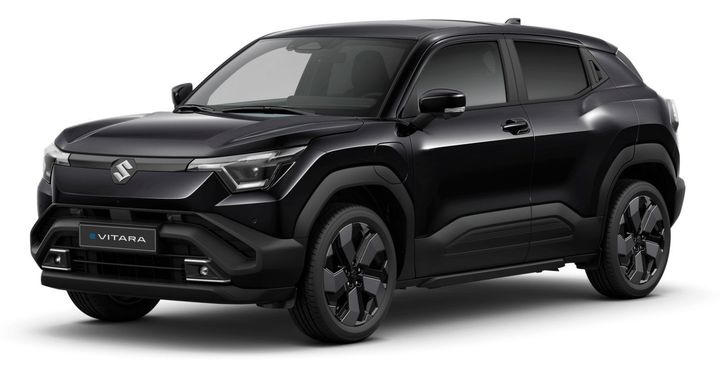
Maruti Suzuki e Vitara Guide: Explore Key Details, Features, and Information
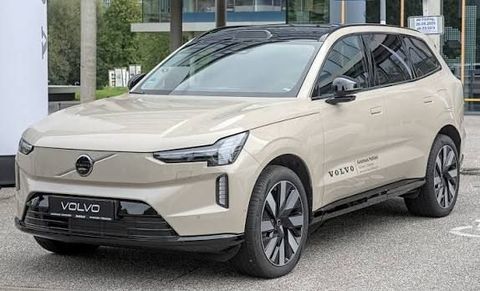
The Maruti Suzuki e Vitara is Maruti Suzuki’s first fully electric SUV for the Indian passenger vehicle market. It is important because Maruti Suzuki has traditionally been known for petrol, CNG, and hybrid passenger vehicles, while the e Vitara marks its formal entry into the electric SUV category in India.
The e Vitara was showcased at Bharat Mobility Global Expo 2025, and its India-specific version later moved closer to market introduction. Maruti Suzuki’s Nexa platform describes the e Vitara with a high-capacity lithium-ion battery made of 120 cells, designed to operate across temperatures from -30°C to 60°C.
The model is positioned as an electric SUV rather than a small city EV. This matters because electric SUVs are becoming a key part of India’s mobility transition. A compact or midsize electric SUV can appeal to families, office commuters, intercity users, and people looking at long-term electric mobility planning.
At a basic level, the e Vitara exists to answer four major questions in the Indian EV market:
- Can a mainstream brand make electric SUVs more familiar?
- Can EVs provide practical driving range for daily and occasional longer routes?
- Can charging access become easier through home and public charging options?
- Can battery safety, crash safety, and connected features improve buyer confidence?
The e Vitara also reflects a broader shift in India’s car market. Electric vehicles are no longer limited to early adopters. They are now becoming part of mainstream family-car discussions, especially in urban and semi-urban areas where charging infrastructure is improving.
Importance
The Maruti Suzuki e Vitara matters because Maruti Suzuki has one of the widest dealership and ownership ecosystems in India. When a company with this scale enters the electric SUV space, it can influence awareness, charging habits, maintenance expectations, resale discussions, vehicle insurance planning, and public perception of EV technology.
For a general audience, the e Vitara is useful as a learning example because it brings together many important EV topics: battery capacity, claimed driving range, charging time, safety ratings, variant planning, connected vehicle technology, and government policy support.
Electric SUVs also solve several real-world problems:
| User Need | How an Electric SUV Helps |
|---|---|
| Daily urban travel | Lower tailpipe emissions and smoother driving |
| Family usage | SUV body style, cabin space, and practical seating |
| Range confidence | Larger battery packs can support longer travel |
| Technology access | Connected displays, ADAS, cameras, and smart features |
| Energy transition | Supports India’s movement toward cleaner mobility |
The e Vitara is also relevant for people comparing electric vehicles with petrol, diesel, CNG, and hybrid vehicles. EVs require a different decision-making method. Instead of focusing only on engine size and mileage, users need to understand battery capacity, range rating, charging duration, battery warranty terms, electricity usage, and vehicle software.
Reports mention that the India-spec e Vitara has two battery pack choices: 49 kWh and 61 kWh, both with a front-wheel-drive setup. The larger battery has an ARAI-rated range of up to 543 km.
This is significant because a claimed range above 500 km can reduce range anxiety for many users. However, practical range depends on speed, climate control use, payload, road conditions, tyres, route elevation, and driving style.
Recent Updates
The Maruti Suzuki e Vitara became one of the most discussed electric SUVs in India after its showcase at Bharat Mobility Global Expo 2025. A later update from December 2025 confirmed that the India-spec e Vitara would come with 49 kWh and 61 kWh battery options, with the larger battery carrying an ARAI-certified range of 543 km.
In February 2026, Reuters reported that Suzuki introduced its first EV in India through Maruti Suzuki, with the e Vitara developed in collaboration with Toyota. The report also stated that the model had been manufactured in India since August 2025 and that 13,000 units had already been exported to 28 countries in 2025.
Another important update is related to variants. Reports mention three main variants: Delta, Zeta, and Alpha. The Delta variant is linked with the smaller 49 kWh battery, while Zeta and Alpha are linked with the larger 61 kWh battery.
Safety is also a major update. Bharat NCAP lists the Maruti Suzuki e Vitara Alpha 61 kWh as a tested vehicle, with India as the country of origin and 2025 as the year of publication. Reports have also stated that the e Vitara received a 5-star Bharat NCAP rating, which is an important signal for safety-focused users.
Key Details Overview
| Detail Area | Information |
|---|---|
| Vehicle type | Electric SUV |
| Brand | Maruti Suzuki |
| Battery options | 49 kWh and 61 kWh |
| Drivetrain | Front-wheel-drive for India-spec version |
| Claimed range | Up to 543 km for 61 kWh battery |
| Main variants | Delta, Zeta, Alpha |
| Seating | 5-seat SUV layout |
| Safety rating | 5-star Bharat NCAP reported |
| Platform relevance | First Maruti Suzuki electric SUV in India |
Battery and Range Information
The e Vitara’s battery options are central to its identity. The 49 kWh battery is expected to support more regular urban and city-focused usage, while the 61 kWh battery is aimed at users who need higher range confidence.
| Battery Pack | Usage Understanding | Range Reference |
|---|---|---|
| 49 kWh | Daily commute, city routes, moderate travel | Official range figure varies by listing |
| 61 kWh | Longer daily usage and better range confidence | Up to 543 km ARAI-rated range |
Simple Range Graph
Below is a simple visual comparison based on available range references.
| Battery Reference | Range Visual |
|---|---|
| 49 kWh | Range details vary by listing ███████████ |
| 61 kWh | Up to 543 km █████████████████████████ |
This graph is only for basic learning. Real-world range can be lower or higher depending on driving conditions and charging behavior.
Laws or Policies
The Maruti Suzuki e Vitara is affected by India’s electric mobility regulations, road safety standards, vehicle registration framework, and state-level EV policies.
Electric vehicles in India must follow regulatory requirements related to battery safety, vehicle approval, registration, insurance, and charging standards. For an electric SUV, these rules are especially important because the battery pack is one of the most valuable and technically sensitive parts of the vehicle.
Important policy-related areas include:
- Battery safety standards: These relate to thermal management, charging safety, and battery durability.
- Vehicle registration: Electric SUVs must be registered under applicable transport rules.
- Motor insurance: EV owners need insurance coverage, and battery-related terms should be checked carefully.
- Charging infrastructure: Public and private charging access affects EV practicality.
- Bharat NCAP: Safety ratings help users understand crash protection.
- State EV policies: Some Indian states provide EV-related benefits, registration support, or charging infrastructure programs.
- Emission reduction goals: EV adoption supports India’s broader clean mobility and energy transition goals.
The e Vitara also fits into India’s broader alternative-energy vehicle movement. In 2026, Maruti Suzuki also made headlines for flex-fuel technology, showing that the company is exploring multiple clean mobility routes rather than only one technology path.
Tools and Resources
People researching the Maruti Suzuki e Vitara can use several neutral resources to understand the vehicle more clearly.
| Tool or Resource | Use |
|---|---|
| Official Maruti Suzuki / Nexa page | Product details and official updates |
| EV range calculator | Helps estimate practical driving range |
| Charging time calculator | Helps understand charging duration |
| Public charging locator apps | Helps locate EV charging points |
| State EV policy portals | Explains local EV rules and benefits |
| Bharat NCAP website | Provides vehicle safety information |
| Vehicle insurance comparison platforms | Helps understand EV insurance categories |
| RTO portals | Useful for registration-related knowledge |
| EV ownership checklist | Helps compare range, charging, warranty, and safety |
| Battery warranty document | Explains coverage, limits, and exclusions |
A useful research checklist for any electric SUV should include:
- Battery capacity
- Certified range
- Real-world range feedback
- AC charging duration
- DC fast-charging compatibility
- Home charger compatibility
- Safety rating
- Airbag count
- ADAS features
- Battery warranty terms
- Vehicle insurance details
- Tyre size and replacement availability
- Ground clearance
- Boot space
- After-sales network availability
Practical Insights
The e Vitara should be understood as more than just a new vehicle model. It is a sign that mainstream electric SUVs are entering a more mature stage in India.
For first-time EV learners, the main insight is that an EV should not be judged only by range. Range is important, but the full picture includes charging access, route type, software quality, battery warranty, repair ecosystem, safety rating, and driving comfort.
The e Vitara’s reported 5-star Bharat NCAP rating also gives it a stronger safety discussion point. For family-focused users, safety ratings can influence trust, especially when the vehicle is used for highways, school routes, office travel, and weekend trips.
Another important factor is local manufacturing and export relevance. Reuters reported that the e Vitara was manufactured in India and exported to multiple countries in 2025. This matters because it places India not only as a market for EVs but also as a production base for global electric mobility.
FAQs
What is the Maruti Suzuki e Vitara?
The Maruti Suzuki e Vitara is Maruti Suzuki’s first fully electric SUV for India. It is designed as a five-seat electric SUV with battery options, connected features, and a strong focus on practical electric mobility.
What battery options are available in the Maruti Suzuki e Vitara?
Reports mention two battery options for the India-spec e Vitara: 49 kWh and 61 kWh. The larger 61 kWh battery is linked with an ARAI-rated range of up to 543 km.
What are the main variants of the Maruti Suzuki e Vitara?
The main variants reported are Delta, Zeta, and Alpha. The Delta variant is associated with the 49 kWh battery, while Zeta and Alpha are associated with the 61 kWh battery.
What is the safety rating of the Maruti Suzuki e Vitara?
The Maruti Suzuki e Vitara Alpha 61 kWh is listed by Bharat NCAP as a tested vehicle, and reports state that the model received a 5-star Bharat NCAP safety rating.
Why is the Maruti Suzuki e Vitara important for India?
It is important because it marks Maruti Suzuki’s entry into the electric SUV space. Since Maruti Suzuki has a large presence in India, the e Vitara can influence mainstream EV awareness, charging habits, safety expectations, and electric SUV adoption.
Conclusion
The Maruti Suzuki e Vitara is a major step in India’s electric vehicle journey. It brings Maruti Suzuki into the electric SUV category with battery options, a claimed range of up to 543 km for the larger battery, Bharat NCAP safety relevance, and a familiar SUV format for Indian users.
For a general audience, the key learning is simple: the e Vitara is not only a new electric SUV, but also a sign of how mainstream EV adoption is evolving. It connects battery technology, range planning, charging infrastructure, safety ratings, vehicle insurance, and government policy into one practical topic.
The most responsible way to study the e Vitara is to compare official specifications, certified range, real-world driving feedback, safety documents, charging access, and ownership-related terms. As India’s EV ecosystem grows, vehicles like the e Vitara will help more people understand electric mobility in a clear, practical, and structured way.