JSW Jetour T2 Guide: Explore Key Details and Information
The JSW Jetour T2 is an upcoming SUV topic connected with India’s growing interest in rugged, technology-focused, and possibly electrified sport utility vehicles. Jetour is a brand under Chery Automobile, and the Jetour T2 is already listed on Jetour’s global platform as a rugged adventure SUV with features such as intelligent four-wheel drive, L2 driving assistance, a large central display, and multiple powertrain references depending on market configuration.
In the Indian context, the name “JSW Jetour T2” is being discussed because JSW Group has a major role in JSW MG Motor India, the joint venture involving SAIC Motor. Recent reports indicate JSW’s stake and control in this Indian auto venture have been expanding, while the company is focusing more on new energy vehicles, hybrids, and premium models.
This article gives a neutral and educational overview of the JSW Jetour T2 topic. It is not a confirmation of final India specifications. It explains what the vehicle represents, why it matters, what recent updates are relevant, which policies may affect it, and what tools readers can use to understand this segment better.
What the JSW Jetour T2 Topic Is and Why It Exists
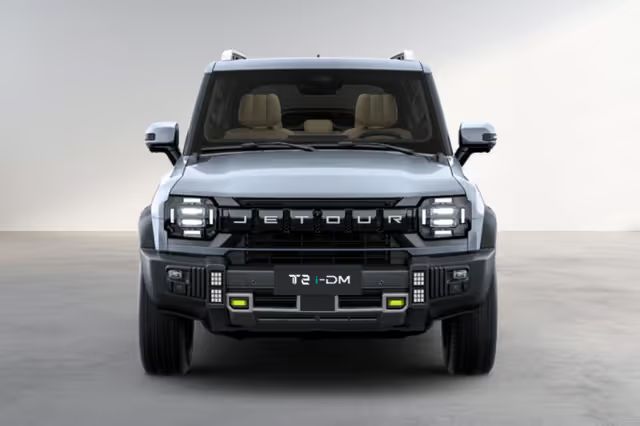
The Jetour T2 is positioned globally as a boxy, adventure-oriented SUV. Its design language follows the growing trend of upright SUVs with a strong road presence, high ground clearance orientation, and technology-led interiors. On Jetour’s global pages, the T2 is shown with features such as a 15.6-inch central control screen, Snapdragon 8155 smart chip, L2 intelligent driving assistance, automatic intelligent four-wheel drive, and differential lock-related off-road technology.
The topic exists in India because the country’s SUV market has expanded rapidly, especially in the compact, midsize, premium, and lifestyle SUV categories. Indian drivers increasingly look at SUVs not only for space and road presence but also for safety, technology, long-distance comfort, and poor-road usability.
The “JSW Jetour T2” discussion is also connected with the broader strategy of JSW MG Motor India. Reuters reported in February 2026 that the company planned investment between $330 million and $440 million for capacity expansion and new model development, with a focus on hybrids and electric vehicles.
Because of this direction, any rugged SUV with hybrid or new-energy potential naturally becomes important for Indian automobile watchers, policy analysts, auto insurance researchers, vehicle finance readers, and SUV comparison audiences.
Why This Topic Matters Today
The JSW Jetour T2 matters because it sits at the intersection of three strong automobile trends in India: SUV demand, hybrid technology, and active safety features.
For general readers, it helps explain how Indian car choices are changing. Earlier, many SUV conversations focused mainly on engine size, seating, and brand image. Today, the same discussion includes ADAS, vehicle safety rating, battery-assisted drivetrains, fuel efficiency, car insurance classification, road tax rules, emission compliance, and long-term ownership planning.
For Indian families, SUVs like the Jetour T2 category affect decisions around:
- Highway comfort and long-distance travel
- Safety rating awareness
- Advanced driver assistance systems
- Cabin technology and connected features
- Fuel efficiency or hybrid efficiency
- Vehicle registration rules
- Insurance premium comparison
- Maintenance planning
- Resale value research
- Urban and semi-urban road suitability
For the automobile industry, models in this category may increase competition in the premium SUV and lifestyle SUV segments. If a model like the Jetour T2 enters India with hybrid or plug-in hybrid technology, it may also add another option in a space where Indian consumers are trying to understand the difference between petrol, diesel, strong hybrid, plug-in hybrid, and battery electric vehicles.
Simple Overview Table
| Area | What It Means for Readers |
|---|---|
| Vehicle Type | Rugged SUV-style model with adventure-focused positioning |
| Key Interest Area | Design, hybrid potential, safety technology, and off-road systems |
| Indian Relevance | Linked with JSW MG Motor’s new energy vehicle direction |
| Policy Impact | Safety norms, emission rules, Bharat NCAP, registration rules |
| Reader Use Case | SUV comparison, insurance research, vehicle loan planning, feature awareness |
Recent Updates and Market Trends
As of June 2026, the most important updates are not just about one model but about the ecosystem around JSW MG Motor India and India’s hybrid-EV direction.
In February 2026, Reuters reported that JSW MG Motor India planned a large expansion, with production capacity intended to move from around 120,000 units to 300,000 units annually. The report also stated that the company’s future production direction would heavily focus on new energy vehicles.
In May 2026, Reuters reported that SAIC Motor was expected to transfer another 10% stake in the Indian joint venture to JSW Group. This would increase JSW’s stake to 45%, making JSW the largest individual shareholder in the venture. The report also noted that SAIC was expected to reinvest about ₹6 billion to support new vehicle launches, including extended-range EVs and hybrids.
Auto portals have also reported recent India testing activity around the Jetour T2. One June 2026 report stated that the vehicle had been spied testing in India and could be linked with a later festive-season market entry, though such timelines should be treated as expected rather than final unless officially announced.
The broader trend is clear: India is moving toward a more diverse powertrain mix. Battery electric vehicles remain important, but hybrids and plug-in hybrids are gaining attention because they can address range anxiety, charging infrastructure gaps, and highway driving needs.
Simple Trend Graph
| Trend Area | 2024 | 2025 | 2026 Direction |
|---|---|---|---|
| EV Awareness | Medium | High | Very High |
| Hybrid Discussion | Medium | High | Very High |
| ADAS Interest | Medium | High | Very High |
| Bharat NCAP Awareness | Growing | Strong | Stronger |
| Premium SUV Demand | High | High | High |
Laws, Policies, and Rules That May Affect This Topic
Any vehicle considered for India has to align with Indian vehicle regulations, emission rules, safety standards, homologation norms, and registration requirements.
A major safety reference point is Bharat NCAP. Bharat NCAP applies to M1 category vehicles with gross vehicle weight up to 3,500 kg and evaluates adult occupant protection, child occupant protection, and safety assist technologies.
This matters because Indian consumers now pay closer attention to safety ratings. For an SUV like the Jetour T2 category, factors such as airbags, electronic stability control, seatbelt reminders, structural safety, child restraint compatibility, and ADAS calibration can influence public perception.
India also has AIS and CMVR-linked safety and technical standards. AIS 145 has been associated with safety requirements such as airbags, seatbelt reminders, speed warning systems, and ABS, while Bharat NCAP’s AIS 197 framework has increased attention on structured crash safety evaluation.
ADAS policy is another evolving area. For heavy and large vehicle categories, India has been discussing mandatory ADAS-related requirements from 2026 onward, while passenger cars continue to move gradually through market-led adoption and safety-rating pressure.
For hybrid or plug-in hybrid models, government policy can involve multiple areas:
- Emission compliance
- Fuel efficiency standards
- Battery safety requirements
- Registration classification
- State-level road tax treatment
- Insurance category evaluation
- Vehicle inspection norms
- Charging infrastructure guidelines, where applicable
Readers should note that final rules can vary by model type, state, and certification category. A petrol SUV, hybrid SUV, plug-in hybrid SUV, and battery electric SUV may not follow identical registration and taxation treatment.
Useful Tools and Resources
Readers researching the JSW Jetour T2 or any similar SUV can use the following resources for factual understanding:
- Bharat NCAP website: To check official safety ratings when a vehicle is tested in India.
- VAHAN portal: To understand vehicle registration data and category-level information.
- MoRTH updates: For road safety rules, vehicle norms, and policy notifications.
- Official Jetour global website: For global specifications and feature references.
- JSW MG Motor India announcements: For confirmed India-related product and company updates.
- IRDAI-linked insurance awareness pages: For understanding motor insurance basics.
- Fuel efficiency calculators: For estimating running patterns across petrol, hybrid, and EV categories.
- EMI calculators: For planning vehicle finance scenarios in a structured way.
- Vehicle comparison templates: For comparing safety, dimensions, boot space, range, warranty, insurance class, and maintenance intervals.
- Charging station locator apps: Useful if a plug-in hybrid or electric variant becomes relevant.
Research Checklist Table
| Research Area | What to Verify |
|---|---|
| Official Status | Confirm India announcement from company channels |
| Safety | Check Bharat NCAP or global NCAP references when available |
| Powertrain | Verify petrol, hybrid, plug-in hybrid, or EV configuration |
| Insurance | Compare comprehensive motor insurance factors |
| Finance | Review vehicle loan eligibility and EMI structure |
| Policy | Check registration and road tax rules by state |
| Features | Confirm ADAS, airbags, display, drivetrain, and warranty terms |
| Practicality | Review dimensions, boot space, seating, and ground clearance |
FAQs
What is the JSW Jetour T2?
The JSW Jetour T2 refers to the India-related discussion around the Jetour T2 SUV and its possible connection with JSW MG Motor India’s future product plans. Globally, the Jetour T2 is presented as a rugged adventure SUV with modern cabin technology, driver assistance features, and intelligent four-wheel-drive-related systems.
Is the JSW Jetour T2 officially confirmed for India?
As of June 4, 2026, public reports discuss testing activity and possible India plans, but readers should treat final India launch timing, specifications, and variant information as unconfirmed until official company communication is available. Recent media reports have suggested testing and possible festive-season timing, but this remains expected information rather than a final company statement.
What type of engine or powertrain can the Jetour T2 have?
Globally, Jetour lists different T2-related configurations, including petrol and i-DM hybrid references depending on market. The T2 global specification page references a 1.5-litre displacement version, while the T2 i-DM page presents a plug-in hybrid positioning. India-specific powertrain details must be verified only after official confirmation.
Why is Bharat NCAP important for this SUV category?
Bharat NCAP gives Indian consumers a structured way to understand crash safety performance for eligible M1 category vehicles up to 3,500 kg. For SUVs, this can influence trust, insurance research, family usage decisions, and feature comparison.
Which readers should follow this topic?
This topic is useful for SUV researchers, automobile students, car insurance readers, vehicle finance planners, policy watchers, hybrid technology learners, and people comparing future premium SUV options in India. It is also useful for understanding how India’s auto market is moving from conventional SUVs toward safer, smarter, and more energy-efficient models.
Conclusion
The JSW Jetour T2 is an important topic because it reflects where the Indian SUV market may be heading: stronger design identity, more safety technology, hybrid or new-energy possibilities, and deeper policy influence. The model’s global profile shows an adventure-focused SUV with technology-led features, while India-related discussion is connected with JSW MG Motor’s expansion and new energy vehicle strategy.
For now, readers should separate confirmed facts from expected information. Official company announcements, Bharat NCAP data, homologation details, insurance classification, and final India specifications will be the most reliable sources when the model’s market status becomes clearer.
From an educational perspective, the JSW Jetour T2 is more than one SUV name. It is a useful case study for understanding India’s next phase of automobile development, where safety ratings, hybrid technology, ADAS, vehicle finance, insurance planning, and government policy all shape how modern SUVs are evaluated.