Jump to a Chapter

Industrial Robots Explained: Explore Guide, Basics, Knowledge, Insights, Facts, and Helpful Resources

Industrial Robots Explained: Explore Guide, Basics, Knowledge, Insights, Facts, and Helpful Resources

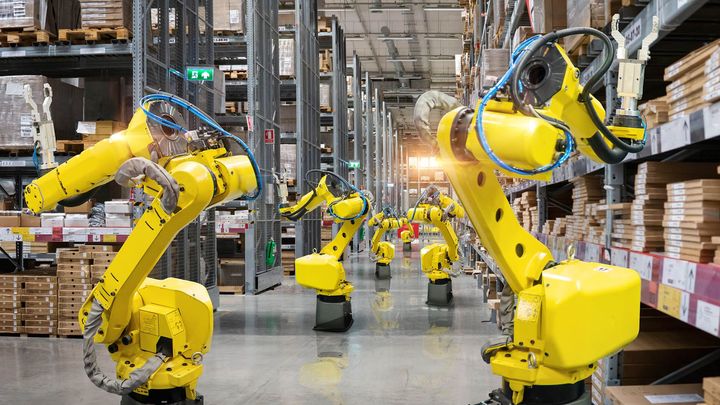
Industrial robots are programmable machines designed to perform manufacturing and industrial tasks with a high level of accuracy, consistency, and efficiency. These robotic systems are commonly used in industries such as automotive manufacturing, electronics production, metal fabrication, food processing, logistics, pharmaceuticals, and packaging.

The concept of industrial robotics emerged as manufacturers searched for ways to improve productivity, reduce repetitive manual work, and maintain consistent quality standards. Unlike traditional machines that perform a single function, modern industrial robots can often be programmed for multiple tasks and integrated into larger automation systems.

Industrial robots typically consist of several components:

  • Robotic arm or manipulator
  • Sensors and vision systems
  • Controllers and software
  • End-of-arm tooling
  • Communication interfaces

Common industrial robot applications include:

  • Welding
  • Material handling
  • Assembly operations
  • Packaging
  • Painting
  • Inspection and quality control
  • Palletizing and depalletizing

As industrial automation continues to evolve, robotics technology has become an important part of modern production environments.

Why Industrial Robots Matter Today

Industrial robots play a significant role in improving manufacturing efficiency and operational consistency. As global industries face increasing demand for higher production volumes and greater product quality, automation solutions help organizations manage complex production processes.

Several factors contribute to the growing importance of industrial robotics:

  • Increased production requirements
  • Demand for precision manufacturing
  • Workplace safety improvements
  • Digital transformation initiatives
  • Advanced manufacturing technologies
  • Smart factory development

Industrial robots can perform repetitive tasks continuously while maintaining consistent performance levels. This capability helps manufacturers reduce production variations and improve quality assurance processes.

The technology affects a wide range of stakeholders:

StakeholderImpact
ManufacturersImproved production efficiency
EngineersAdvanced automation opportunities
Quality TeamsEnhanced inspection accuracy
Supply ChainsBetter operational consistency
ConsumersMore standardized products
ResearchersInnovation in robotics technology

Another important benefit is workplace safety. Robots can handle tasks involving extreme temperatures, hazardous materials, heavy lifting, or repetitive motions that may contribute to workplace injuries.

The growth of artificial intelligence, machine vision, predictive maintenance, and industrial Internet of Things (IIoT) technologies has further expanded the capabilities of modern robotic automation systems.

Recent Updates and Industry Trends

The industrial robotics sector has experienced significant developments over the past year. Several trends continue to influence manufacturing technology and automation strategies.

Artificial Intelligence Integration

During 2025 and 2026, many manufacturers expanded the use of AI-powered robotics systems. Machine learning algorithms are increasingly being used to improve object recognition, process optimization, and predictive maintenance capabilities.

AI-enabled robots can analyze operational data and adapt to changing production conditions more effectively than traditional automation systems.

Collaborative Robots Growth

Collaborative robots, often called cobots, continue to gain attention across manufacturing environments. These robots are designed to work alongside human operators while incorporating advanced safety features.

Organizations increasingly use collaborative automation for:

  • Assembly operations
  • Product inspection
  • Material handling
  • Packaging processes

Smart Manufacturing Expansion

Smart factory initiatives continued to grow throughout 2025 and early 2026. Industrial robots are becoming more connected through digital manufacturing platforms, allowing real-time monitoring and performance analysis.

Machine Vision Advancements

Vision-guided robotics systems have become more sophisticated. Improved cameras, sensors, and image-processing software help robots perform tasks involving:

  • Quality inspection
  • Object identification
  • Sorting operations
  • Precision assembly

Sustainability and Energy Efficiency

Manufacturers are increasingly focusing on energy-efficient automation technologies. New robotic systems often include features that help optimize energy consumption and support sustainability objectives.

Industrial Robotics Technology Trends

TrendIndustry Impact
Artificial IntelligenceImproved decision-making
Machine VisionBetter inspection accuracy
Predictive MaintenanceReduced downtime
Collaborative RobotsEnhanced human-robot interaction
Digital TwinsBetter process simulation
Industrial IoTReal-time operational insights

Industrial Robot Adoption Overview


Technology Adoption Trend

AI Robotics ██████████
Machine Vision █████████
Industrial IoT █████████
Collaborative Robots ████████
Digital Twins ███████
Traditional Robotics ██████████


Illustrative representation of current industry trends.

Regulations, Standards, and Policies

Industrial robots operate within a framework of safety standards, technical regulations, and workplace compliance requirements. These regulations help ensure safe deployment and operation of robotic systems.

Several international standards influence industrial robotics applications.

Workplace Safety Standards

Manufacturing facilities using robotic automation typically follow occupational safety regulations that address:

  • Machine guarding requirements
  • Emergency stop systems
  • Risk assessments
  • Worker training procedures
  • Hazard prevention measures

Robotics Safety Standards

Industrial robotics systems are commonly designed according to internationally recognized standards covering:

  • Robot safety requirements
  • Collaborative robot operation
  • Functional safety systems
  • System integration practices

Data and Cybersecurity Requirements

As connected manufacturing environments expand, cybersecurity regulations increasingly affect industrial automation systems. Organizations may implement policies addressing:

  • Network security
  • Access control
  • Data protection
  • Operational technology security

Environmental Compliance

Industrial facilities often follow environmental regulations related to:

  • Energy efficiency
  • Electronic equipment management
  • Waste reduction initiatives
  • Sustainability reporting

Government-supported advanced manufacturing programs in various countries also encourage innovation in robotics, automation, artificial intelligence, and smart manufacturing technologies.

Helpful Tools and Resources

Many tools and resources support learning, planning, and managing industrial robotics systems.

Robotics Design and Simulation Tools

These tools help engineers model robotic processes before implementation.

Common capabilities include:

  • Process simulation
  • Collision detection
  • Workflow optimization
  • Digital twin development

Industrial Automation Software

Automation software platforms often support:

  • Robot programming
  • Production monitoring
  • System integration
  • Performance analytics

Machine Vision Platforms

Vision systems assist with:

  • Object recognition
  • Inspection automation
  • Quality assurance
  • Defect detection

Learning Resources

Helpful educational resources include:

  • Robotics engineering courses
  • Manufacturing technology publications
  • Automation industry reports
  • Technical standards documentation
  • Engineering research journals

Useful Resource Categories

Resource TypePurpose
Simulation SoftwareVirtual testing
Analytics PlatformsPerformance monitoring
Training ProgramsSkills development
Technical StandardsCompliance guidance
Industry ReportsMarket insights
Engineering CommunitiesKnowledge sharing

Frequently Asked Questions

What is an industrial robot?

An industrial robot is a programmable automated machine designed to perform manufacturing or industrial tasks such as welding, assembly, packaging, inspection, and material handling with precision and consistency.

How are industrial robots different from traditional machines?

Traditional machines generally perform fixed functions, while industrial robots can be reprogrammed for different tasks and integrated into flexible automation systems.

What industries commonly use industrial robots?

Industrial robots are widely used in automotive manufacturing, electronics production, food processing, pharmaceuticals, logistics, packaging, metalworking, and consumer goods manufacturing.

Are industrial robots connected to artificial intelligence?

Some modern industrial robots use artificial intelligence technologies to improve decision-making, machine vision, predictive maintenance, and adaptive automation capabilities. However, not all industrial robots require AI to operate effectively.

What is a collaborative robot?

A collaborative robot, or cobot, is designed to work alongside human operators while incorporating safety technologies that help reduce operational risks in shared workspaces.

How do industrial robots improve quality control?

Industrial robots can perform repetitive tasks with consistent precision, helping reduce variability and supporting automated inspection systems that identify defects and quality issues.

Conclusion

Industrial robots have become an important component of modern manufacturing and industrial automation. These programmable systems help organizations improve consistency, efficiency, safety, and operational performance across a wide range of industries.

Recent developments in artificial intelligence, machine vision, collaborative robotics, predictive maintenance, industrial IoT, and smart manufacturing continue to expand the capabilities of robotic automation systems. At the same time, safety standards, cybersecurity requirements, and environmental regulations influence how these technologies are deployed and managed.

As manufacturing technology continues to evolve, industrial robots are expected to remain a significant part of advanced production environments, supporting innovation, quality improvement, and digital transformation initiatives. Understanding the fundamentals, trends, regulations, and available resources can help individuals and organizations stay informed about this rapidly developing field of industrial robotics and automation technology.

author-image

Harshit Sharma

We are a performance-driven media buying team focused on scaling brands through smart, data-backed advertising strategies

July 06, 2026 . 8 min read