Industrial Cooling Towers: Explore Modern Heat Rejection Systems
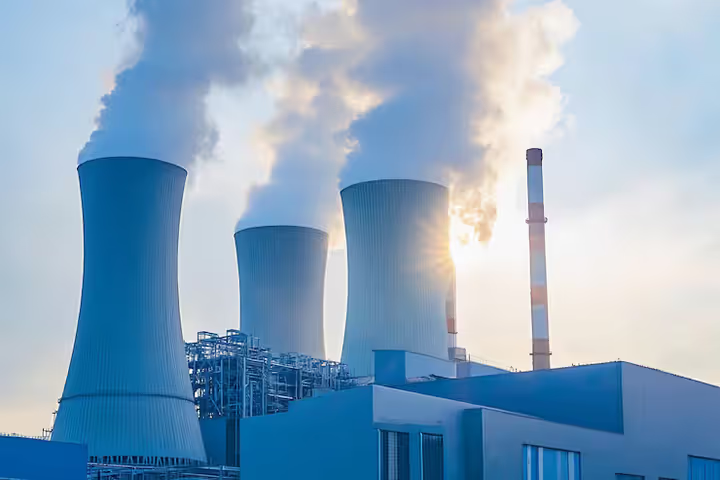
Industrial cooling towers are specialized heat rejection systems used to remove excess heat from industrial processes, manufacturing facilities, power generation plants, and large commercial installations. These systems help maintain stable operating temperatures by transferring unwanted heat from water into the atmosphere.
Many industrial operations generate significant amounts of heat during production. Without effective cooling, equipment performance can decline, operational efficiency may decrease, and machinery may experience premature wear. Industrial cooling towers play a critical role in maintaining safe and efficient operating conditions.
Understanding How Industrial Cooling Towers Work
Cooling towers operate on the principle of evaporative cooling. Warm water from industrial equipment is circulated through the tower, where it comes into contact with air. A small portion of the water evaporates, removing heat from the remaining water.
The cooled water is then returned to the process or equipment for reuse, creating a continuous cooling cycle.
| Component | Function |
|---|---|
| Water Distribution System | Spreads warm water evenly within the tower |
| Fill Media | Increases surface area for heat transfer |
| Fans | Move air through the cooling tower |
| Drift Eliminators | Reduce water loss through airborne droplets |
| Basin | Collects cooled water |
| Pumps | Circulate water throughout the system |
| Water Treatment Equipment | Controls scale, corrosion, and biological growth |
Main Components of Industrial Cooling Towers
Water Distribution System
- Delivers heated water to the cooling tower.
- Ensures uniform water coverage across fill material.
- Supports efficient heat transfer.
Fill Media
- Provides a large contact surface between air and water.
- Enhances evaporation and cooling performance.
- Available in film-fill and splash-fill designs.
Air Movement System
- Uses fans or natural airflow.
- Promotes heat exchange between water and air.
- Influences overall cooling efficiency.
Drift Eliminators
- Capture water droplets before they leave the tower.
- Reduce water consumption.
- Help maintain environmental compliance.
Cold Water Basin
- Stores cooled water.
- Supplies water back to industrial processes.
- Supports continuous system operation.
Water Treatment Systems
- Control mineral deposits.
- Prevent microbial growth.
- Improve equipment longevity.
Types of Industrial Cooling Towers
Industrial cooling towers are available in several configurations depending on operational requirements.
Natural Draft Cooling Towers
- Utilize natural airflow generated by temperature differences.
- Common in large power generation facilities.
- Require minimal mechanical equipment.
Mechanical Draft Cooling Towers
- Use fans to move air through the structure.
- Suitable for a wide range of industrial applications.
- Offer greater operational control.
Induced Draft Cooling Towers
- Fans pull air upward through the tower.
- Widely used in industrial environments.
- Provide efficient cooling performance.
Forced Draft Cooling Towers
- Fans push air into the tower.
- Useful where specific airflow control is needed.
- Often applied in specialized industrial systems.
Crossflow Cooling Towers
- Air moves horizontally across falling water.
- Easier maintenance access.
- Common in commercial and industrial facilities.
Counterflow Cooling Towers
- Air moves upward against downward-flowing water.
- High thermal efficiency.
- Suitable for space-constrained installations.
Why Industrial Cooling Towers Are Important
Industrial cooling towers support reliable operation across numerous industries. Their ability to remove excess heat contributes to process stability, equipment protection, and energy efficiency.
Operational Benefits
- Maintains optimal equipment temperatures.
- Supports continuous production processes.
- Reduces risk of overheating.
- Improves system reliability.
- Enhances industrial energy efficiency.
- Extends equipment lifespan.
Many industrial facilities depend on cooling tower systems to maintain production quality and prevent costly downtime.
Common Industrial Applications
Industrial cooling towers are used in a variety of sectors where heat management is essential.
Power Generation
- Thermal power plants.
- Combined-cycle facilities.
- Cogeneration installations.
Manufacturing
- Metal processing operations.
- Chemical manufacturing plants.
- Automotive production facilities.
- Electronics manufacturing units.
Oil and Gas Operations
- Refining processes.
- Petrochemical production.
- Gas processing facilities.
Food and Beverage Processing
- Process cooling applications.
- Refrigeration support systems.
- Packaging and production lines.
HVAC and Commercial Facilities
- Large commercial buildings.
- Data centers.
- Hospitals.
- Educational campuses.
Problems Solved by Industrial Cooling Towers
Heat accumulation can create significant operational challenges. Cooling towers address several critical issues.
Excessive Equipment Temperatures
- Prevent thermal damage.
- Support equipment efficiency.
- Reduce operational interruptions.
Process Instability
- Maintain consistent production conditions.
- Improve product quality.
- Enhance operational control.
Energy Waste
- Improve heat rejection efficiency.
- Support optimized system performance.
- Reduce unnecessary energy consumption.
Water Reuse Requirements
- Enable recirculating cooling systems.
- Support sustainable water management practices.
- Reduce freshwater demand.
Cooling Tower Maintenance Considerations
Proper maintenance is essential for achieving reliable performance and extending equipment life.
Routine Inspection Tasks
- Check fan operation.
- Inspect fill media condition.
- Monitor water quality.
- Verify pump performance.
- Examine structural components.
Water Treatment Practices
- Scale prevention.
- Corrosion control.
- Biological contamination management.
- Monitoring dissolved solids.
Performance Monitoring
- Temperature differential tracking.
- Airflow verification.
- Water consumption analysis.
- Energy usage evaluation.
Regular maintenance helps minimize unexpected shutdowns and supports long-term operational efficiency.
Industrial Cooling Tower Regulations and Compliance
Cooling tower operations are often subject to environmental, safety, and water management requirements.
Environmental Considerations
- Water conservation initiatives.
- Drift emission control.
- Responsible wastewater management.
- Air quality compliance requirements.
Health and Safety Measures
- Microbial growth monitoring.
- Worker safety procedures.
- Equipment inspection programs.
- Risk management protocols.
Industry Standards
Organizations frequently reference standards developed by:
- Cooling Technology Institute
- American Society of Heating, Refrigerating and Air-Conditioning Engineers
- International Organization for Standardization
- Local environmental authorities and regulatory agencies
Compliance requirements vary by country, industry sector, and facility size.
Recent Trends and Developments (2025–2026)
The industrial cooling tower sector continues to evolve as organizations focus on sustainability, automation, and operational efficiency.
Smart Monitoring Technologies
- IoT-based monitoring systems.
- Real-time performance analytics.
- Predictive maintenance capabilities.
- Remote operational oversight.
Advanced Water Management
- Improved water treatment technologies.
- Reduced water consumption strategies.
- Enhanced recycling and reuse practices.
- Automated chemical dosing systems.
Energy-Efficient Fan Systems
- Variable frequency drives (VFDs).
- High-efficiency motor technologies.
- Intelligent airflow control.
- Reduced energy demand.
Digital Twin Applications
- Virtual system modeling.
- Predictive performance analysis.
- Maintenance planning optimization.
- Operational scenario testing.
Sustainability Initiatives
- Lower water footprint designs.
- Reduced environmental impact.
- Improved thermal performance.
- Integration with industrial sustainability programs.
During 2025 and early 2026, many industrial operators increased adoption of digital monitoring platforms and advanced cooling tower maintenance technologies to improve operational reliability and resource efficiency.
Useful Tools and Learning Resources
Industry Organizations
- Cooling Technology Institute (CTI)
- ASHRAE
- International Organization for Standardization (ISO)
Monitoring and Analysis Tools
- Industrial SCADA platforms
- Predictive maintenance software
- Water quality monitoring systems
- Energy management systems
Educational Resources
- Engineering training programs
- Industrial maintenance courses
- Thermal management publications
- Process engineering reference materials
These resources help professionals understand cooling tower design, operation, and maintenance practices.
FAQ
What is the primary purpose of an industrial cooling tower?
An industrial cooling tower removes excess heat from industrial processes by transferring heat from water to the atmosphere, helping maintain stable operating temperatures.
What industries commonly use cooling towers?
Power generation, manufacturing, petrochemical processing, food production, data centers, and large HVAC installations commonly rely on cooling tower systems.
How does evaporative cooling work in a cooling tower?
A small portion of circulating water evaporates when exposed to airflow. This evaporation removes heat from the remaining water, reducing its temperature before recirculation.
Why is water treatment important in cooling towers?
Water treatment helps prevent scale formation, corrosion, and biological growth, improving equipment reliability and operational efficiency.
What are the latest developments in industrial cooling towers?
Recent developments include IoT monitoring, predictive maintenance systems, advanced water management technologies, energy-efficient fan controls, and digital twin applications.
Conclusion
Industrial cooling towers are essential components of modern industrial infrastructure. They provide effective thermal management by removing excess heat from industrial processes and equipment. Through evaporative cooling and efficient heat rejection, these systems help maintain operational stability, improve energy efficiency, and support equipment longevity.
With advancements in smart monitoring, predictive maintenance, water conservation technologies, and digital system management, industrial cooling towers continue to evolve to meet modern industrial demands. Understanding their operation, components, applications, and maintenance requirements is valuable for organizations seeking reliable and efficient thermal management solutions.