Heavy Equipment Rental: A Practical Guide to Costs, Equipment Types, and Project Planning
Heavy equipment plays an important role in construction, infrastructure development, landscaping, agriculture, roadwork, and industrial projects. Excavators, bulldozers, loaders, cranes, forklifts, and other specialized machines can significantly improve productivity and reduce the amount of manual labor required.
However, purchasing heavy machinery can require a substantial investment. Equipment rental provides an alternative that allows businesses, contractors, and project managers to access machinery for a specific period without making the full upfront investment required for ownership.
Understanding heavy equipment rental costs, rental agreements, insurance requirements, maintenance responsibilities, and equipment selection can help businesses make more informed decisions.
What Is Heavy Equipment Rental?
Heavy equipment rental is a service through which construction companies, contractors, businesses, and individuals temporarily use machinery in exchange for a rental fee.
Rental periods can vary depending on the project. Some companies offer:
- Daily equipment rentals
- Weekly equipment rentals
- Monthly rentals
- Long-term equipment leasing arrangements
- Project-based rental agreements
The rental price generally depends on factors such as equipment type, machine size, rental duration, location, availability, operating requirements, and additional services.
Why Do Businesses Rent Heavy Equipment?
Heavy machinery can represent a significant capital expense. For companies that only need specific equipment for a short-term project, renting may provide greater flexibility than purchasing.
Lower Upfront Capital Requirements
Purchasing a new excavator, crane, loader, or other large machine can require considerable capital. Renting allows a business to use the equipment while preserving funds for other project expenses.
This can be particularly relevant for small contractors and businesses managing projects with limited equipment budgets.
Access to Specialized Machinery
Some projects require equipment that a company does not normally use. For example, a contractor may need a large excavator for one excavation project but have little reason to own that machine permanently.
Rental services can provide access to specialized equipment without requiring long-term ownership.
Equipment Flexibility
Construction requirements can change from one project to another. A contractor may need a compact loader for one site and a larger excavator or bulldozer for another.
Rental arrangements can make it easier to select equipment based on the requirements of each project.
Maintenance and Service Considerations
Equipment ownership typically involves maintenance, inspections, repairs, storage, and other ongoing responsibilities. Depending on the rental agreement, some maintenance responsibilities may remain with the rental company.
Businesses should always review the contract carefully to understand who is responsible for servicing and repairs.
Common Types of Heavy Equipment for Rent
Different machines are designed for different applications. Choosing the correct equipment can affect project efficiency, operating costs, and safety.
Excavators
Excavators are commonly used for:
- Digging foundations
- Trenching
- Site preparation
- Demolition
- Material handling
- Drainage work
Excavators are available in different sizes, including compact models for smaller sites and larger machines for major excavation projects.
Bulldozers
Bulldozers are primarily designed for pushing and moving large quantities of soil, rocks, and other materials.
They are commonly used in:
- Road construction
- Land clearing
- Grading
- Mining operations
- Large-scale site preparation
Wheel Loaders
Wheel loaders are used for moving materials such as soil, gravel, sand, and construction debris.
Their versatility makes them useful for construction sites, aggregate operations, warehouses, and infrastructure projects.
Skid Steer Loaders
Skid steer loaders are compact machines that can operate in relatively confined areas. Different attachments can expand their functionality.
Common attachments include:
- Buckets
- Augers
- Forks
- Trenchers
- Sweepers
- Grading attachments
Cranes
Cranes are used when construction projects require lifting and positioning heavy materials.
Depending on the application, rental companies may provide different crane types, including mobile cranes, tower cranes, rough-terrain cranes, and other specialized lifting equipment.
Because crane operations involve significant safety considerations, businesses should verify operator qualifications, inspection requirements, load capacities, and applicable regulations before beginning work.
Forklifts
Forklifts are commonly used for moving and lifting palletized materials.
They are widely used in:
- Warehouses
- Manufacturing facilities
- Construction sites
- Distribution centers
- Industrial facilities
The appropriate forklift depends on factors such as lifting capacity, operating environment, height requirements, and surface conditions.
Understanding Heavy Equipment Rental Costs
One of the most important considerations when renting equipment is the total cost rather than simply the advertised daily rental rate.
What Determines Rental Prices?
Heavy equipment rental prices can depend on:
- Machine type
- Equipment size
- Rental duration
- Geographic location
- Equipment availability
- Machine age and condition
- Attachments
- Delivery and transportation
- Fuel requirements
- Insurance and damage protection
- Operator requirements
A specialized machine may cost considerably more than a standard model because of its capabilities and limited availability.
Daily vs. Weekly vs. Monthly Rental
Short-term rentals can be useful for brief projects, while longer rental periods may have different pricing structures.
Before selecting a rental period, businesses should estimate how many working days the machine will actually be required.
A machine that remains unused for several days can increase the effective cost of a project.
Additional Heavy Equipment Rental Expenses
The base rental price is not always the complete project cost.
Delivery and Transportation
Large machinery may require specialized transportation to and from the job site.
Transportation charges can depend on:
- Distance
- Equipment dimensions
- Machine weight
- Local transportation regulations
- Loading requirements
These costs should be included when preparing a project budget.
Fuel Costs
Some rental agreements require the customer to return equipment with a specified fuel level. Others may charge additional fees for fuel.
Businesses should determine fuel responsibilities before signing a rental agreement.
Attachments and Accessories
Specialized attachments can increase the functionality of rental equipment but may also increase the total rental cost.
For example, an excavator may be rented with different buckets or hydraulic attachments depending on the work being performed.
Heavy Equipment Rental Insurance
Insurance is an important consideration when renting construction machinery.
Rental companies may require customers to provide evidence of insurance or purchase specific coverage depending on the equipment and rental agreement.
Potential areas of coverage may include:
- Equipment damage
- Theft
- Liability
- Property damage
- Accidents involving third parties
Insurance requirements vary by company, location, project, and equipment type. Businesses should review their existing commercial insurance policies and discuss requirements with qualified insurance professionals before renting expensive machinery.
How to Choose the Right Heavy Equipment
Selecting the right machine requires more than comparing rental prices.
Consider the Project Requirements
Start by identifying the exact work that needs to be completed.
Consider:
- Material type
- Site conditions
- Required lifting capacity
- Digging depth
- Working height
- Operating space
- Project duration
- Required attachments
Check Equipment Specifications
Important specifications can include:
- Operating weight
- Engine power
- Bucket capacity
- Maximum digging depth
- Lifting capacity
- Fuel consumption
- Reach
- Dimensions
Matching equipment specifications to the job can help prevent unnecessary operating costs.
Consider Site Conditions
Ground conditions can influence equipment selection.
For example, soft or uneven terrain may require machinery designed specifically for those conditions. Confined construction sites may benefit from compact equipment with a smaller operating footprint.
Heavy Equipment Rental vs. Purchasing
The choice between renting and purchasing depends on the company's operating requirements and financial situation.
| Factor | Rental | Purchase |
|---|---|---|
| Initial capital | Generally lower | Generally higher |
| Long-term ownership | No | Yes |
| Maintenance responsibility | Depends on contract | Owner responsibility |
| Equipment flexibility | High | Lower |
| Resale value | Not applicable | Potential consideration |
| Storage | Usually not required by renter | Owner responsibility |
| Short-term projects | Often suitable | May be less practical |
| Long-term frequent use | May become expensive | Can be considered |
There is no universal choice for every business. Companies should evaluate expected utilization, financing costs, maintenance, depreciation, storage, insurance, and the expected useful life of the equipment.
Heavy Equipment Financing and Leasing Considerations
Businesses considering equipment ownership may also evaluate commercial equipment financing or leasing.
Equipment financing can allow a company to spread the purchase cost over time, while leasing can provide access to equipment under a contractual payment arrangement.
Important factors to review include:
- Interest rate
- Loan or lease term
- Down payment
- Monthly payment
- Fees
- Ownership terms
- Residual value
- Early termination provisions
- Total cost over the agreement
Because financing products vary significantly, businesses should compare the complete cost rather than focusing only on the monthly payment.
How to Reduce Heavy Equipment Rental Costs
Careful planning can help businesses manage equipment expenses.
Select the Correct Machine Size
Renting equipment that is significantly larger than necessary can increase costs without providing meaningful benefits.
At the same time, equipment that is too small may take longer to complete the work.
The goal is to match machine capacity with the actual project requirements.
Plan the Rental Period Carefully
Estimate the project's realistic equipment requirements before booking.
Avoid extending a rental simply because equipment was not scheduled efficiently.
Inspect Equipment Before Use
Inspect the machine when it arrives and document its condition.
Look for:
- Existing damage
- Fluid leaks
- Tire or track condition
- Safety equipment
- Warning indicators
- Attachments
- Hour-meter reading
Photographs can provide useful documentation when required by the rental agreement.
Compare Total Rental Costs
When comparing rental companies, look beyond the basic advertised price.
Compare:
- Rental rates
- Delivery charges
- Pickup charges
- Insurance requirements
- Fuel policies
- Damage policies
- Overtime charges
- Attachment costs
- Cleaning fees
The lowest advertised rental rate does not necessarily represent the lowest overall project cost.
Heavy Equipment Safety
Heavy machinery can present significant workplace hazards when operated incorrectly.
Operators should receive appropriate training and follow applicable workplace safety requirements.
Important safety practices include:
- Conducting pre-operation inspections
- Using appropriate personal protective equipment
- Maintaining safe operating distances
- Following load limits
- Keeping unauthorized people away from operating areas
- Using equipment only for its intended purpose
- Following manufacturer instructions
- Maintaining clear communication on active job sites
For lifting equipment such as cranes and forklifts, operators should follow applicable capacity and inspection requirements.
Questions to Ask a Heavy Equipment Rental Company
Before signing an agreement, customers can ask:
Equipment Questions
- What is the machine's operating capacity?
- How old is the equipment?
- What maintenance has recently been performed?
- Are attachments included?
- Is an operator available?
Cost Questions
- What is the complete rental price?
- Are transportation charges separate?
- Are there overtime fees?
- Who pays for fuel?
- Are there cleaning or damage charges?
Contract Questions
- What is the minimum rental period?
- What happens if the equipment is returned early?
- Who handles repairs?
- What happens if the equipment breaks down?
- What insurance is required?
Getting these details in writing can help reduce misunderstandings later.
Heavy Equipment Rental for Different Industries
Heavy machinery rental is not limited to traditional construction projects.
Construction
Contractors commonly rent equipment for foundations, excavation, grading, demolition, and material handling.
Road and Infrastructure Projects
Road construction and infrastructure projects may require graders, rollers, excavators, loaders, and other specialized machinery.
Landscaping and Property Development
Compact excavators, skid steers, loaders, and other smaller machines can be useful for landscaping and site preparation.
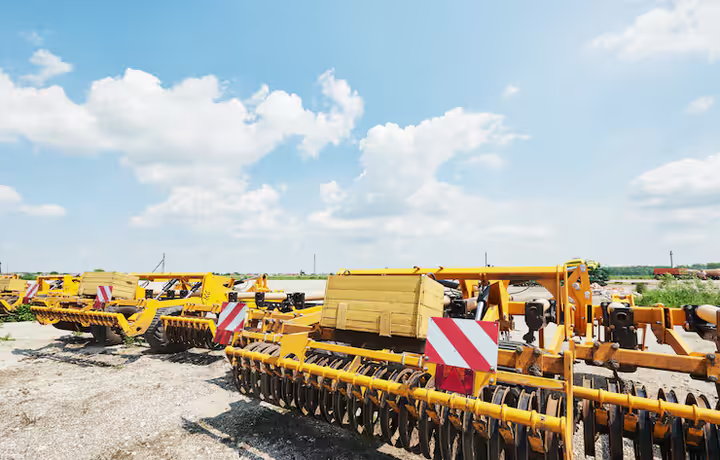
Agriculture
Certain agricultural operations may use rented machinery for land preparation, material movement, and seasonal activities.
Industrial Operations
Industrial facilities may rent forklifts, cranes, generators, and other equipment when temporary capacity is required.
Frequently Asked Questions About Heavy Equipment Rental
Is renting heavy equipment cheaper than buying?
Not necessarily. Rental can be financially practical for short-term or occasional use, while purchasing may make more sense when equipment is used frequently for many years. Businesses should compare the total costs of both options.
What is included in heavy equipment rental?
Inclusions vary by rental company and contract. The agreement may cover the machine itself, while transportation, fuel, attachments, insurance, and operator services may be charged separately.
Do I need insurance to rent heavy equipment?
Insurance requirements depend on the rental company, equipment, project, and location. Customers should confirm the required coverage before taking possession of the equipment.
Can I rent heavy equipment without an operator?
Some equipment can be rented on a self-operated basis, while certain machinery or projects may require qualified operators. Requirements depend on the equipment and applicable regulations.
How far in advance should heavy equipment be rented?
For commonly available equipment, short notice may sometimes be sufficient. Specialized machinery can have limited availability, so advance planning is generally advisable for larger or time-sensitive projects.
Conclusion
Heavy equipment rental can provide businesses and contractors with flexible access to machinery without requiring immediate ownership of expensive equipment. Excavators, bulldozers, loaders, cranes, forklifts, and other machines can support a wide range of construction, industrial, infrastructure, and development activities.
The most important factors are not simply the advertised rental rate. Businesses should evaluate the total rental cost, equipment specifications, transportation, insurance, maintenance responsibilities, contract terms, safety requirements, and expected utilization.
A well-planned rental decision can help a project use the right machinery while maintaining better control over equipment-related expenses.
For any major equipment rental or financing decision, businesses should review the applicable contract, insurance requirements, workplace regulations, and financial terms with the appropriate qualified professionals.