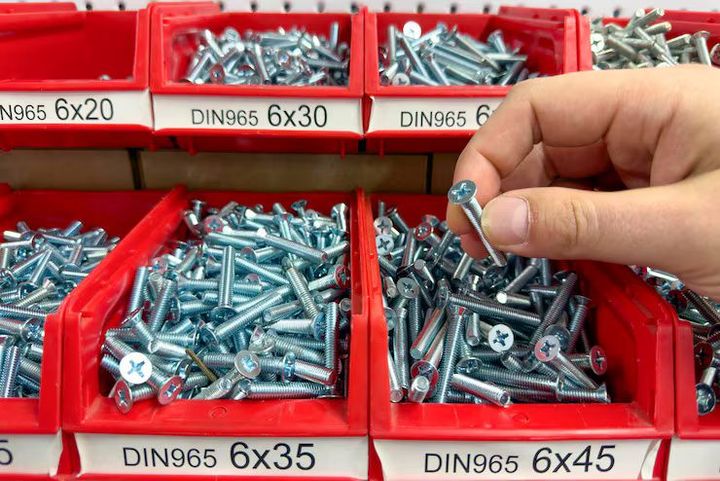
The importance of fasteners has increased with the complexity of modern engineering systems and the demand for durable and reliable assemblies. Proper selection of fasteners ensures structural integrity, safety, and long-term performance.
Recent trends include the development of high-strength alloys, corrosion-resistant coatings, and precision manufacturing techniques. These advancements improve durability and compatibility across various materials. Understanding fastener types, materials, and strength factors is essential for effective application and performance.
Who It Affects and What Problems It Solves
Industrial fasteners are used by engineers, manufacturers, construction professionals, and maintenance teams. These stakeholders rely on secure connections to ensure the stability and functionality of structures and equipment.
Without proper fasteners, assemblies may fail, leading to safety risks and operational issues. Fasteners provide reliable and repeatable joining solutions.
Problems It Helps Solve
-
Weak or unstable connections between components
-
Material incompatibility leading to corrosion or failure
-
Difficulty in assembly and disassembly
-
Reduced structural integrity
-
Increased maintenance and repair costs
-
Safety risks in mechanical systems
Recent Updates and Trends
In the past year, industrial fasteners have seen advancements in materials and manufacturing processes. High-strength alloys and composite materials are being used to improve load capacity and durability.
Surface coatings such as anti-corrosion and anti-friction treatments are enhancing performance in harsh environments. These coatings extend the lifespan of fasteners and reduce maintenance requirements.
Automation and precision manufacturing are improving the consistency and quality of fasteners. This ensures better fit and performance in critical applications.
Smart fasteners with embedded sensors are emerging, enabling monitoring of load, tension, and environmental conditions. These innovations support predictive maintenance and improve safety.
Sustainability is also influencing fastener production, with a focus on recyclable materials and energy-efficient manufacturing processes.
Types of Industrial Fasteners
| Fastener Type | Description | Application | Outcome |
|---|
| Bolts | Threaded fasteners used with nuts | Structural assembly | Strong connection |
| Screws | Threaded fasteners without nuts | General fastening | Ease of use |
| Nuts | Complementary components for bolts | Secure tightening | Stability |
| Washers | Flat components for load distribution | Prevent damage | Even pressure |
| Rivets | Permanent fasteners | Metal structures | Durable joints |
Each type serves a specific purpose in assembly processes.
Materials Used in Fasteners
| Material Type | Description | Advantages | Considerations |
|---|
| Carbon Steel | Common and cost-effective | High strength | Prone to corrosion |
| Stainless Steel | Corrosion-resistant | Durability | Higher cost |
| Alloy Steel | Enhanced strength properties | Heavy-duty applications | Specialized use |
| Aluminum | Lightweight material | Corrosion resistance | Lower strength |
| Brass | Non-corrosive and conductive | Electrical applications | Limited strength |
Material selection affects compatibility and performance.
Strength and Performance Factors
| Factor | Description | Importance | Result |
|---|
| Tensile Strength | Resistance to pulling force | Prevents failure | Structural integrity |
| Shear Strength | Resistance to sliding force | Ensures stability | Secure connection |
| Torque | Rotational force applied | Proper tightening | Reliable fastening |
| Fatigue Resistance | Ability to withstand repeated stress | Long-term durability | Reduced wear |
| Corrosion Resistance | Protection against environmental factors | Extends lifespan | Maintenance reduction |
These factors determine fastener reliability.
Material Compatibility Considerations
| Material Combination | Compatibility Level | Risk | Recommendation |
|---|
| Steel to Steel | High | Low corrosion | Standard use |
| Steel to Aluminum | Moderate | Galvanic corrosion | Use coatings |
| Stainless Steel to Steel | High | Minimal risk | Suitable for most applications |
| Aluminum to Aluminum | High | Low weight applications | Use proper torque |
Understanding compatibility prevents failure and damage.
Applications Across Industries
Industrial fasteners are used in various industries to ensure secure assembly and operation.
In construction, they are used to join structural components such as beams and frames. In automotive manufacturing, fasteners are used to assemble vehicles and ensure safety.
Aerospace applications require high-strength and lightweight fasteners for critical components. In electronics, small fasteners are used for precise assembly.
These applications highlight the versatility and importance of fasteners in engineering systems.
Maintenance and Best Practices
Proper maintenance is essential for ensuring fastener performance and longevity. Regular inspection helps identify loosening, corrosion, or damage.
Using the correct torque during installation prevents over-tightening or under-tightening. Applying protective coatings and lubricants improves durability.
Replacing worn or damaged fasteners ensures safety and reliability. Proper storage and handling also contribute to maintaining quality.
Training personnel in correct installation techniques enhances performance and reduces risks.
Laws and Policies Related to Fasteners
Industrial fasteners are subject to quality and safety standards that ensure reliability and performance. These standards define material specifications, testing procedures, and usage guidelines.
In India, manufacturing and construction industries must comply with relevant safety and quality regulations. These policies ensure safe and effective use of fasteners.
Practical Guidance Table
| Situation | Recommended Approach | Practical Benefit |
|---|
| High Load Applications | Use alloy or high-strength steel fasteners | Improved durability |
| Corrosive Environment | Use stainless steel or coated fasteners | Extended lifespan |
| Lightweight Structures | Use aluminum fasteners | Reduced weight |
| Maintenance Needs | Perform regular inspections | Prevent failure |
Tools and Resources for Fastener Management
Effective fastener management requires appropriate tools and resources.
Common Tools and Resources
-
Torque wrenches for precise tightening
-
Inspection tools for checking wear and alignment
-
Lubrication equipment
-
Storage systems for organization
-
Training materials for installation techniques
Tools Comparison Table
| Tool Type | Functionality | Best Use Case |
|---|
| Torque Wrenches | Apply controlled torque | Installation |
| Inspection Tools | Detect wear and damage | Maintenance |
| Lubrication Equipment | Reduce friction | Performance improvement |
| Storage Systems | Organize fasteners | Inventory management |
| Training Resources | Educate personnel | Skill development |
Frequently Asked Questions
What are industrial fasteners?
They are components used to join or secure materials in various applications.
What materials are used for fasteners?
Common materials include steel, stainless steel, aluminum, and brass.
Why is material compatibility important?
It prevents corrosion and ensures long-term performance.
How is fastener strength measured?
By factors such as tensile strength, shear strength, and torque.
Do fasteners require maintenance?
Yes, regular inspection and proper installation are essential.
Conclusion
Industrial fasteners are fundamental components in engineering and construction, providing secure and reliable connections between materials. Their types, materials, and strength characteristics determine their effectiveness in various applications.
Recent advancements in materials, coatings, and manufacturing processes have improved fastener performance and durability. These developments support more efficient and safe operations.
A data-driven approach indicates that selecting appropriate fasteners, ensuring material compatibility, and following best practices are key to achieving optimal results. By implementing these strategies, industries can enhance structural integrity, reduce maintenance costs, and ensure long-term reliability.