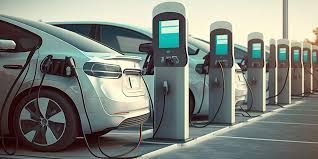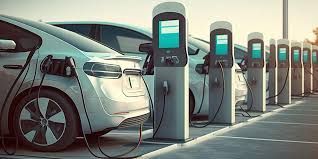
Fast EV Charging Explained: Complete Guide, Tips, Basics, Facts, and Everything You Need to Know.
Fast electric vehicle (EV) charging has become an essential part of the modern transition toward clean mobility. As more drivers switch from gasoline and diesel vehicles to electric models, the need for efficient and reliable charging solutions has grown rapidly. Fast EV charging refers to technology and infrastructure designed to replenish an electric vehicle’s battery much more quickly than traditional or slow chargers, making longer trips and day-to-day use more convenient for consumers, businesses, and fleets.
What Fast EV Charging Is and Why It Exists
Electric vehicles run on batteries that store electricity rather than burning fuel. Charging these batteries can be done at different speeds and power levels. Fast charging uses high-power direct current (DC) delivered straight to the vehicle’s battery, bypassing slower internal conversion systems found in home chargers. While a slow home charger might take many hours to fully charge a car, fast chargers can typically restore roughly 80% of battery capacity in 20–40 minutes, depending on vehicle and station power levels.
Fast charging exists to solve practical challenges:
-
Time efficiency: Reduces long waits for recharging, especially on highway trips.
-
Convenience: Supports drivers who cannot charge at home.
-
Range confidence: Lessens “range anxiety” by making quick stops possible nearly anywhere with infrastructure.
In the global EV ecosystem, fast charging is also classified into various power tiers (for example, 50 kW, 150 kW, 350+ kW) that determine how quickly charging can occur. Most newer public chargers are now positioned along highways and in urban hubs to serve a wide range of vehicles.
Why Fast EV Charging Matters Today
As EV adoption accelerates worldwide, fast charging matters for several key reasons:
Supporting broader EV use
Many drivers rely on public fast chargers when they travel long distances or do not have reliable access to home charging. The global stock of ultra-fast chargers (capable of 150 kW or more) has grown significantly as automakers and infrastructure operators push for broader coverage.
Economic and social impact
Fast charging affects not just individual EV owners but also:
-
Ride-hailing and delivery drivers who need quick turnaround times.
-
Commercial and logistics fleets that use electric trucks and vans.
-
Cities working to reduce emissions from road transport and improve air quality.
Smoother travel experiences
With infrastructure expanding, strategic placement of fast chargers along major corridors enables more predictable long-distance driving, much like fuel stations did for traditional vehicles.
Recent Trends and Updates (2025–2026)
The EV charging landscape continues to evolve quickly. Here are some notable developments:
-
Rapid infrastructure expansion in the U.S.: In 2025, the U.S. added tens of thousands of new public fast-charging ports, with an overall network exceeding 70,000 ports. Activity continued despite changes to federal incentives.
-
Collaborative networks in Europe: Four major EV charging firms formed a unified network offering ultra-fast charging (up to 400 kW) across 25 countries.
-
Fast charging growth in India: Indian states like Karnataka are planning 1,500 high-capacity charging stations under government schemes, while other regions are increasing DC fast charger placements on highways.
-
New charger technologies: Next-generation hardware capable of extremely high power levels (600 kW and more) is expected to roll out from 2026, likely boosting convenience for larger vehicles.
-
Policy shifts impacting deployment: Changes in government programmes, such as pauses or reviews of funding mechanisms in the U.S., affect how and where fast chargers are built.
How Laws, Standards, and Policies Shape Fast EV Charging
Government rules and guidelines strongly influence where fast chargers appear and how they operate. Here’s how policy frameworks make a difference:
National and regional infrastructure targets
-
European Union: Regulations require high-power charging stations (150 kW+) at regular intervals along core highway corridors.
-
United States: The National Electric Vehicle Infrastructure (NEVI) programme and other funding measures aim to place fast chargers every 50 miles along major interstate routes.
-
India: Schemes like FAME II and PM E-Drive support the rollout of EV charging points and encourage public-private partnerships.
Standards and interoperability
To ensure that chargers work reliably with many vehicle brands:
-
Standardised connectors like CCS and adoption of new standards (e.g., Tesla’s NACS supported in the U.S.) help reduce fragmentation.
-
Countries often adopt safety standards for chargers to reduce risks related to overheating or electrical faults. local markets, including India’s BIS certification requirements, reflect this growing emphasis.
Grid and energy regulations
Smart charging, bi-directional charging (V2G), and renewable electricity integration are increasingly part of policy discussions, especially in Europe, where regulators are encouraging grid-friendly charging solutions.
Tools and Resources for EV Charging
Drivers and planners have access to a range of helpful tools and information sources:
Apps for locating fast chargers
-
PlugShare: A mapping and community feedback app showing chargers worldwide with filters for speed and connector type.
-
ChargeHub: Provides real-time availability, power levels, and station details (especially useful in North America).
-
Google Maps: Built-in EV charger discovery and route planning features help drivers plan charging stops.
Planning and monitoring tools
-
EV route planners: Specialized websites and apps calculate optimal charging stops for long journeys based on battery range and station locations.
-
Station network portals: Operators often offer web dashboards with real-time status, network maps, and service alerts.
Educational and policy resources
-
IEA’s Global EV Outlook: Offers annual data and forecasts for charging infrastructure and EV growth.
-
Government portals where national schemes and technical guidelines are published, such as ministries of transportation or energy.
Frequently Asked Questions (FAQs)
What is the difference between Level 2 and fast charging?
Level 2 chargers deliver alternating current (AC) at moderate power (up to ~22 kW) and are common in homes and workplaces. Fast chargers use direct current (DC) at much higher power (50 kW and above), reducing charging times to under an hour.
Can all EVs use fast charging?
No. Not all EVs support every type of fast charger. Always check your vehicle’s maximum charging rate and accepted connector types before relying on a particular station.
Does fast charging damage the battery?
Modern EVs manage battery health with built-in systems that control temperature and charging speed. Occasional fast charging is generally safe, but frequent use at maximum speeds can incrementally affect battery life compared to slower, gentler charging.
Why don’t stations always work when I arrive?
Some stations may be offline due to network issues, hardware faults, or maintenance. Charger reliability varies by region and provider, so planning ahead and having alternatives helps.
How should I plan fast charging on a long trip?
Use mapping tools to identify chargers with suitable power levels along your route, allow buffer time for queuing, and aim for charge stops when your battery is lower (e.g., 20–30%) to maximise effective charging speed.
Conclusion
Fast EV charging is a foundational technology for the electric vehicle ecosystem. It exists to make electric mobility practical, convenient, and increasingly widespread. As infrastructure grows, supported by national policies and global investment, drivers can expect progressively more accessible and powerful charging options. While challenges such as standardisation and charger reliability remain, the rapid expansion of networks and uptake of new technologies signal a transforming transportation landscape.
Disclaimer: This article is educational and informational in nature. Charging availability, prices, and infrastructure details vary by region and change over time. Always consult local authorities, manufacturers, and certified experts for the most current information.