Family Vacation Planning Guide: Basics, Tips, Facts, and Travel Information
Family vacation planning means organizing a trip in a way that works for different age groups, routines, comfort needs, travel documents, safety requirements, and daily schedules. A family trip is different from solo travel because it may include children, parents, grandparents, or relatives with different needs.
The purpose of family vacation planning is to reduce confusion before and during travel. A clear plan helps families understand where they are going, what documents are needed, what to pack, how to arrange daily activities, and how to handle unexpected changes.
Family travel exists because travel is often connected with rest, bonding, learning, cultural exposure, and shared memories. For children, travel can provide new experiences outside regular school and home routines. For adults, it can create structured time with family members away from daily responsibilities.
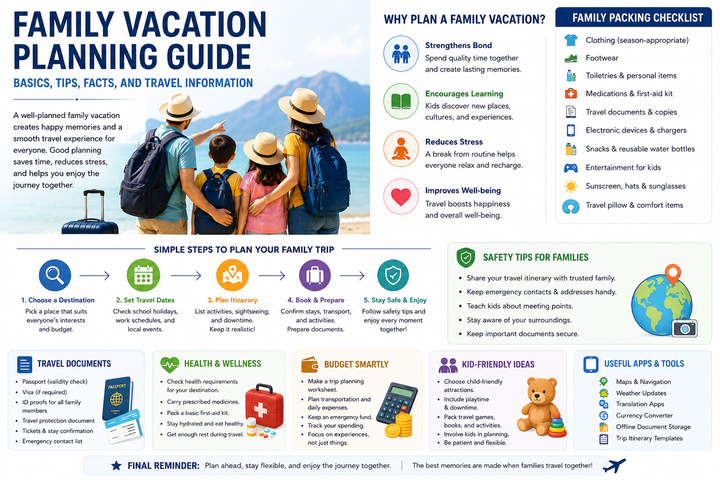
A family vacation plan usually includes:
- Destination research
- Travel document review
- Packing checklist
- Itinerary planning
- Health and safety preparation
- Stay suitability review
- Local movement planning
- Weather and season check
- Emergency contact list
- Travel protection document information
Family vacation planning is not about making the trip complicated. It is about creating enough structure so that the travel experience remains manageable.
Why Family Vacation Planning Matters Today
Family vacation planning matters because modern travel involves more decisions than before. Families may need to compare destinations, school calendars, work schedules, health needs, travel documents, weather conditions, local rules, and child-friendly activities.
The 2025 Family Travel Survey by NYU School of Professional Studies reported strong family travel intent, with 92% of parents saying they were likely to travel with their children in the next year. The same survey also highlighted the growing role of children in family travel choices.
Family vacation planning affects:
- Parents planning travel with children
- Grandparents joining multi-generation trips
- Children with school schedules
- Families with infants or toddlers
- Families with special health needs
- Working adults coordinating leave dates
- Students planning educational travel
- Families preparing for domestic or international travel
Good planning can help solve common travel problems:
- Missed documents
- Overpacked or underprepared luggage
- Too many activities in one day
- Unclear local movement plans
- Weather-related disruption
- Child fatigue during travel
- Food and routine challenges
- Limited rest time
- Confusion during airport or station movement
| Planning Area | Why It Matters | Practical Example |
|---|---|---|
| Documents | Avoids travel disruption | Passport, ID, consent records |
| Packing | Reduces last-minute stress | Medicines, clothing, child items |
| Itinerary | Balances activity and rest | One major activity per day |
| Safety | Helps in emergencies | Contact list, location sharing |
| Health | Supports travel readiness | Prescriptions, allergy notes |
| Weather | Helps with clothing and timing | Rainwear, sun protection |
Family travel also matters because more families are considering trips with multiple generations. When grandparents, parents, and children travel together, the planning needs become broader. Families may need slower schedules, accessible spaces, rest periods, and activities suitable for different ages.
Recent Updates and Travel Trends
Family travel trends in 2025 and 2026 show greater attention toward flexibility, shared experiences, safety preparation, and practical planning.
One major trend is the rise of “kidfluence,” where children influence destination and activity choices. The 2025 Family Travel Survey highlighted children’s role in family travel decisions, along with strong interest in group travel and experience-led trips.
Another trend is multi-generation travel. Families are increasingly planning trips where grandparents, parents, and children travel together. This creates the need for slower schedules, accessible spaces, larger rooms or connected stay arrangements, dietary planning, and activity options for different ages.
Travel planning tools are also becoming more digital. Families now commonly use map apps, shared calendars, weather apps, translation tools, offline document folders, and digital notes to coordinate trip information. This is useful because family travel often involves many connected details.
Illustrative trend view:
Family travel intent        ██████████
Child-led preferences       ████████
Multi-generation trips      ████████
Digital planning tools      █████████
Flexible itineraries        █████████
Safety preparation          ██████████
This chart is illustrative and not a measured ranking.
| Trend | What It Means | Family Planning Impact |
|---|---|---|
| Child-influenced planning | Children help shape activity choices | Include age-suitable options |
| Multi-generation trips | More age groups travel together | Plan rest, access, and comfort |
| Digital itineraries | Apps help organize plans | Keep offline copies too |
| Flexible schedules | Families avoid overloading days | Add buffer time |
| Safety awareness | More attention to preparation | Keep medical and contact details ready |
A practical family travel plan should not be too rigid. Families often benefit from a flexible structure: fixed travel dates, essential documents, basic daily outline, and enough open time for rest.
Laws, Policies, and Travel Rules in India
The country context here is India. Family vacation planning in India is affected by passport rules, identity documents, child travel requirements, airline rules, health guidance, and destination-specific regulations.
For international travel, passports are important for adults and minors. The Passport Seva portal states that for minor applicants, present address proof documents in the name of parents can be submitted, and consent of both parents is assumed unless specified.
Passport Seva also explains that in special cases, the online passport application form permits the applicant to provide the name of the father, mother, or legal guardian, meaning only one parent may be listed where applicable.
For foreign travel from India, travelers should review valid passport requirements, visa requirements where applicable, airline rules, and destination entry conditions. A PRS summary of the Immigration and Foreigners Bill, 2025 states that persons entering or departing from India must have valid travel documents, and foreigners require valid visa documentation where applicable.
Families should review:
- Passport validity
- Visa requirements where applicable
- Child identity documents
- Airline minor rules
- Destination entry conditions
- Health advisories
- Local transport rules
- Travel protection document information
- Emergency contact details
- School calendar and leave requirements
| Rule Area | Family Relevance |
|---|---|
| Passport rules | Important for adults and minors |
| Minor travel documents | Relevant when one parent or guardian travels |
| Visa rules | Required for many international destinations |
| Airline child policies | May differ by age and route |
| Health guidance | Important for medicines and vaccinations |
| Local rules | May affect transport, safety, and public spaces |
For domestic travel in India, families should still carry valid ID documents, check destination-specific advisories where relevant, and confirm local rules for protected areas, wildlife zones, temples, museums, or heritage locations.
Tools and Resources for Family Vacation Planning
Family vacation planning becomes easier when information is organized in one place. The following tools and resources can help families prepare without creating confusion.
Planning tools
- Family travel checklist
- Packing checklist
- Travel itinerary template
- Weather tracker
- Shared calendar
- Emergency contact sheet
- Medication list
- Travel protection document sheet
- Document folder
- Trip planning worksheet
- Child activity planner
- Family meal preference list
Useful apps and digital tools
- Map apps for routes
- Weather apps
- Translation apps
- Airline apps
- Calendar apps
- Notes apps
- Offline document storage
- Location sharing tools
- Public transport apps
- Currency converter apps for international travel
Important document checklist
- Passport
- Visa documents where applicable
- Aadhaar or approved ID for domestic travel
- Child identity records
- Tickets or reservation details
- Stay confirmation record
- Travel protection document
- Medical prescriptions
- Emergency contact list
- School-related permission record where needed
Packing checklist for families
- Weather-suitable clothes
- Comfortable footwear
- Basic medicines
- Prescription medicines
- Child snacks
- Reusable water bottle
- Chargers and power bank
- Copies of key documents
- Travel pillow
- Hygiene items
- Sun protection
- Light entertainment for children
Practical Family Vacation Planning Tips
A practical family travel plan should balance activities, rest, and flexibility.
Keep the itinerary realistic
Avoid planning too many activities in a single day. Children and older adults may need more rest time. A simple plan with one main activity and one light activity per day is often easier to manage.
Check weather before packing
Weather can affect clothing, local movement, sightseeing, and outdoor activity planning. Families should review day and night temperatures, rain chances, and local seasonal patterns.
Plan around meal routines
Children and older adults may need regular meal timing. Keeping simple snacks and water available can help during long travel periods.
Keep documents organized
Use one digital folder and one physical folder for important documents. Make sure more than one adult knows where key papers are kept.
Prepare for health needs
Carry prescriptions, allergy notes, and basic medical information. For international travel, review destination health guidance before departure.
Create a child safety plan
Children should know the names of parents or guardians, stay location, and what to do if separated in a crowded area. Younger children can carry a small ID card with guardian contact details.
Add buffer time
Family travel often takes longer than expected. Extra time between activities can reduce stress and make delays easier to handle.
Use simple daily notes
A short daily note can include route, meal plan, clothing needs, activity timing, and emergency contacts. This helps all adults understand the plan.
Sample Family Travel Planning Table
| Task | Suggested Timing | Notes |
|---|---|---|
| Check documents | Early planning stage | Review passport, ID, and travel papers |
| Review weather | Before packing | Check both day and night conditions |
| Create packing list | Several days before travel | Separate child, adult, and medical items |
| Prepare emergency contacts | Before departure | Keep digital and printed copies |
| Plan daily activities | Before travel | Avoid overloading the schedule |
| Save offline copies | Before departure | Useful when network access is limited |
Common Questions
What is family vacation planning?
Family vacation planning is the process of organizing travel details such as destination, documents, packing, local movement, safety, health needs, and daily activities for a family trip.
How early should a family start planning a vacation?
The timeline depends on destination, season, school calendar, passport or visa needs, and group size. International trips usually need earlier document review than short domestic trips.
What documents are important for family travel?
Common documents include passports, visas where applicable, domestic ID, child identity records, travel protection documents, medical prescriptions, tickets, and emergency contact details.
How can families make travel easier with children?
Families can keep the schedule simple, pack child-friendly essentials, allow rest time, carry snacks, keep documents organized, and prepare children for the journey in advance.
Why is a flexible itinerary useful?
A flexible itinerary helps families manage delays, tiredness, weather changes, and unexpected needs. It also allows more rest time for children and older adults.
Information Notice
This article is for general educational purposes only. It does not provide legal, immigration, medical, financial, or personal travel advice. Travel rules, passport requirements, visa conditions, airline procedures, and destination regulations can change. Families should verify official guidance before making travel decisions.
Conclusion
Family vacation planning helps families organize travel in a structured and calm way. It is useful because family trips involve different ages, routines, documents, health needs, comfort levels, and safety considerations.
Recent trends show strong family travel interest, growing child influence in trip choices, multi-generation travel, and more digital planning. At the same time, travel rules, documents, airline policies, and safety preparation remain important.
A good family vacation plan does not need to be complex. It should cover the basics: destination research, documents, packing, itinerary, health needs, safety contacts, and flexible daily planning. With clear preparation, families can focus more on shared experiences and less on avoidable confusion.