Digital Wallet Software Explained: Features, Architecture, Security, APIs & Fintech Technology
Digital wallet software is a technology system that enables users to manage digital payment credentials, balances, transactions, and financial interactions through mobile applications, websites, or connected platforms.
Unlike a simple payment application, modern wallet software can include multiple interconnected components. These may include account management, payment processing, digital ledgers, authentication, QR payments, transaction histories, API integrations, fraud monitoring, notifications, analytics, and administrative controls.
The software works as an interface between users and the underlying financial infrastructure. Depending on its design, it can connect with banks, payment networks, payment processors, card systems, identity platforms, and other fintech technologies.
What Is Digital Wallet Software?
Digital wallet software is a collection of applications, backend systems, databases, APIs, and security mechanisms that manage electronic wallet functionality.
A typical architecture may include:
- Mobile or web application
- User account system
- Wallet and balance management
- Digital ledger
- Payment-processing engine
- API gateway
- Authentication system
- Fraud detection
- Transaction monitoring
- Notification system
- Reporting and analytics
- Administrative dashboard
- External financial integrations
The visible wallet application represents only the frontend portion. Most transaction processing, validation, security checks, and data management happen within backend systems.
How Digital Wallet Software Works
A simplified digital wallet transaction can follow this workflow:
User → Wallet Application → API → Authentication → Transaction Engine → Risk Checks → Payment Infrastructure → Ledger → Notification
For example:
- A user initiates a transaction.
- The application sends the request to the wallet API.
- The platform authenticates the request.
- Account and transaction rules are checked.
- Risk and fraud controls evaluate the activity.
- The transaction is routed to the appropriate payment infrastructure.
- A response is received.
- The wallet ledger records the financial event.
- The transaction status is updated.
- The user receives a confirmation.
The exact workflow varies according to the wallet model, payment method, jurisdiction, and external financial integrations.
Core Features of Digital Wallet Software
User Account Management
Digital wallet software normally includes account creation, authentication, profile management, device registration, account recovery, and access controls.
User-management systems should separate ordinary profile operations from sensitive financial actions wherever appropriate.
Digital Wallet and Balance Management
The wallet component manages account balances and financial events.
A robust ledger can record:
- Credits
- Debits
- Transfers
- Refunds
- Reversals
- Holds
- Adjustments
- Transaction references
Instead of relying only on a single balance field, financial systems generally require traceable transaction records for reconciliation and auditing.
Payment Processing
Depending on the platform, wallet software can support multiple payment methods.
These may include:
- Bank-linked payments
- Cards
- QR payments
- Account transfers
- Digital payment credentials
- In-app payment flows
- Recurring transactions
Available payment methods depend on the underlying infrastructure and applicable regulations.
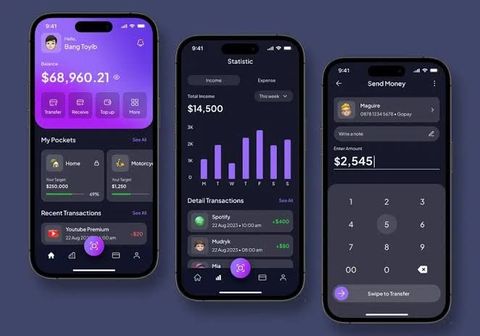
Peer-to-Peer Transfers
P2P functionality allows supported users to transfer funds between accounts.
The software can manage:
- Sender verification
- Recipient identification
- Amount validation
- Authentication
- Transaction limits
- Risk checks
- Transaction authorization
- Ledger updates
- Confirmation
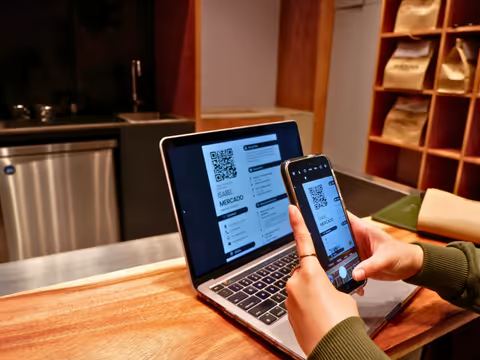
QR Code Payments
QR functionality allows users to scan or present a machine-readable code during a payment.
A QR-based transaction may contain information related to:
- Payment destination
- Recipient
- Amount
- Transaction reference
- Merchant information
Static and dynamic QR implementations can support different transaction workflows.
Transaction History
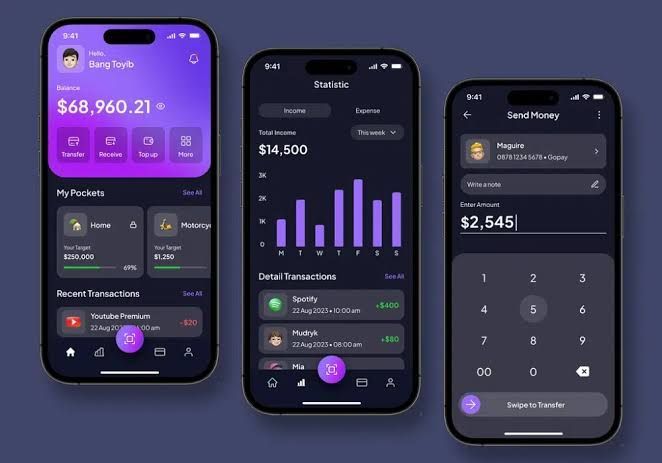
A wallet should provide clear records of previous transactions.
Information may include:
- Date
- Time
- Amount
- Transaction type
- Status
- Reference number
- Payment destination
- Payment method
Search and filtering capabilities become increasingly useful as transaction volume grows.
Notifications
Wallet software can generate alerts for:
- Completed transactions
- Failed transactions
- Account changes
- Login attempts
- Verification events
- Security alerts
- Transaction reversals
Notifications may be delivered through push notifications, email, SMS, or in-app messaging.
Digital Wallet Software Architecture
A wallet architecture can be divided into several logical layers.
1. Presentation Layer
This is the user-facing portion of the software.
It can include:
- Android applications
- iOS applications
- Web applications
- Administrative dashboards
2. API Layer
The API layer connects the frontend with backend functionality.
It can handle requests involving:
- Authentication
- Wallet accounts
- Payments
- Transfers
- Transaction history
- Notifications
- User profiles
3. Business Logic Layer
This layer controls the rules governing wallet operations.
Examples include:
- Transaction validation
- Account status
- Payment limits
- Eligibility rules
- Refund workflows
- Transaction states
- Risk decisions
4. Transaction Processing Layer
This component manages transaction workflows and communication with external financial systems.
It may coordinate multiple steps before a transaction reaches its final state.
5. Ledger Layer
The ledger maintains financial records and provides the foundation for reconciliation.
Ledger architecture is especially important because financial events must remain traceable.
6. Security Layer
Security mechanisms can include:
- Authentication
- Authorization
- Encryption
- Tokenization
- Fraud detection
- Device controls
- Audit logging
7. Data Layer
The data layer stores information such as:
- User profiles
- Transaction metadata
- Ledger records
- Device information
- Audit events
- Configuration information
Digital Wallet Software Technology Stack
A wallet platform typically combines multiple technologies.
| Layer | Common Technology Categories |
|---|---|
| Mobile | Android, iOS, cross-platform frameworks |
| Web | Modern web frameworks |
| Backend | Java, Python, Go, JavaScript, C# and similar technologies |
| APIs | REST, event-driven APIs, webhooks |
| Database | Relational and specialized databases |
| Cache | In-memory caching systems |
| Messaging | Message queues and event streaming |
| Cloud | Compute, storage, networking and monitoring |
| Security | Encryption, authentication, tokenization |
| Analytics | Data platforms and reporting systems |
The appropriate technology depends on transaction volume, architecture, integration requirements, regulatory environment, and operational needs.
APIs in Digital Wallet Software
APIs are one of the most important components of modern wallet software.
They allow the wallet application to communicate with internal systems and external financial infrastructure.
Common Wallet APIs
A platform may provide APIs for:
- User registration
- Authentication
- Wallet creation
- Balance information
- Payment initiation
- Fund transfers
- Transaction history
- Refunds
- QR generation
- Card tokenization
- Identity verification
- Notifications
- Reporting
API Authentication
Financial APIs require strong authentication and authorization controls.
Possible mechanisms include:
- OAuth-based authorization
- API keys
- Access tokens
- Signed requests
- Cryptographic signatures
- Mutual TLS
- Role-based permissions
Sensitive operations may require additional verification.
API Gateway
An API gateway can act as a controlled entry point for wallet APIs.
It may handle:
- Authentication
- Rate limiting
- Request validation
- Routing
- Logging
- Monitoring
- Access policies
This can help standardize how applications communicate with backend systems.
Webhooks
Webhooks allow external systems to send event notifications to wallet software.
For example, an external payment system may notify the wallet when a transaction moves from pending to completed.
This reduces the need for repeated status requests.
Digital Wallet Security
Security is fundamental because wallet software may process financial information, payment credentials, and personal data.
Encryption
Encryption protects information during transmission and, where appropriate, while stored.
Secure transport protocols such as TLS are commonly used for communication between applications and backend systems.
Encryption should be supported by proper key management, access controls, monitoring, and secure development practices.
Tokenization
Tokenization replaces sensitive payment information with a token.
The token can then be used in supported transaction processes without repeatedly exposing the underlying payment credential.
Tokenization can reduce sensitive-data exposure, but it does not automatically eliminate security or regulatory responsibilities.
Multi-Factor Authentication
Multi-factor authentication can combine several verification factors:
- Password or PIN
- One-time code
- Biometric verification
- Trusted device
- Cryptographic credentials
The authentication approach should reflect transaction risk and applicable requirements.
Device Security
Wallet applications can monitor device-related signals such as:
- Device registration
- Device changes
- Application integrity
- Login behavior
- Session activity
- Unusual device patterns
These signals can contribute to risk evaluation.
Fraud Detection
Fraud-management systems can analyze:
- Transaction frequency
- Amount patterns
- Device behavior
- Login activity
- Account history
- Recipient relationships
- Failed authentication
- Unusual transaction patterns
Rule-based controls and machine-learning models can be combined for risk monitoring.
Role of AI in Digital Wallet Software
Artificial intelligence is increasingly relevant to fintech software.
Fraud Detection
Machine-learning models can identify transaction patterns that differ from expected account behavior.
Behavioral Analysis
AI systems can analyze activity patterns to identify unusual changes.
Risk Evaluation
Multiple signals can be combined to generate risk indicators for transactions or accounts.
Customer Assistance
AI assistants can help explain transaction statuses, common wallet functions, and account processes.
Transaction Monitoring
Large transaction datasets can be analyzed for unusual patterns and potential risk signals.
AI should operate alongside authentication, authorization, monitoring, security testing, and appropriate human oversight.
Digital Wallet Integrations
Wallet software rarely operates in isolation.
It may connect with:
- Banks
- Payment processors
- Card networks
- Payment gateways
- Identity verification systems
- Fraud-monitoring platforms
- Notification platforms
- Accounting systems
- Analytics platforms
- Regulatory reporting systems
A modular integration architecture can make it easier to introduce or replace external components.
Digital Wallet Software and Payment Gateways
A payment gateway generally provides technology for transmitting payment information and communicating with payment-processing infrastructure.
Wallet software can sit above or alongside this infrastructure.
A simplified architecture may look like:
Wallet App → Wallet Backend → Payment Gateway → Payment Network → Financial Institution
The exact architecture depends on the payment method and platform design.
Types of Digital Wallet Software
Closed Wallet Software
Closed wallet software is designed for use within a particular ecosystem.
Semi-Closed Wallet Software
Semi-closed systems can support transactions across a defined network of participating entities.
Open Wallet Software
Open wallet systems can support broader payment functionality and may interact with regulated financial infrastructure.
Mobile Wallet Software
Mobile wallet software is optimized for smartphones and may support payments, digital credentials, QR functionality, tickets, or loyalty features.
Web Wallet Software
Web-based wallets operate through browsers and can be integrated into online platforms.
Enterprise Wallet Software
Enterprise-oriented wallet systems may support business transactions, controlled spending, partner settlements, or internal financial workflows.
Digital Wallet Software vs Mobile Banking Software
| Area | Digital Wallet Software | Mobile Banking Software |
|---|---|---|
| Wallet balance | Common | May connect directly to bank accounts |
| Payment credentials | Often supported | Bank-controlled |
| P2P payments | Common | Common |
| QR payments | Often supported | Often supported |
| Bank account management | May be limited | Core functionality |
| External payment integrations | Often important | Usually controlled by bank infrastructure |
| Third-party APIs | Frequently used | Usually more tightly controlled |
| Financial products | Depends on platform | Often broader |
The distinction can vary depending on the institution and jurisdiction.
Digital Wallet Software Development Process
Requirements Planning
The first stage is defining:
- Target users
- Payment methods
- Transaction types
- Supported regions
- Integration requirements
- Security expectations
- Regulatory obligations
Architecture Planning
Technical teams define the application, API, database, transaction, ledger, security, and integration architecture.
UI and UX Design
Important user flows include:
- Registration
- Authentication
- Payment-method management
- Payment initiation
- Transfers
- Transaction history
- Failed transaction handling
- Account recovery
Backend Development
Backend components can include:
- User management
- Wallet management
- APIs
- Transaction processing
- Ledger systems
- Integration modules
- Notification systems
Security Implementation
Security controls can be incorporated across the complete architecture.
These may include:
- Encryption
- Tokenization
- Authentication
- Authorization
- Fraud monitoring
- Secure logging
- Access management
Testing
Testing can include:
- Functional testing
- API testing
- Integration testing
- Security testing
- Performance testing
- Load testing
- Mobile testing
- Recovery testing
Deployment and Monitoring
After deployment, teams monitor:
- Application availability
- API performance
- Transaction status
- Security events
- System errors
- Infrastructure health
- Reconciliation
Transaction Reliability and Idempotency
Financial transactions require careful handling of duplicate requests.
For example, a user might tap a payment button twice because the first request appears to be taking too long.
If the backend processes both requests independently, duplicate transactions could occur.
Idempotency mechanisms allow the platform to recognize repeated requests and prevent unintended duplicate processing.
Other reliability mechanisms may include:
- Transaction state management
- Retry policies
- Timeouts
- Queue-based processing
- Reconciliation
- Error handling
- Event tracking
These mechanisms are important when wallet software communicates with external systems that may respond slowly or temporarily become unavailable.
Digital Wallet Data Management
Wallet platforms process several types of data.
Identity Data
May include:
- Name
- Contact details
- Verification information
- Account identifiers
Transaction Data
May include:
- Amount
- Timestamp
- Transaction reference
- Status
- Payment method
- Sender or recipient information
Device Data
May include:
- Device identifiers
- Application information
- Session information
- Security signals
Technical Logs
These may include:
- API requests
- System events
- Authentication events
- Errors
- Security alerts
Sensitive data should be collected and retained according to applicable privacy and regulatory requirements.
Compliance Considerations
Digital wallet software can involve several regulatory and technical areas:
- Customer identification
- Transaction monitoring
- Data protection
- Payment security
- Authentication
- Consumer protection
- Financial reporting
- Record retention
- Cybersecurity
- Third-party technology controls
For environments involving payment account data, PCI DSS is an important security standard. Other requirements may apply depending on the wallet's structure, geography, payment methods, and regulated entities involved.
In India, digital wallet and payment activities can also involve requirements from the Reserve Bank of India (RBI) and other applicable authorities. The exact obligations depend on the business model and the regulated activity.
Organizations should verify current requirements with relevant authorities and qualified compliance professionals before deployment.
Digital Wallet Software Security Architecture
A mature security architecture can follow a layered model.
Identity Layer
Controls user identity and authentication.
Access Layer
Determines which users, applications, and internal systems can access specific functions.
Data Protection Layer
Protects sensitive information through encryption, tokenization, access controls, and secure storage.
Transaction Layer
Monitors and validates financial operations.
Monitoring Layer
Tracks suspicious activities, system anomalies, and security events.
Audit Layer
Maintains records that support investigation, reconciliation, and accountability.
This layered approach helps reduce reliance on a single security mechanism.
Important Factors When Evaluating Digital Wallet Software
Scalability
Can the system handle increasing transaction volumes?
Reliability
Can it recover correctly from failed or delayed transactions?
Security
Does the architecture provide strong authentication, encryption, authorization, monitoring, and fraud controls?
API Capability
Are APIs documented, versioned, monitored, and protected?
Integration Flexibility
Can the platform connect with required banks, payment networks, identity systems, and other technologies?
Ledger Integrity
Can financial events be accurately recorded and reconciled?
Data Protection
Does the platform appropriately manage personal and financial information?
Observability
Are logs, metrics, alerts, and traces available for technical monitoring?
Recent Trends in Digital Wallet Technology
Tokenized Payment Credentials
Tokenization continues to support payment-security architectures by reducing direct exposure of sensitive credentials.
Real-Time Payment Infrastructure
Faster payment networks require wallet software to process transaction requests, responses, and status changes quickly.
Embedded Payments
Payment functionality can increasingly be integrated directly into digital platforms and applications.
API-Driven Finance
APIs enable wallets to connect with broader financial ecosystems and specialized technology providers.
AI-Based Risk Monitoring
Machine-learning techniques can analyze large volumes of transaction data for unusual patterns.
Digital Identity
Some wallet ecosystems are expanding beyond payment functionality toward digital credentials and identity-related capabilities.
Cloud-Native Architecture
Cloud infrastructure can provide flexible computing, monitoring, data processing, and deployment capabilities when designed with appropriate security and resilience controls.
Tools and Resources for Digital Wallet Technology
Useful technology resources can include:
- API documentation platforms
- Payment-network documentation
- Authentication frameworks
- Encryption libraries
- Tokenization technologies
- API gateways
- Cloud infrastructure
- Database systems
- Message queues
- Fraud-monitoring platforms
- Security testing tools
- Monitoring and observability platforms
- Financial compliance resources
- PCI Security Standards Council resources
- RBI regulatory resources for India-specific payment activities
FAQs
What is digital wallet software?
Digital wallet software is a technology system that manages electronic wallets, payments, transactions, account information, security controls, and integrations with financial infrastructure.
What are the main components of wallet software?
Common components include a mobile or web application, APIs, backend systems, transaction processing, a digital ledger, databases, authentication, security controls, fraud monitoring, and external payment integrations.
Why are APIs important for digital wallets?
APIs allow wallet applications to communicate with backend systems and external financial infrastructure. They can support payments, transfers, authentication, account information, notifications, and transaction updates.
How is digital wallet software secured?
Security can involve encryption, tokenization, multi-factor authentication, authorization, device controls, fraud detection, secure APIs, monitoring, audit trails, and continuous security testing.
Can digital wallet software use artificial intelligence?
Yes. AI can support fraud detection, behavioral analysis, transaction monitoring, risk evaluation, and user assistance.
Conclusion
Digital wallet software combines application development, payment technology, APIs, transaction processing, digital ledgers, security architecture, and financial integrations into one interconnected technology ecosystem.
The visible mobile or web interface is only one component. Behind it are transaction engines, APIs, databases, authentication systems, security controls, fraud monitoring, payment integrations, and ledger systems that coordinate financial activities.
As fintech technology continues to evolve, digital wallet software is becoming increasingly connected with tokenization, real-time payments, API-based finance, artificial intelligence, cloud infrastructure, and digital identity technologies.
Understanding the architecture and security principles behind wallet software is useful for anyone researching modern payment technology, fintech infrastructure, or digital financial platforms.
Disclaimer
This article is provided for general educational and informational purposes only. It is not financial, legal, regulatory, cybersecurity, or professional advice and is not intended to promote any particular company, platform, product, or financial decision. Digital payment technologies, regulations, security standards, and platform capabilities can change over time and vary by jurisdiction. Always verify current requirements with relevant authorities, payment networks, standards organizations, and qualified professionals before implementing or using financial technology.