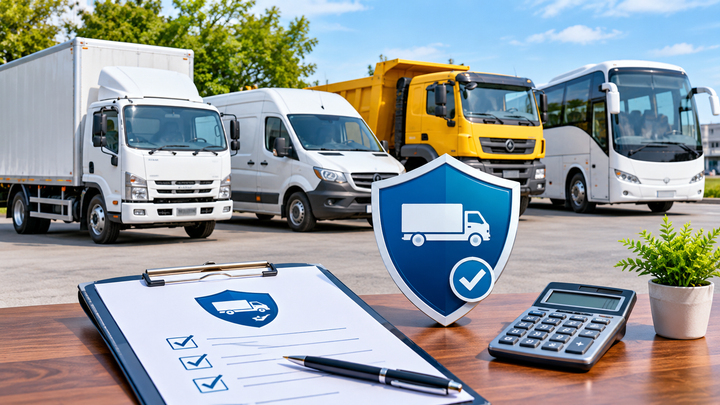
Commercial Vehicle Insurance Explained: Types, Coverage, Claims
Commercial vehicle insurance is a motor insurance policy designed to protect vehicles used for business and commercial activities against specified financial and legal liabilities.
It can cover trucks, taxis, buses, goods carriers, delivery vans, and other business vehicles against third-party claims and, depending on the policy, damage to the insured vehicle.
In India, third-party motor insurance is mandatory for commercial vehicles used in public places. Understanding the available policy types, coverage options, exclusions, premium factors, and claim procedures helps business owners manage vehicle-related risks and maintain regulatory compliance.
Quick Facts About Commercial Vehicle Insurance
Feature | Description |
|---|---|
Insurance category | Commercial motor insurance |
Primary purpose | Protect commercial vehicles and manage accident-related liabilities |
Main users | Transport operators, businesses, fleet owners, and commercial drivers |
Common vehicles | Trucks, buses, taxis, vans, and goods carriers |
Mandatory coverage | Third-party liability insurance |
Optional protection | Own-damage and additional coverage |
Main risks covered | Accidents, third-party injury, property damage, and eligible vehicle losses |
Regulatory authority | Insurance Regulatory and Development Authority of India |
Relevant legislation | Motor Vehicles Act, 1988 |
Claim process | Insurer assessment and applicable settlement procedures |
What Is Commercial Vehicle Insurance?
Commercial vehicle insurance is a specialized motor insurance arrangement for vehicles used to transport passengers, carry goods, provide transportation-related activities, or support business operations.
Unlike ordinary private car insurance, commercial vehicle insurance considers the nature of business use, vehicle category, operating conditions, and associated risks.
For example, a logistics company operating several delivery trucks faces different risks from a business using a single commercial taxi. The policy must reflect the vehicle's registered classification and permitted usage.
Commercial motor insurance generally provides two primary forms of protection:
Third-party liability: Covers eligible legal liabilities arising from injury, death, or property damage caused to another party.
Own-damage protection: Covers specified damage or loss involving the insured commercial vehicle, subject to policy conditions.
The appropriate coverage depends on the vehicle type, business activity, insurance requirements, and selected policy structure.
Why Commercial Vehicle Insurance Matters
Commercial vehicles are exposed to operational risks because they frequently travel on public roads, carry passengers or goods, and operate under different environmental and traffic conditions.
An accident involving a commercial vehicle can create financial liabilities, vehicle repair expenses, business interruptions, and compensation claims.
Commercial vehicle insurance helps businesses manage these risks through several forms of protection.
Legal compliance: Helps businesses meet mandatory motor insurance requirements.
Third-party liability protection: Covers eligible liabilities involving other road users.
Vehicle damage protection: Comprehensive or package policies can cover specified damage to insured vehicles.
Passenger-related protection: Applicable policy extensions may address certain passenger or occupant liabilities.
Business continuity: Own-damage coverage may reduce the financial impact of eligible vehicle losses.
Fleet risk management: Businesses can organize insurance protection for multiple commercial vehicles.
Financial planning: Insurance helps businesses manage uncertain accident-related expenses.
Insurance does not eliminate operational risks. Businesses must also maintain vehicles, follow transport regulations, and ensure that drivers have appropriate licences.
Understanding Commercial Vehicle Insurance
Simple Explanation
Consider a logistics company operating a fleet of delivery trucks. One truck accidentally collides with another vehicle while transporting goods.
The accident may create several financial responsibilities:
Damage to the other vehicle.
Injury to another road user.
Damage to the insured truck.
Loss or damage involving transported goods.
Temporary interruption of delivery operations.
A third-party policy addresses eligible liabilities towards other parties. An own-damage policy may cover specified damage to the insured truck. Goods-in-transit insurance and other separate protections may be needed for transported cargo or business interruption.
This distinction is important because commercial vehicle insurance does not automatically cover every loss associated with a business transport operation.
Parties Involved in Commercial Vehicle Insurance
Party | Role |
|---|---|
Policyholder | Business owner or registered vehicle owner |
Insurer | Insurance company providing coverage |
Driver | Person operating the commercial vehicle |
Third party | Person or property affected by an accident |
Claimant | Individual or entity seeking eligible compensation |
How Commercial Vehicle Insurance Works
Step 1: Identify the Vehicle Category
The business owner identifies the vehicle's registered category, such as a goods carrier, passenger vehicle, taxi, bus, or commercial van.
Accurate classification is essential because insurance requirements and risk assessments differ between vehicle categories.
Step 2: Select Appropriate Coverage
The owner chooses the required third-party liability protection and evaluates whether own-damage protection or additional coverage is necessary.
The selected policy should match the vehicle's registered use and business operations.
Step 3: Provide Vehicle and Business Information
The insurer may require vehicle registration details, engine and chassis information, vehicle age, usage details, and other relevant information.
Fleet policies may also require information about multiple vehicles and their operating arrangements.
Step 4: Policy Issuance
After underwriting and applicable documentation, the insurer issues the policy. The policyholder should verify vehicle details, coverage sections, policy duration, exclusions, and insured values.
Step 5: Accident or Insured Event
If an accident or another covered event occurs, the policyholder reports it according to the insurer's requirements and applicable procedures.
Step 6: Claim Assessment
The insurer reviews the incident, supporting documents, coverage conditions, and applicable liability.
Step 7: Claim Settlement
Eligible claims are settled according to the policy terms and relevant legal procedures. Third-party compensation claims may involve the Motor Accident Claims Tribunal.
Commercial Vehicle Insurance Workflow Table
Stage | Activity | Purpose |
|---|---|---|
Vehicle classification | Identify vehicle type and usage | Establish correct insurance category |
Coverage selection | Choose liability and own-damage protection | Match business requirements |
Documentation | Submit vehicle and owner details | Support underwriting |
Policy issuance | Receive insurance certificate | Establish coverage |
Accident reporting | Notify insurer and authorities where required | Record the incident |
Claim submission | Provide supporting documents | Initiate assessment |
Claim evaluation | Verify coverage and circumstances | Determine eligibility |
Settlement | Process eligible compensation | Resolve the claim |
Types of Commercial Vehicle Insurance
Commercial vehicle insurance policies are designed for different vehicle categories and operating requirements. The main policy structures distinguish between liability-only protection and broader package coverage.
Third-Party Commercial Vehicle Insurance
Third-party insurance provides mandatory liability protection for eligible accidents involving other people or their property.
It generally covers:
Third-party bodily injury liability.
Accidental death liability.
Eligible third-party property damage.
Other statutory liabilities covered under the policy.
Advantages:
Meets mandatory insurance requirements.
Provides essential liability protection.
Suitable as the minimum required motor insurance cover.
Comprehensive Commercial Vehicle Insurance
A comprehensive or package policy combines third-party liability with protection against specified damage to the insured commercial vehicle.
Depending on policy wording, covered events may include:
Road accidents and accidental damage.
Fire and explosion.
Theft and burglary.
Floods, storms, and other specified natural disasters.
Riots, malicious acts, and certain transit-related damage.
Advantages:
Combines liability and own-damage protection.
Helps manage eligible vehicle repair expenses.
Can include additional coverage options.
Standalone Own-Damage Insurance
Standalone own-damage insurance protects the insured commercial vehicle against specified losses while requiring a separate valid third-party policy.
Advantages:
Provides protection against eligible vehicle damage.
Can cover specified theft and fire losses.
Allows businesses to select separate liability and vehicle-damage arrangements.
Fleet Commercial Vehicle Insurance
Fleet insurance is designed for businesses operating multiple vehicles. Depending on the insurer's arrangement, several vehicles can be managed under a coordinated insurance program.
Advantages:
Simplifies insurance administration.
Supports multiple vehicle categories where permitted.
Helps businesses manage renewal schedules.
Can support centralized policy documentation.
Commercial Vehicle Insurance Types Comparison
Policy Type | Third-Party Liability | Own-Damage Protection | Main Application |
|---|---|---|---|
Liability-only | Yes | No | Minimum legal protection |
Comprehensive/package | Yes | Yes | Broader commercial vehicle protection |
Standalone own-damage | No | Yes | Additional vehicle protection |
Fleet insurance | Depends on selected structure | Depends on selected structure | Businesses operating multiple vehicles |
What Does Commercial Vehicle Insurance Cover?
Commercial vehicle insurance coverage depends on the selected policy and the insured vehicle category.
Accidental Vehicle Damage
Package policies can cover eligible damage caused by road accidents, collisions, overturning, and other specified accidental events.
Fire and Explosion
Coverage may include vehicle damage caused by fire, explosion, self-ignition, or lightning, subject to policy conditions.
Theft and Burglary
A package policy may cover theft or burglary involving the insured commercial vehicle. The insurer assesses the claim according to the policy's insured value and applicable conditions.
Natural Disasters
Specified natural events may include floods, storms, cyclones, earthquakes, landslides, and other covered calamities.
Third-Party Liability
The policy provides eligible legal liability protection for injury, death, or property damage caused to another party.
Passenger and Employee Liability
Depending on the vehicle category and policy extensions, additional protection may be available for passengers, paid drivers, cleaners, and other specified employees.
Additional Coverage Options
Some insurers provide optional benefits such as:
Zero depreciation or depreciation reimbursement.
Engine protection.
Return to invoice.
Roadside assistance.
Consumables protection.
No Claim Bonus protection.
These benefits are not automatically included in every policy and may require additional premium.
Commercial Vehicle Insurance Coverage Comparison
Coverage | Liability-Only Policy | Package Policy |
|---|---|---|
Third-party injury | Yes | Yes |
Third-party death | Yes | Yes |
Third-party property damage | Yes | Yes |
Insured vehicle accident damage | No | Yes, subject to terms |
Fire damage | No | Yes, subject to terms |
Vehicle theft | No | Yes, subject to terms |
Natural calamities | No own-damage cover | Yes, subject to terms |
Optional add-ons | Limited | Available depending on insurer |
Types of Vehicles Covered Under Commercial Vehicle Insurance
Goods Carrying Vehicles
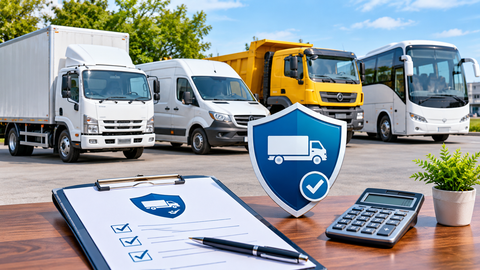
Trucks, pickup vans, tempos, and delivery vehicles used for transporting commercial goods can be insured under suitable goods-carrying vehicle policies.
Passenger Carrying Vehicles
Taxis, buses, school transport vehicles, and passenger auto-rickshaws require insurance appropriate to their registered passenger-carrying category.
Heavy Commercial Vehicles
Heavy trucks, trailers, and other large transport vehicles require policies that account for their vehicle classification, gross vehicle weight, and operating conditions.
Light Commercial Vehicles
Light commercial vehicles include smaller goods carriers and business transport vans. Their insurance requirements depend on registration category and permitted use.
Special and Miscellaneous Vehicles
Certain construction equipment, tractors, cranes, and specialised vehicles may require specific commercial or miscellaneous vehicle insurance arrangements.
Commercial Vehicle Insurance Applications Table
Vehicle Category | Common Examples | Main Insurance Consideration |
|---|---|---|
Goods carriers | Trucks, tempos, pickups | Cargo operations and vehicle liability |
Passenger carriers | Taxis, buses, vans | Passenger liability and permits |
Heavy vehicles | Trailers, heavy trucks | Gross vehicle weight and operating risks |
Light commercial vehicles | Delivery vans | Business usage and vehicle classification |
Special vehicles | Cranes, excavators | Equipment category and operating conditions |
Commercial Vehicle Insurance vs. Private Car Insurance
Commercial and private car insurance differ mainly in the permitted use of the insured vehicle and the associated risk assessment.
Comparison | Commercial Vehicle Insurance | Private Car Insurance |
|---|---|---|
Main use | Business and commercial operations | Personal transportation |
Typical vehicles | Trucks, taxis, buses, delivery vans | Personal cars |
Risk assessment | Business use and vehicle category | Private vehicle use |
Passenger exposure | Depends on registered category | Private passenger use |
Goods transportation | May apply to goods carriers | Not intended for commercial goods transport |
Policy requirements | Commercial vehicle classification | Private car classification |
Using a privately insured vehicle for unauthorised commercial activities can create coverage problems. The insurance policy should accurately reflect the vehicle's registration and permitted use.
Commercial Vehicle Insurance Premium Factors
Commercial vehicle insurance premiums depend on the selected coverage, vehicle specifications, and applicable insurance rules.
Important factors include:
Vehicle type: Trucks, buses, taxis, and light commercial vehicles have different risk classifications.
Gross vehicle weight: Weight classification is relevant to certain goods-carrying vehicles.
Seating capacity: Passenger-carrying vehicle classification can influence applicable premiums.
Vehicle age: Older vehicles may have different own-damage risk assessments.
Insured Declared Value: IDV is relevant to own-damage coverage and total-loss assessment.
Operating location: Geographic exposure may influence underwriting.
Claims history: Eligible No Claim Bonus benefits may affect own-damage premiums.
Optional covers: Additional protection can increase the premium.
Third-party premiums and own-damage premiums follow different pricing approaches. Businesses should examine the complete policy schedule rather than comparing only the headline premium.
Commercial Vehicle Insurance Claim Process
Step 1: Report the Accident
Inform the insurance company and relevant authorities according to the accident circumstances. For theft, serious injury, or third-party incidents, police documentation may be required.
Step 2: Register the Claim
Provide the policy information, vehicle registration details, accident date, location, and incident description.
Step 3: Arrange Vehicle Inspection
For own-damage claims, the insurer may appoint a surveyor to inspect the vehicle and assess the reported damage before repairs are authorised.
Step 4: Submit Required Documents
Common documents include:
Insurance policy certificate.
Vehicle registration certificate.
Valid driving licence.
Fitness certificate, where applicable.
Permit and other transport documents, where required.
Claim form.
Police report or FIR, where applicable.
Repair estimates and invoices.
Step 5: Repair or Claim Assessment
Depending on the insurer and workshop arrangement, an eligible repair may be processed through a cashless network garage or reimbursement procedure.
Step 6: Claim Settlement
After reviewing the documents, inspection findings, policy coverage, deductibles, and applicable conditions, the insurer processes the eligible claim.
Third-party liability claims may follow a separate legal process involving the Motor Accident Claims Tribunal.
Common Commercial Vehicle Insurance Challenges and Solutions
Challenge | Possible Cause | Recommended Action |
|---|---|---|
Claim rejection | Policy exclusions or incorrect usage | Verify policy conditions and vehicle classification |
Claim delay | Incomplete documentation | Submit accurate records |
Coverage dispute | Unclear policy wording | Review coverage and endorsements |
Driver eligibility issue | Incorrect licence category | Verify the driver's licence |
Permit-related problem | Expired or invalid permit | Maintain valid transport documents |
Vehicle overloading | Exceeding permitted capacity | Follow registered vehicle limits |
Cargo loss | Goods not included in motor cover | Consider separate transit insurance |
Policy lapse | Missed renewal | Track renewal dates |
Industry Standards and Legal Requirements
Commercial vehicle insurance in India is governed by motor vehicle legislation and applicable insurance regulations.
Motor Vehicles Act, 1988
The Motor Vehicles Act establishes the legal framework for motor vehicle registration, insurance, transport operations, and accident compensation.
Section 146: Mandatory Third-Party Insurance
Section 146 requires valid third-party insurance for motor vehicles used in public places, subject to applicable statutory exceptions.
Section 147: Insurance Requirements
Section 147 establishes the requirements for qualifying insurance policies, including specified liabilities involving third-party injury, death, and property damage. It also addresses specified passenger liabilities for transport vehicles.
Section 149: Insurer Responsibilities
Section 149 addresses the insurer's responsibilities concerning third-party compensation claims and applicable settlement procedures.
IRDAI Regulations
The Insurance Regulatory and Development Authority of India regulates the insurance sector and establishes applicable requirements for insurers and insurance products.
Businesses should also maintain relevant vehicle documents, including registration certificates, permits, fitness certificates, and appropriate driving licences.
Limitations of Commercial Vehicle Insurance
Commercial vehicle insurance provides important protection, but it does not automatically cover every business-related financial loss.
Cargo exclusion: Goods transported in a commercial vehicle generally require separate transit or goods-in-transit protection.
Business interruption: Lost revenue during vehicle repairs is not automatically covered.
Mechanical breakdown: Ordinary mechanical failure and routine wear and tear are generally excluded.
Policy exclusions: Unauthorised usage, certain driver-related violations, and other excluded circumstances may affect claims.
Deductibles: The policyholder may need to pay applicable deductibles during eligible own-damage claims.
Permit restrictions: Operating outside authorised permit conditions can create coverage complications.
Coverage limitations: Optional passenger, employee, and additional benefits may require separate selection.
Businesses should review policy wording carefully and obtain professional insurance advice when coverage requirements are complex.
Frequently Asked Questions About Commercial Vehicle Insurance
1. What is commercial vehicle insurance?
Commercial vehicle insurance protects vehicles used for business activities against specified third-party liabilities and, depending on the policy, own-vehicle damage. It is designed for vehicles such as trucks, buses, taxis, and delivery vans.
2. Is commercial vehicle insurance mandatory in India?
Yes. Third-party motor insurance is mandatory for commercial vehicles used in public places under Section 146 of the Motor Vehicles Act, 1988.
3. What types of vehicles require commercial insurance?
Commercial trucks, buses, taxis, goods carriers, delivery vans, and other vehicles registered for commercial activities require insurance appropriate to their registered category and use.
4. What is the difference between commercial and private vehicle insurance?
Commercial vehicle insurance covers vehicles used for business and transport activities, while private car insurance is designed for personal transportation. Their risk classifications, permitted usage, and policy requirements differ.
5. Does commercial vehicle insurance cover transported goods?
No, ordinary commercial motor insurance does not automatically insure the cargo. Businesses may need separate goods-in-transit or marine cargo insurance.
6. What documents are required for commercial vehicle insurance claims?
Common documents include the insurance certificate, registration certificate, driving licence, claim form, and supporting accident records. Permits, fitness certificates, police reports, and repair invoices may also be required depending on the claim.
7. What is fleet commercial vehicle insurance?
Fleet insurance is an arrangement that helps businesses manage insurance for multiple vehicles under a coordinated insurance program. Coverage and eligibility depend on the insurer's terms.
8. Can commercial vehicle insurance cover passenger injuries?
Applicable third-party policies provide specified passenger liability protection for covered transport vehicles. Additional passenger or personal accident benefits may depend on the policy and selected extensions.
9. What factors affect commercial vehicle insurance premiums?
Vehicle category, gross vehicle weight, seating capacity, vehicle age, insured declared value, operating location, claims history, and optional coverage can influence premiums.
10. What happens if a commercial vehicle operates without valid insurance?
Operating a vehicle in a public place without the legally required insurance can violate Section 146 of the Motor Vehicles Act. Section 196 establishes the applicable penalty provisions.
Conclusion
Commercial vehicle insurance helps businesses manage financial and legal risks associated with operating trucks, buses, taxis, delivery vans, and other commercial vehicles. Understanding third-party liability, comprehensive coverage, own-damage protection, policy exclusions, and claim procedures helps businesses select suitable insurance arrangements. Maintaining accurate vehicle documentation and valid insurance is essential for responsible commercial transport operations.