CNC & Metal Fabrication: Modern Methods and Key Insights
Understand CNC machining and metal fabrication, their importance, recent smart manufacturing developments, safety rules, useful tools, and common questions.
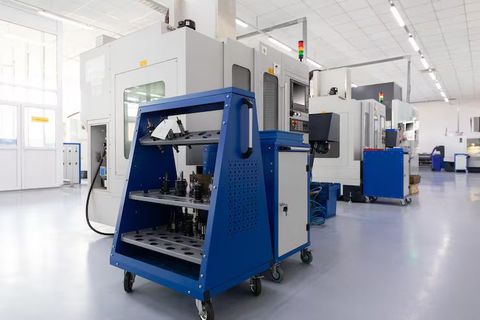
CNC machining and metal fabrication are manufacturing methods used to turn design files and raw metal into precise components, structures, and assemblies. CNC, or computer numerical control, uses programmed instructions to guide machine tools such as milling machines, lathes, routers, and machining centers. Metal fabrication covers cutting, bending, forming, drilling, welding, and finishing.
They support industries such as automotive, aerospace, industrial equipment, electronics, construction, and energy manufacturing.
How CNC and Metal Fabrication Work
A typical workflow begins with a CAD model or technical drawing. CAM software can convert design information into machine instructions. Material is prepared, the CNC machine is set up, and machining or fabrication takes place.
Common processes include:
- CNC milling for complex surfaces and holes
- CNC turning for cylindrical components
- CNC drilling for accurate holes
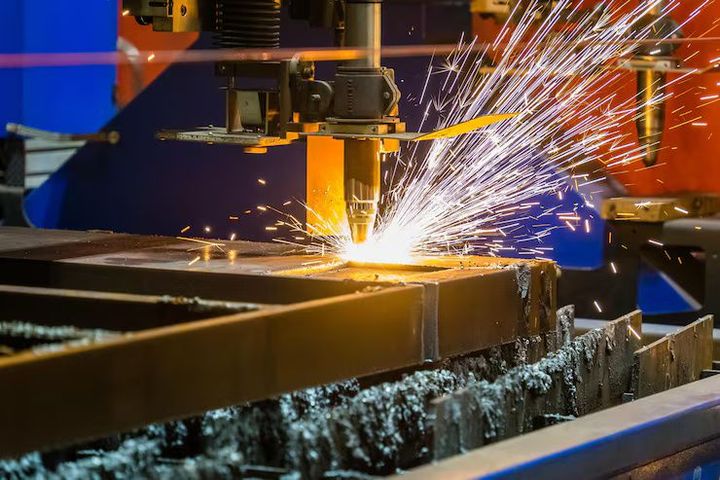
- Laser or plasma cutting
- Press braking and forming for shaped metal parts
- Welding and joining for fabricated assemblies
Measurement equipment such as calipers, coordinate measuring machines, and optical inspection systems can verify dimensions.
Why CNC and Metal Fabrication Matter Today
Precision manufacturing is increasingly important as products become more compact, complex, and data-driven. CNC machining can repeat programmed movements with high consistency, while fabrication equipment can handle different materials and geometries.
The technology helps engineers, designers, manufacturers, and maintenance teams address common challenges:
- Maintaining dimensional accuracy
- Managing complex geometries and tight tolerances
- Reducing repetitive handling
- Improving production traceability
- Supporting rapid design changes
Industrial automation is also changing CNC machine tools. Robotic loading, machine vision, automated inspection, and production systems can link machining with smart manufacturing workflows.
| Technology | Typical role | Key advantage |
|---|---|---|
| CNC milling | Complex components | Controlled movement |
| CNC turning | Round components | Consistent machining |
| Laser cutting | Sheet and plate | Accurate profiles |
| Press brake | Bending | Repeatable forming |
| Robotic handling | Material movement | Less repetitive handling |
Recent Updates in CNC Manufacturing
Recent developments have focused on artificial intelligence, digital twins, robotics, connected machines, and data-driven quality control.
In January 2026, the U.S. National Institute of Standards and Technology published research on data requirements for digital twins of CNC machine tools. It examined how sensor and machine data can support descriptive, diagnostic, predictive, prescriptive, and autonomous applications.
In July 2026, NIST released a roadmap covering AI and machine learning for smart manufacturing. It highlighted industrial data analytics, advanced sensing, autonomous systems, digital twins, robotics, and sustainable manufacturing as important development areas.
During 2025, manufacturing research also expanded around AI-enabled robotics and computer vision for inspection, machine monitoring, flexible automation, and production decision-making.
The broader direction is toward connected CNC environments where machine data, CAD/CAM software, inspection, and production analytics work together.
Laws, Safety Rules, and Policies
Requirements depend on the country. In the United States, CNC and metal fabrication workplaces are affected by Occupational Safety and Health Administration requirements for machine guarding, hazardous energy control, electrical safety, and personal protective equipment.
OSHA 29 CFR 1910.212 requires appropriate machine guarding against hazards such as rotating parts, flying chips, sparks, and points of operation. Lockout/tagout requirements under 29 CFR 1910.147 address hazardous energy during maintenance.
Applicable machine-tool safety standards and environmental rules may also address fluids, fumes, waste, and noise.
Because regulations differ by jurisdiction and may change, organizations should verify current requirements with the relevant authority before implementing equipment or procedures.
Tools and Resources for CNC and Fabrication
Useful resources include:
- CAD software for part design
- CAM software for toolpaths
- CNC simulation tools
- Cutting-parameter calculators for feeds and speeds
- Material databases for metal properties
- GD&T references for dimensional requirements
- Digital inspection templates for quality records
- Machine monitoring dashboards
- Twin frameworks
- Safety checklists for machine guarding
Frequently Asked Questions
What is CNC machining?
CNC machining is a manufacturing method in which computer-controlled instructions guide machine tools to cut, drill, turn, or shape material.
What is metal fabrication?
Metal fabrication is the broader process of forming and joining metal through cutting, bending, drilling, welding, and forming.
Is CNC machining the same as metal fabrication?
No. CNC machining is one category of precision manufacturing. Metal fabrication includes a wider range of cutting, forming, and joining processes.
Why are CAD and CAM important?
CAD defines part geometry, while CAM helps translate that design into machining instructions and toolpaths.
What is the role of AI in CNC manufacturing?
AI can analyze machine and production data for predictive maintenance, quality inspection, process monitoring, and production optimization. Engineering judgment, validation, and safety controls remain important.
Conclusion
CNC and metal fabrication are evolving from standalone production methods into connected parts of smart manufacturing. Advances in robotics, digital twins, AI, inspection technology, and industrial data systems are expanding what modern fabrication environments can monitor and automate. Machine guarding, energy control, quality procedures, and regulatory compliance remain essential. Understanding both the technical processes and the wider manufacturing framework provides a useful foundation for anyone exploring CNC machining and metal fabrication.
Disclaimer
This article is provided for general educational and informational purposes. Manufacturing regulations, safety requirements, technical standards, and environmental rules vary by location and application. Readers should verify applicable requirements with the appropriate regulatory authority and qualified technical professionals before making operational decisions.