Capsule Hotels Explained: Learn Unique Accommodation Concepts, Design Details, Travel Advice, and Key Facts
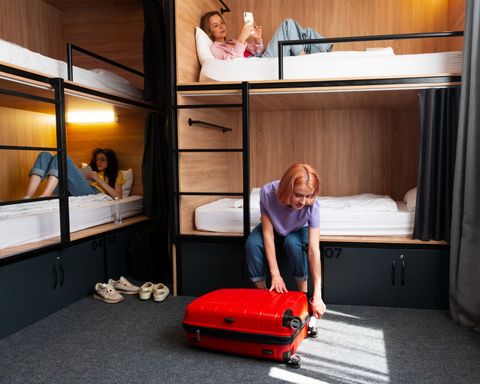
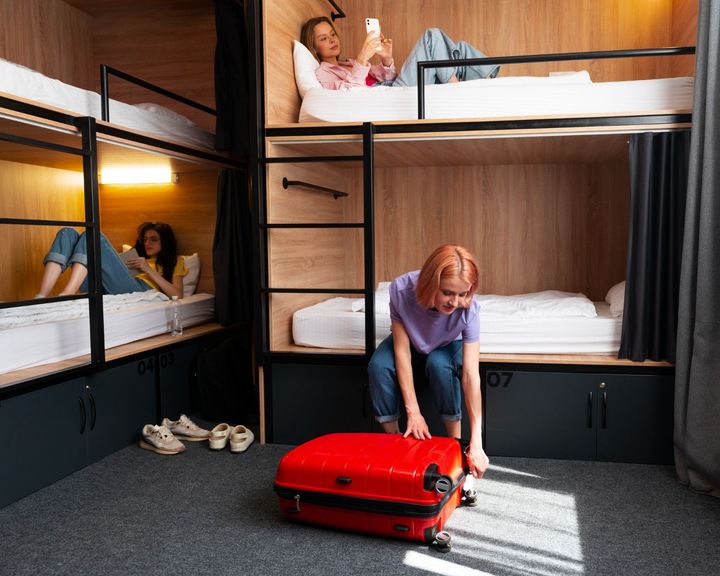
A capsule hotel is a compact accommodation concept where guests sleep in individual pod-like spaces rather than conventional hotel rooms.
Understanding Capsule Hotels and Why They Exist
The concept originated in Japan and was designed around efficient use of space, especially in dense urban areas where travelers often need a practical place to rest for a short period. Tokyo’s official tourism guide describes capsule hotels as bed-sized pods arranged efficiently, with shared facilities commonly located outside the sleeping area.
A typical capsule may include a bed, reading light, charging point, ventilation, small storage features, privacy curtain or shutter, and sometimes a screen or other technology. Bathrooms, lounges, lockers, and other facilities are commonly shared.
The concept has expanded beyond Japan into airports, city centers, transport hubs, and major international destinations. This makes searches such as airport capsule hotel, capsule hotel near airport, short stay hotels, and capsule hotels near me increasingly relevant for travelers with overnight layovers, early flights, or limited accommodation needs.
The main idea is simple: provide a dedicated sleeping space while reducing the amount of physical space required for each guest.
Why Capsule Hotels Matter Today
Modern travelers have different accommodation requirements. Some need only several hours of rest between flights, while others want a centrally located place to sleep without booking a conventional full-size room.
Capsule hotels can address several practical situations:
- Overnight airport connections and early-morning departures
- Short city visits and late arrivals
- Solo travel and independent tourism
- Travelers seeking affordable accommodation
- Visitors in densely populated cities
- Business travelers requiring a simple overnight stay
- Travelers interested in technology-focused accommodation
- People comparing budget hotel booking with pod-based alternatives
Airport-oriented accommodation is particularly relevant as air travel and airport development continue to influence hospitality demand in India. In September 2025, The Economic Times reported that airport hotels in India were increasingly evolving around growing passenger traffic and connectivity.
A capsule is not automatically better than a conventional room. Its suitability depends on privacy expectations, luggage requirements, bathroom preferences, length of stay, and tolerance for compact spaces.
Different Types of Capsule Hotels
Capsule hotels can be grouped according to location, design, privacy, and intended use.
| Type | Typical Characteristics | Suitable For |
|---|---|---|
| Airport Capsule Hotel | Close to or inside an airport environment | Layovers and early flights |
| Standard Capsule Hotel | Basic sleeping pod with shared facilities | Solo travelers |
| Premium Capsule Hotel | Enhanced bedding, lighting, design, and technology | Comfort-focused travelers |
| Luxury Capsule Hotel | Higher-end interiors and upgraded common areas | Travelers seeking a refined pod experience |
| Private Pod Hotel | Greater separation and privacy around individual pods | Guests prioritizing personal space |
| Women-Only Capsule Hotel | Dedicated accommodation areas for women | Female solo travelers |
| Transit Capsule | Designed around short rest periods | Airport and transport connections |
The difference between a capsule hotel and a hostel is also worth noting. A hostel may place several beds in one open dormitory, while a capsule hotel generally provides an enclosed or partially enclosed individual sleeping pod.
Benefits and Applications
The strongest advantage of capsule accommodation is space efficiency. Multiple sleeping units can be arranged within a smaller footprint than conventional private hotel rooms.
Other potential benefits include:
- Short-stay flexibility: Useful for travelers needing accommodation for limited periods.
- Central locations: Capsule properties are often positioned near transport hubs and busy urban areas.
- Individual sleeping spaces: Guests normally have a defined personal sleeping area.
- Technology integration: Some properties use digital controls, smart lighting, electronic access, or app-based processes.
- Efficient design: Storage, lighting, ventilation, and sleeping functions can be integrated into a compact area.
- Solo-travel suitability: The format is naturally oriented toward individual travelers.
- Travel experimentation: Capsule hotels provide an alternative accommodation experience for visitors who want something different from conventional hotels.
For an airport capsule hotel, proximity is often more important than room size. A traveler with a six-hour overnight connection may value convenient access and a private sleeping pod more than a large room.
However, travelers should check luggage rules, check-in requirements, bathroom arrangements, age restrictions, gender-specific areas, and capsule dimensions before completing a capsule hotel booking.
Five Leading Capsule Hotel Companies and Brands
The following names are established examples in the capsule and pod accommodation segment. This is an informational list, not a ranking.
- nine hours — nine hours official website — Japan-based brand with locations including Narita Airport and major Japanese cities. Its website also lists a June 2026 opening of nine hours Shinjuku-North.
- First Cabin — First Cabin official website — Operates compact cabin-style properties, including locations at Haneda Airport Terminal 1 and Kansai Airport.
- The Millennials — The Millennials official website — Known for a technology-oriented capsule accommodation concept.
- Zedwell Hotels — Zedwell Hotels official website — Its Piccadilly Circus property has more than 1,000 individual sleeping capsules, according to the company.
- BOOK AND BED TOKYO — BOOK AND BED TOKYO official website — Combines compact sleeping areas with a book-focused accommodation concept.
Recent Trends and Updates
Capsule accommodation has continued developing during 2025 and 2026, particularly through larger properties, premium interiors, technology, and airport-oriented locations.
In June 2025, GO TOKYO published an updated capsule hotel guide, noting that the concept had expanded internationally beyond its Japanese origins.
In November 2025, National Geographic Traveller reported on the growing popularity of capsule accommodation in global cities, highlighting Zedwell Piccadilly Circus in London and its large-scale pod format.
A notable 2026 development is nine hours Shinjuku-North, which opened on June 15, 2026. The property has 206 rooms and was developed with Tokyo Women's Medical University around sleep and wellness research.
Another emerging trend is the movement toward premium capsule hotels. Modern properties increasingly combine compact sleeping areas with improved bedding, acoustic design, filtered air, digital controls, lounges, and attractive interiors. This creates a middle ground between traditional hostels and conventional hotels.
Laws, Policies, and Regulations in India
India does not have one single national rule specifically governing every capsule hotel. Operators and property developers may need to comply with several layers of regulation depending on the location, building type, and operating model.
The Ministry of Tourism maintains hotel classification and hospitality guidelines through its national framework. In August 2025, the Ministry published updated guidelines covering hotel and resort star classification, guest houses, homestays, motels, and other accommodation categories.
Important areas can include:
- Local municipal permissions and building requirements
- Fire and life-safety requirements
- Occupancy and emergency-exit rules
- Electrical and ventilation standards
- Guest identification and record requirements
- State-level tourism regulations
- Airport-specific security and access rules
- Accessibility requirements where applicable
- Applicable taxation and invoicing rules
For airport capsule hotels, airport authority regulations and terminal security procedures can add another layer of requirements. Travelers should therefore verify the property's exact location and access conditions before planning an overnight stay.
Tools and Resources for Travelers
Several tools can make research easier:
| Tool or Resource | Main Purpose |
| Google Maps | Find capsule hotels near airports and transport hubs |
| Hotel comparison platforms | Compare locations, room types, ratings, and current prices |
| Official hotel websites | Check facilities, policies, and availability |
| Airport websites | Verify terminal access and accommodation information |
| Currency converter | Understand international accommodation prices |
| Travel maps | Estimate walking and transport times |
| Review platforms | Compare recent traveler experiences |
For searches such as capsule hotels near me, check the exact location rather than relying only on the hotel name. An airport property may be inside a terminal, connected to a terminal, or several minutes away by road.
Frequently Asked Questions
What is a capsule hotel?
A capsule hotel provides individual compact sleeping pods instead of conventional private hotel rooms. Shared bathrooms, lockers, lounges, or other facilities are common.
Are capsule hotels suitable for airport layovers?
They can be useful for overnight or extended layovers, particularly when located near an airport. Travelers should confirm terminal access, check-in hours, luggage arrangements, and distance from their departure gate.
Are capsule hotels private?
A capsule usually provides personal sleeping space, but privacy varies. Some use curtains or shutters, while premium designs may provide more enclosed pods. Shared facilities remain common.
What should I check before capsule hotel booking?
Check capsule dimensions, luggage storage, bathroom arrangements, check-in and check-out times, age requirements, gender-specific areas, cancellation rules, and the property's exact location.
Are luxury capsule hotels available?
Yes. Some modern properties use premium bedding, enhanced lighting, acoustic design, technology, larger common areas, and upgraded interiors. However, the definition of “luxury” varies between properties.
Conclusion
Capsule hotels represent a practical evolution of compact accommodation. Originating in Japan, the concept has developed into several formats ranging from basic sleeping pods to premium capsule hotels, airport accommodation, technology-focused properties, and more private pod designs.
For travelers, the main factors to consider are location, privacy, luggage capacity, facilities, accessibility, and length of stay. An airport capsule hotel can be particularly useful for transit travelers, while a city-center pod may suit solo visitors exploring a major urban destination.
As capsule accommodation continues to develop in 2025 and 2026, its role is expanding beyond simple overnight sleeping spaces. Better design, technology, efficient use of space, and changing travel patterns are helping create new forms of short stay hotels, private pod hotel accommodation, and modern urban lodging.
Informational disclaimer: Any accommodation price, package, or rate example should be treated as an estimate for general information only. Actual amounts can vary by date, location, occupancy, taxes, booking conditions, and availability. Always verify current details through the relevant accommodation provider before making travel plans.