Cable Manufacturing Guide: Explore the Process, Types, Equipment and Essential Information
Cable manufacturing is the industrial process of producing insulated conductors that transmit electrical power, data, control signals, or communication signals. These products are used in residential buildings, industrial facilities, telecommunications networks, renewable energy systems, transportation, and infrastructure projects.
A typical electrical cable consists of one or more conductors, insulation, and, depending on its intended application, protective layers such as metallic shielding, bedding, armouring, or an outer sheath. Each layer serves a specific purpose, including carrying current, preventing electrical leakage, reducing interference, or protecting against environmental damage.
The manufacturing process varies according to the cable's design and operating requirements. A low-voltage building wire, a high-voltage transmission cable, a fibre-optic cable, and a flexible industrial control cable require different materials, machinery, and testing methods.
Manufacturers must consider electrical performance, mechanical strength, operating temperature, moisture resistance, and applicable safety standards when planning production. Correct material selection and process control are important because cable defects can lead to equipment failures, power interruptions, overheating, or safety hazards.
Why Cable Manufacturing Matters Today
Electrical and communication cables form an essential part of modern infrastructure. Growing electricity demand, industrial automation, data connectivity, electric mobility, and renewable energy installations increase the need for reliable cable systems.
Cable manufacturing supports several important sectors:
Power generation and distribution: Power cables connect generating stations, substations, transformers, and electrical distribution networks.
Construction and real estate: Building wires distribute electricity to lighting, sockets, appliances, and electrical panels.
Telecommunications: Fibre-optic and communication cables carry data across local networks, broadband infrastructure, and long-distance communication systems.
Industrial automation: Control and instrumentation cables connect sensors, programmable logic controllers, motors, and monitoring equipment.
Renewable energy: Solar photovoltaic and wind-power installations use cables designed for particular electrical, environmental, and mechanical conditions.
Transportation and electric mobility: Vehicles, rail systems, and charging infrastructure use specialised cables for power transmission, control, and communication.
Reliable cable production also helps address problems such as insulation breakdown, signal interference, conductor overheating, and premature material deterioration.
For engineers, electrical contractors, infrastructure planners, and equipment manufacturers, understanding cable specifications helps ensure that the selected cable matches the intended load, environment, installation method, and expected service life.
Types of Electrical and Industrial Cables
Cable types are generally classified according to their construction, conductor material, insulation, voltage rating, flexibility, and intended application.
| Cable type | Typical application | Important characteristic |
|---|---|---|
| Low-voltage power cable | Buildings and small industrial systems | Designed for specified low-voltage applications |
| Medium-voltage cable | Industrial distribution and utility networks | Requires suitable electrical insulation and field control |
| High-voltage cable | Transmission and major electrical infrastructure | Uses specialised insulation and electrical stress management |
| Control cable | Industrial machinery and automation | Carries control signals between equipment |
| Instrumentation cable | Measurement and process-control systems | May include shielding to reduce interference |
| Fibre-optic cable | Broadband and data communication | Transmits information using light |
| Solar DC cable | Photovoltaic installations | Designed for relevant outdoor and DC operating conditions |
| Flexible cable | Portable equipment and moving machinery | Designed to tolerate specified bending and movement |
Cable selection should be based on the relevant technical specifications rather than appearance alone. Important factors include conductor size, rated voltage, current-carrying capacity, temperature rating, insulation type, installation conditions, and applicable fire-performance requirements.
Cable Manufacturing Process: From Raw Material to Finished Cable
The cable manufacturing process usually includes conductor preparation, insulation, assembly, protective layering, and quality testing. The exact production sequence depends on the cable design.
Conductor preparation and wire drawing
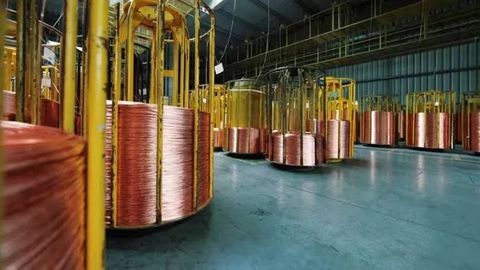
Copper or aluminium is commonly used as the conductor material. Metal rods are drawn through progressively smaller dies to achieve the required wire diameter. Drawing lubricants and controlled processing conditions help manage friction, surface quality, and dimensional accuracy.
The drawn wire may undergo annealing, a controlled heating process that improves ductility and flexibility. The resulting conductor must meet the specified diameter, electrical resistance, and mechanical requirements.
Stranding and conductor formation
For many cable designs, multiple fine wires are twisted or laid together to form a stranded conductor. Stranding can improve flexibility and make larger conductors easier to handle during installation.
Solid conductors may be used where their mechanical and electrical characteristics suit the application. Conductor construction is selected according to the cable standard and intended use.
Insulation extrusion
An extrusion machine applies a layer of insulating material around the conductor. Common materials include PVC, polyethylene, cross-linked polyethylene (XLPE), and specialised elastomeric compounds.
During extrusion, the material is heated, shaped around the conductor through a die, and cooled under controlled conditions. Important process variables include temperature, line speed, insulation thickness, and concentricity.
Core laying and cabling
Multicore cables require individual insulated conductors to be assembled into a specific arrangement. The cores may be twisted together with fillers or binding materials to achieve the required geometry and mechanical stability.
Depending on the cable type, additional steps may include taping, screening, or the application of metallic shielding.
Armouring and outer sheathing
Some cables require additional mechanical protection. Steel wire, steel tape, or other approved materials may be used for armouring, depending on the cable design.
An outer sheath is then applied where specified to protect the cable from moisture, abrasion, chemicals, sunlight, or other environmental conditions. The appropriate protection depends on the installation environment.
Testing, inspection, and packaging
The completed cable undergoes the inspections and tests specified by the relevant standard and product specification. Depending on the design, these may include conductor resistance measurements, insulation thickness checks, high-voltage tests, dimensional inspections, and other electrical or mechanical assessments.
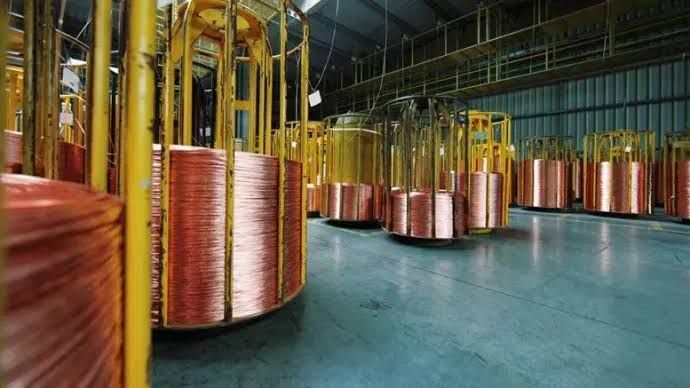
Approved cable lengths are then wound onto drums or reels, labelled, and documented for identification and traceability.
Essential Cable Manufacturing Equipment
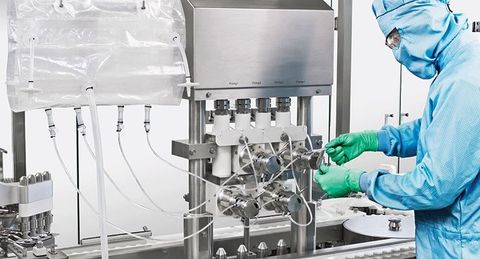
Cable production uses specialised machinery at different stages. Equipment selection depends on conductor material, cable construction, production capacity, and required product specifications.
| Equipment | Main function |
|---|---|
| Wire drawing machine | Reduces metal rod diameter to the required wire size |
| Annealing machine | Improves wire ductility through controlled heating |
| Stranding machine | Combines multiple wires into a conductor |
| Cable extrusion machine | Applies insulation or an outer sheath |
| Cabling machine | Arranges insulated cores into a multicore cable |
| Armouring machine | Applies protective metallic layers where required |
| Spark tester | Detects certain insulation defects during production |
| Electrical testing equipment | Measures specified electrical properties and verifies performance |
| Take-up and winding machine | Collects finished cable onto reels or drums |
Manufacturing lines may also include laser diameter gauges, online thickness measurement systems, temperature controllers, and programmable automation systems. These tools help monitor process conditions and identify deviations before the finished cable leaves the production line.
Quality Control and Cable Testing
Quality control is essential because a cable must perform safely under its specified electrical, thermal, and mechanical conditions. Testing requirements depend on the product category and applicable standard.
Important checks include:
Conductor resistance: Confirms that electrical resistance meets the applicable specification.
Insulation thickness: Checks whether the insulating layer meets dimensional requirements.
High-voltage testing: Evaluates insulation performance under the specified test conditions.
Insulation resistance: Measures resistance to electrical leakage through insulation.
Dimensional inspection: Checks conductor diameter, overall cable diameter, and layer thickness.
Mechanical testing: Assesses properties such as tensile strength, elongation, and flexibility where required.
Material and flame testing: Evaluates specified properties for cable types intended for particular environments.
Not every test applies to every cable. Manufacturers should follow the relevant product standard, approved test procedures, and documented quality-control plan. A single successful test does not establish suitability for every installation.
Recent Developments in Cable Manufacturing
Developments during 2025 and 2026 have highlighted the importance of updated product standards, quality assurance, and electrical infrastructure expansion in India.
November 2025 — Updated XLPE cable standard: The Bureau of Indian Standards lists IS 7098 (Part 1):2025, covering cross-linked polyethylene insulated, thermoplastic-sheathed cables rated up to and including 1,100 volts. The standard was reaffirmed in November 2025 according to the BIS standards database. Manufacturers and technical teams should verify the applicable revision and certification requirements for their specific products.
March 2026 — Power transmission expansion: On 23 March 2026, the Ministry of Power reported plans to add more than 1.91 lakh circuit kilometres of transmission lines and approximately 1,270 GVA of transformation capacity at 220 kV and above during 2022–23 to 2031–32. These plans highlight the role of transmission infrastructure in connecting electricity generation with demand centres.
April 2026 — Review of PVC cable standards: On 24 April 2026, BIS Mumbai held an industry consultation on the draft fifth revision of IS 694, which covers PVC-insulated wires and cables rated up to and including 1,100 volts. A draft revision and stakeholder consultation should not automatically be interpreted as a final standard already in force. <Cite refs={["turn468554search5"]}/>
Other continuing manufacturing trends include automated process monitoring, digital inspection records, improved extrusion controls, and greater attention to material traceability. Their suitability depends on the production line and the cable's technical requirements.
Laws, Standards, and Government Policies in India
Cable manufacturing in India is affected by product standards, certification requirements, electrical safety rules, environmental obligations, and procurement policies.
Bureau of Indian Standards (BIS): BIS develops Indian Standards and administers product certification schemes. Certain cable categories are subject to mandatory certification under applicable government notifications and quality control orders. The exact requirements depend on the product, standard, and current notification. <Cite refs={["turn468554search9","turn468554search12"]}/>
Relevant Indian Standards: IS 694 addresses PVC-insulated wires and cables within its specified voltage range. IS 7098 covers specified XLPE-insulated cable categories, with different parts addressing different voltage ranges. The applicable edition must be checked before production, testing, or certification.
Electricity safety requirements: The Electricity Act, 2003, and applicable electrical safety regulations provide a broader framework for electrical installations and safe use. Cable selection and installation must comply with the requirements relevant to the project and application.
Environmental and factory compliance: Depending on the facility and its activities, manufacturers may need to comply with applicable factory safety, pollution control, waste handling, fire safety, and occupational health requirements. Specific approvals vary by location, process, and environmental impact.
Make in India and procurement policy: Government procurement preferences for qualifying domestically manufactured products can influence the supply chain for power infrastructure. The Ministry of Power has identified certain high-voltage XLPE cables within its domestic-content policy framework. Eligibility depends on the applicable procurement order and product category. <Cite refs={["turn468554search35"]}/>
Manufacturers should consult official notifications rather than relying only on older summaries, since standards, certification schedules, and implementation dates can change.