Blood Pressure Monitoring Devices Guide: Basic Information and Useful Facts
Blood pressure monitoring devices are instruments used to measure the pressure of blood against artery walls. A reading usually has two numbers: systolic pressure, which appears when the heart contracts, and diastolic pressure, which appears when the heart rests between beats.
These devices exist because blood pressure cannot be judged reliably by how a person feels. Many people with high blood pressure may not notice clear symptoms. The World Health Organization stated in September 2025 that an estimated 1.4 billion adults aged 30–79 had hypertension in 2024, and about 600 million adults with hypertension were unaware of their condition.
Blood pressure monitoring devices are used in clinics, hospitals, pharmacies, community health programs, workplaces, and homes. They help record readings, observe trends, and support discussions with qualified health professionals. They do not replace clinical evaluation, but they can provide useful measurement data when used correctly.
Common device types include:
- Manual sphygmomanometers
- Aneroid blood pressure devices
- Digital upper-arm monitors
- Wrist blood pressure monitors
- Ambulatory blood pressure monitoring systems
- Connected monitors with app-based record storage
- Multiparameter monitors used in clinical settings
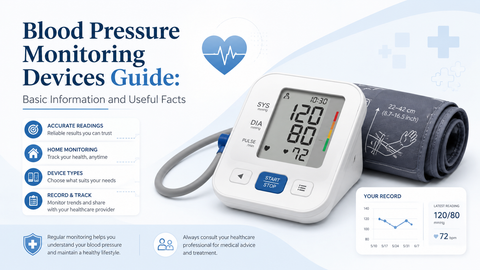
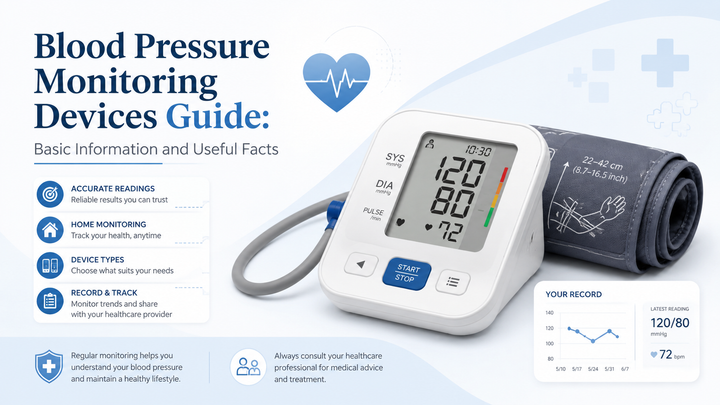
Most general users are familiar with automatic digital devices. These usually include an inflatable cuff, pressure sensor, display screen, start button, and sometimes memory storage. The cuff inflates around the arm, then slowly releases pressure while the device estimates blood pressure using sensor signals.
Why Blood Pressure Monitoring Matters Today
Blood pressure monitoring matters because hypertension is one of the most common cardiovascular risk factors worldwide. It can affect adults across age groups, especially people with family history, sedentary habits, high salt intake, diabetes, kidney concerns, obesity, tobacco exposure, or long-term stress.
In India, hypertension management has become a major public health priority. WHO noted that India aimed for a 25% relative reduction in hypertension prevalence by 2025 and highlighted the India Hypertension Control Initiative as a large public health intervention.
Blood pressure monitoring devices help with several practical problems:
- Detecting repeated high readings that need clinical review
- Tracking readings over time
- Reducing reliance on occasional single readings
- Helping caregivers maintain records
- Supporting follow-up discussions
- Identifying possible measurement errors through repeated checks
- Improving awareness of heart and vascular health
For general users, the main value is structured observation. A single reading can be affected by stress, caffeine, recent activity, pain, incorrect cuff position, or talking during measurement. Repeated readings under proper conditions are more useful than one isolated number.
The American Heart Association states that home monitoring can help health professionals understand whether treatment plans are working, but it does not replace regular clinical visits. It also says people should not stop prescribed medicine based only on home readings without consulting a health professional.
Common Device Types and Uses
| Device Type | Common Setting | Basic Use |
|---|---|---|
| Manual mercury device | Clinical or training setting | Traditional measurement with stethoscope |
| Aneroid device | Clinics and field health settings | Manual cuff device with dial gauge |
| Digital upper-arm monitor | Home and clinic use | Automatic reading with arm cuff |
| Wrist monitor | Limited-use situations | Reading at wrist level, position-sensitive |
| Ambulatory monitor | Clinical evaluation | Repeated readings over 24 hours |
| Connected monitor | Home record tracking | Stores readings digitally |
| Multiparameter monitor | Hospital setting | Measures blood pressure with other vital signs |
Upper-arm digital monitors are generally easier for household use because they reduce manual technique steps. However, correct cuff size, body posture, arm position, and timing still matter.
How Blood Pressure Devices Work
A digital blood pressure monitor works through cuff inflation and pressure sensing. The cuff applies pressure around the arm and temporarily restricts blood flow. As the cuff deflates, the device detects pressure changes caused by blood movement and estimates systolic and diastolic values.
Manual devices work differently. A trained person inflates the cuff and uses a stethoscope to listen for Korotkoff sounds. The pressure at which sounds first appear is systolic pressure. The pressure at which sounds disappear is diastolic pressure.
Important measurement factors include:
- Proper cuff size
- Cuff placed on bare upper arm
- Back supported
- Feet flat on the floor
- Arm supported at heart level
- No talking during the reading
- Resting before measurement
- Avoiding immediate readings after exercise, caffeine, or smoking
- Taking repeated readings when advised
A common error is using an incorrect cuff size. If the cuff is too small or too large, the reading may become inaccurate. A September 2024 report discussed research showing that standard cuffs may not fit some adults correctly, which can affect measurement reliability.
Recent Updates and Trends
Recent discussion around blood pressure monitoring has focused on accuracy, home tracking, connected devices, and proper measurement technique.
World Hypertension Day 2025 used the theme “Measure Your Blood Pressure Accurately, Control It, Live Longer,” emphasizing the importance of correct measurement. This theme reflected the continuing public health focus on reliable readings and hypertension awareness.
In September 2025, WHO updated its hypertension fact sheet and reported that about 33% of adults aged 30–79 worldwide had hypertension in 2024. WHO also noted that many adults with hypertension remain undiagnosed, which explains why measurement access and awareness continue to be important.
In India, cardiovascular and non-communicable disease screening continues to be linked with primary healthcare strengthening. Government material from December 2024 described Health and Wellness Centres as part of Comprehensive Primary Health Care, including common non-communicable diseases such as hypertension, diabetes, and selected cancers.
Technology trends include:
- App-linked reading logs
- Cloud-based family health records
- Better memory storage in home monitors
- Irregular heartbeat indicators
- Cuff fit indicators
- Movement error alerts
- Wider attention to validated devices
- Research into cuffless monitoring
- More awareness of home measurement technique
Cuffless monitoring is an emerging area, but it remains technically complex. A scientific statement in the American Heart Association journal Hypertension discussed cuffless devices and noted that many are used in clinical and home settings despite ongoing questions around measurement validation and performance.
Simple Trend View
| Area | Earlier Practice | Current Direction |
|---|---|---|
| Reading record | Paper diary | App-based and digital logs |
| Device type | Manual devices only | Wider use of automatic monitors |
| Accuracy focus | Basic reading display | Cuff fit and validation attention |
| Public awareness | Clinic-based checks | Home and community monitoring |
| Data use | Occasional reading | Trend-based discussion |
| Device design | Standalone display | Connected and memory-based devices |
Illustrative graph: Blood pressure monitoring focus
2021: Clinic-based checks ███
2022: Home tracking grows ████
2023: Digital record use expands █████
2024: Cuff size awareness rises ██████
2025: Accurate measurement theme strengthens ███████
2026: Connected monitoring and validation focus ████████
This graph shows general topic attention, not a measured national index.
Laws, Policies, and Regulation in India
Blood pressure monitoring devices are regulated as medical devices in India. The Central Drugs Standard Control Organisation states that all medical devices in India are regulated under the Drugs and Cosmetics Act, 1940 and the Medical Devices Rules, 2017. CDSCO classifies medical devices into four risk classes: Class A, Class B, Class C, and Class D.
A CDSCO notice dated 28 December 2020 stated that blood pressure monitoring devices, along with nebulizers, blood glucose monitors, and thermometers, were to be regulated as drugs with effect from 1 January 2021.
This means blood pressure monitoring devices are not treated only as ordinary household gadgets. Their safety, quality, and performance fall under the medical device regulatory framework. A PIB release from February 2026 also stated that quality, safety, and performance of all medical devices are regulated under the Drugs and Cosmetics Act, 1940 and Medical Devices Rules, 2017, administered by the Ministry of Health and Family Welfare.
The Bureau of Indian Standards is also relevant for standards. BIS has a product manual for aneroid sphygmomanometers under IS 7652:1988, including tests such as leakage test, control valve test, and inflating bag leakage test.
Public health policy also matters. WHO reported that India set a target of reaching 75 million people with hypertension or diabetes on standard care by 2025, showing the national focus on screening and long-term management of non-communicable diseases.
Practical Accuracy Checklist
| Checkpoint | Why It Matters |
|---|---|
| Correct cuff size | Reduces inaccurate readings |
| Upper arm at heart level | Helps maintain correct measurement position |
| Rest before reading | Reduces temporary elevation from activity |
| No talking during reading | Avoids movement and pressure changes |
| Same time pattern | Makes reading trends easier to compare |
| Multiple readings | Helps reduce single-reading variation |
| Clean record sheet | Supports clinical discussion |
| Device validation | Supports confidence in measurement quality |
Tools and Resources
Useful tools and resources include:
- BP reading log sheet: A simple table for date, time, systolic reading, diastolic reading, pulse, and notes.
- Home blood pressure diary: Helps observe weekly or monthly patterns.
- Cuff size guide: Helps match cuff range with upper-arm circumference.
- Validated device lists: Used internationally to check whether a device has been assessed through recognized protocols.
- AHA home monitoring guidance: Provides measurement tips and explains the role of home monitoring.
- WHO hypertension fact sheet: Provides global data and public health background.
- CDSCO medical device information: Useful for understanding India’s device regulation framework.
- BIS standards reference: Useful for technical and quality reference related to certain device types.
- Mobile health apps: Some connected devices store readings in app format for easier tracking.
- Printable reading template: Helpful for people who prefer manual records.
Simple BP log template:
| Date | Time | Systolic | Diastolic | Pulse | Notes |
|---|---|---|---|---|---|
| Example | Morning | 128 | 82 | 76 | Rested before reading |
| Example | Evening | 132 | 84 | 78 | No symptoms noted |
For home records, consistency is more useful than excess measurement. Readings should be shared with a qualified health professional when patterns appear unusual or when the user has been asked to monitor regularly.
Frequently Asked Questions
What is a blood pressure monitoring device?
A blood pressure monitoring device is an instrument used to measure blood pressure. It may be manual, aneroid, digital, wrist-based, ambulatory, or part of a hospital monitoring system.
What do the two blood pressure numbers mean?
The first number is systolic pressure, which reflects pressure when the heart contracts. The second number is diastolic pressure, which reflects pressure when the heart rests between beats.
Are home blood pressure readings always accurate?
Home readings can be useful, but accuracy depends on correct technique, cuff size, device quality, body position, and reading conditions. Repeated readings taken properly are usually more informative than one isolated reading.
Is an upper-arm monitor different from a wrist monitor?
Yes. Upper-arm monitors are commonly preferred for general home monitoring. Wrist monitors are more sensitive to arm position because the wrist must be kept at heart level.
Can a blood pressure device diagnose hypertension by itself?
No. A device only provides readings. Diagnosis and interpretation should be done by a qualified health professional using proper clinical context and repeated measurements.
How often should blood pressure be checked?
Frequency depends on age, risk factors, existing medical conditions, and guidance from a qualified health professional. People already monitoring hypertension should follow the schedule recommended to them.
Conclusion
Blood pressure monitoring devices help people understand blood pressure readings in a structured way. They are used in clinical settings, homes, community health programs, and hospitals. Their value depends on accuracy, correct technique, proper cuff fit, and careful record keeping.
The topic matters today because hypertension is widespread and often unnoticed. Recent updates show stronger attention to accurate measurement, home monitoring, connected records, and validation of devices. In India, these devices are regulated under the medical device framework, with CDSCO and BIS playing important roles in quality and standards.
For general readers, the key point is simple: a blood pressure device is a measurement tool, not a complete health judgment by itself. The best use of such a device is regular, careful recording and discussion with a qualified health professional when needed.