Biscuit Making Machines Guide: Explore Equipment Types, Production Tips, Efficiency Insights, Maintenance Advice, and Industry Basics
Biscuit making machines are specialized pieces of food processing machinery designed to automate and streamline biscuit manufacturing. These machines help transform raw ingredients into finished biscuits through a sequence of processes that may include mixing, forming, baking, cooling, and packaging.
Understanding Biscuit Making Machines and Their Purpose
As consumer demand for baked products has grown worldwide, manufacturers have increasingly adopted industrial bakery equipment and bakery automation systems to improve consistency, productivity, and food safety. A modern biscuit making machine can support various production requirements, from small-scale operations to large facilities operating high speed biscuit production lines.
The development of automatic biscuit production line technology reflects the industry's need for efficient production methods that reduce manual handling while maintaining product quality. Today, industrial baking solutions play an important role in food manufacturing across many regions.
Why Biscuit Making Machines Matter Today
The global food manufacturing sector relies heavily on automation to meet growing consumption needs. Biscuit production is one area where machinery helps maintain consistent product dimensions, baking quality, and production efficiency.
Several factors contribute to the importance of biscuit manufacturing equipment:
- Growing demand for packaged baked goods
- Increased focus on food safety standards
- Need for production consistency
- Improved operational efficiency
- Reduced material waste
- Enhanced process monitoring
Biscuit making machines affect multiple stakeholders, including food manufacturers, bakery operators, quality control teams, supply chain managers, and consumers.
The following table highlights common manufacturing challenges and how automation can help address them:
| Production Challenge | Equipment Contribution |
|---|---|
| Inconsistent product size | Automated forming systems |
| Variable baking results | Industrial biscuit oven controls |
| High manual handling | Bakery automation systems |
| Production delays | Continuous production lines |
| Ingredient variation | Controlled mixing processes |
| Quality monitoring | Integrated inspection systems |
Types of Biscuit Making Machines
Biscuit production involves multiple machine categories, each designed to perform a specific function within the manufacturing process.
Dough Mixing Equipment
Mixing equipment combines ingredients such as flour, sugar, fats, water, and flavorings into uniform dough. Consistent mixing helps support product quality throughout production.
Dough Forming Machines
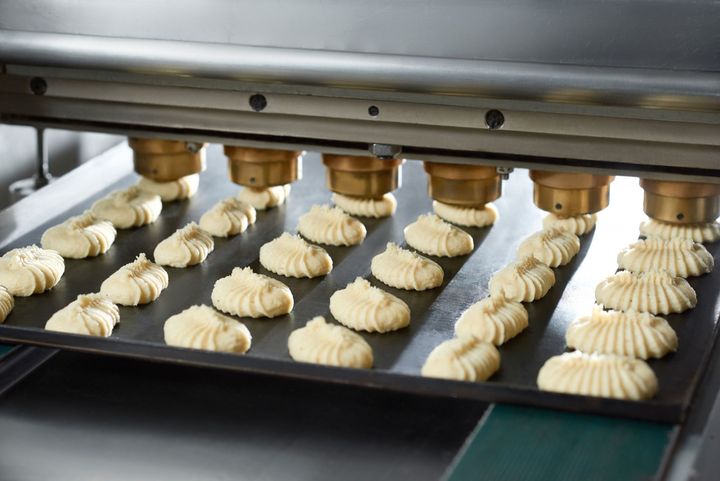
These machines shape dough into specific biscuit designs. Forming systems may use rotary moulding, wire cutting, depositing, or sheeting technologies depending on product requirements.
Biscuit Cutting Machines
Cutting equipment creates uniform biscuit shapes and dimensions. Precision cutting contributes to consistent baking and appearance.
Automatic Biscuit Production Line
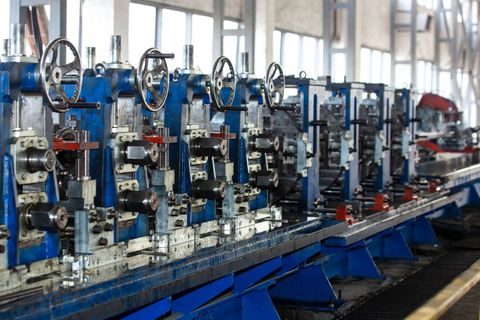
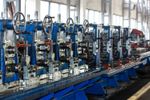
An automatic biscuit production line integrates multiple production stages into a coordinated manufacturing system. These lines often include mixing, forming, baking, cooling, and conveying functions.
Industrial Biscuit Oven
The industrial biscuit oven is responsible for controlled baking. Modern ovens often feature temperature zoning and automated monitoring systems to maintain consistent baking conditions.
Cooling and Conveying Systems
After baking, biscuits move through cooling systems designed to stabilize product quality before packaging or further processing.
Packaging Equipment
Packaging machines prepare finished products for storage and distribution by placing biscuits into containers, trays, or sealed packages.
Benefits and Applications of Biscuit Manufacturing Equipment
The use of industrial bakery equipment provides several operational and quality-related advantages.
Improved Production Efficiency
Automated systems help maintain continuous production flow and reduce interruptions caused by manual processes.
Consistent Product Quality
Precise control of mixing, forming, and baking parameters contributes to uniform appearance and texture.
Enhanced Food Safety
Automation reduces direct product handling and supports hygienic manufacturing environments.
Better Resource Management
Modern food processing machinery helps optimize ingredient usage and minimize production losses.
Scalable Manufacturing
Production systems can often be configured to support varying output levels depending on operational requirements.
Applications commonly include:
- Sweet biscuit production
- Cream-filled biscuit manufacturing
- Cracker production
- Cookie manufacturing
- Specialty baked snacks
- Export-oriented food processing facilities
The chart below illustrates estimated operational focus areas within a typical automated biscuit production process.
| Production Area | Relative Process Share (%) |
| Dough Preparation | 20 |
| Forming Operations | 15 |
| Baking Operations | 35 |
| Cooling Processes | 15 |
| Packaging Activities | 15 |
Top 5 Leading Provider Company Names
Several companies are recognized globally for their contributions to industrial baking solutions and food manufacturing technology.
- Bühler Group
- GEA Group
- Reading Bakery Systems
- Baker Perkins
- Heat and Control
These organizations are known for developing equipment used in bakery automation systems, industrial bakery equipment manufacturing, process optimization, and food production technology.
Recent Updates and Industry Trends
The biscuit manufacturing sector has continued to evolve through technological advancements and sustainability initiatives during the past year.
Artificial Intelligence in Production Monitoring (2025–2026)
Food manufacturers increasingly use artificial intelligence to monitor production performance, identify anomalies, and support predictive maintenance planning.
Energy-Efficient Baking Technologies
Throughout 2025, manufacturers expanded efforts to improve energy efficiency in industrial biscuit oven operations through advanced heat management systems.
Smart Factory Integration
Connected sensors and industrial Internet of Things (IoT) technologies have become more common in automatic biscuit production line environments, enabling real-time monitoring.
Sustainability Initiatives
Many food producers have focused on reducing emissions, minimizing packaging waste, and improving resource efficiency throughout manufacturing operations.
Digital Quality Inspection
Machine vision systems and automated inspection technologies have gained wider adoption for identifying defects and supporting quality assurance processes.
These developments reflect broader industry efforts to improve productivity, environmental performance, and manufacturing reliability.
Laws and Policies Affecting Biscuit Manufacturing
Biscuit manufacturing equipment operates within regulatory frameworks designed to protect consumers, workers, and the environment.
Food Safety Regulations
Food manufacturers are generally required to follow food safety standards governing hygiene, sanitation, production controls, and traceability.
Equipment Safety Standards
Industrial machinery often must comply with workplace safety regulations intended to reduce operational risks and promote safe working conditions.
Environmental Requirements
Governments may establish regulations related to energy usage, emissions management, waste handling, and environmental reporting.
Product Labeling Rules
Food products are commonly subject to labeling requirements that address ingredient disclosure, nutritional information, and allergen identification.
Quality Management Programs
Many manufacturers implement recognized quality management frameworks to support consistent production processes and regulatory compliance.
Requirements vary by country and region, making local regulatory guidance important when evaluating manufacturing operations.
Helpful Tools and Resources
Various tools and resources can assist professionals involved in biscuit manufacturing and bakery operations.
Production Monitoring Platforms
- Manufacturing analytics software
- Equipment performance dashboards
- Process tracking systems
- Production scheduling platforms
Maintenance Resources
- Preventive maintenance templates
- Equipment inspection checklists
- Maintenance scheduling applications
- Spare parts tracking systems
Food Safety Resources
- Hazard analysis documentation tools
- Quality control templates
- Food safety training materials
- Regulatory guidance portals
Engineering and Process Tools
- Production capacity calculators
- Energy consumption estimators
- Process efficiency tracking spreadsheets
- Industrial performance benchmarking resources
The following table summarizes commonly used resources:
| Resource Category | Primary Purpose |
| Monitoring Software | Track production performance |
| Maintenance Templates | Support equipment upkeep |
| Quality Control Tools | Improve consistency |
| Capacity Calculators | Estimate production output |
| Food Safety Resources | Support compliance activities |
Frequently Asked Questions
What is a biscuit making machine?
A biscuit making machine is food processing machinery designed to automate one or more stages of biscuit manufacturing, including mixing, forming, baking, cooling, or packaging.
How does an automatic biscuit production line work?
An automatic biscuit production line integrates multiple production stages into a coordinated system that moves products through preparation, forming, baking, cooling, and packaging processes.
Why is an industrial biscuit oven important?
The industrial biscuit oven provides controlled baking conditions that help ensure consistent product quality, appearance, and texture.
What maintenance practices are commonly recommended?
Routine inspections, cleaning procedures, component monitoring, lubrication schedules, and preventive maintenance planning are commonly used to support equipment reliability.
How do bakery automation systems improve efficiency?
Bakery automation systems help reduce manual intervention, improve production consistency, support quality monitoring, and streamline manufacturing workflows.
Conclusion
Biscuit making machines have become an essential component of modern food manufacturing. Through the use of industrial bakery equipment, food processing machinery, bakery automation systems, industrial biscuit oven technologies, industrial baking solutions, and high speed biscuit production line configurations, manufacturers can improve consistency, efficiency, and process control.
Advances in automation, artificial intelligence, sustainability initiatives, and digital monitoring continue to shape the future of biscuit production. Understanding the various equipment types, operational benefits, maintenance considerations, regulatory requirements, and available resources provides valuable insight into how modern biscuit manufacturing operates.
As food production demands continue to evolve, automatic biscuit production line technologies are expected to remain an important part of efficient and standardized manufacturing environments.
Informational Disclaimer: References to machinery specifications, production capacities, equipment configurations, operational expenses, packages, and performance characteristics are provided for educational purposes only.