Jump to a Chapter

AI Agent Development Explained: Architecture, Frameworks, LLM Integration, Tools & Intelligent Automation Guide

AI Agent Development Explained: Architecture, Frameworks, LLM Integration, Tools & Intelligent Automation Guide

Artificial Intelligence (AI) agents are transforming how software interacts with people, data, and digital systems. Unlike traditional applications that perform predefined tasks, AI agents can understand goals, reason through problems, retrieve information, use external tools, and complete multi-step workflows with minimal human intervention.

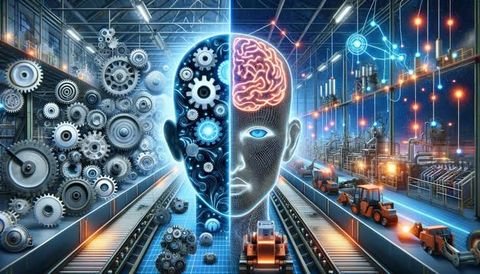
Modern AI agents combine Large Language Models (LLMs), Retrieval-Augmented Generation (RAG), memory systems, planning modules, APIs, databases, and automation frameworks to create intelligent software capable of solving increasingly complex tasks. These systems are being explored across industries such as healthcare, education, finance, customer support, manufacturing, software development, and enterprise operations.

This guide explains AI agent development, system architecture, LLM integration, popular frameworks, memory, planning, orchestration, security, and future trends from an educational perspective. It does not provide implementation, cybersecurity, legal, or business deployment advice.

What Is an AI Agent?

An AI agent is a software system designed to understand objectives, process information, make decisions, interact with external resources, and execute tasks through intelligent workflows.

Unlike a simple chatbot, an AI agent can:

  • Understand user goals
  • Break complex tasks into smaller steps
  • Access external knowledge
  • Use software tools
  • Remember relevant information
  • Make context-aware decisions
  • Execute workflows
  • Learn from interactions within defined system boundaries

Core Components of an AI Agent

Most AI agents consist of several interconnected modules.

Typical components include:

  • User interface
  • Large Language Model (LLM)
  • Prompt management
  • Memory system
  • Planning engine
  • Tool integration
  • Knowledge retrieval
  • Monitoring and logging

Each component contributes to the agent's overall intelligence and functionality.

AI Agent Architecture

A modern AI agent architecture generally includes multiple layers.

User Interaction Layer

Receives requests through:

  • Chat interfaces
  • Voice assistants
  • Web applications
  • Mobile applications
  • APIs
  • Enterprise platforms

Reasoning Layer

Responsible for:

  • Goal interpretation
  • Decision-making
  • Task decomposition
  • Response generation
  • Context understanding

Memory Layer

Supports information retention through:

  • Short-term memory
  • Long-term memory
  • Conversation history
  • User preferences
  • Task history
  • Knowledge references

Tool Layer

Enables interaction with external resources such as:

  • Search engines
  • Databases
  • APIs
  • File systems
  • Business software
  • Cloud services

Execution Layer

Carries out approved actions while monitoring progress and handling results.

Large Language Model (LLM) Integration

LLMs provide the natural language understanding and generation capabilities of many AI agents.

Common LLM functions include:

  • Language understanding
  • Question answering
  • Text generation
  • Summarization
  • Translation
  • Code assistance
  • Content analysis
  • Conversation management

LLMs act as the reasoning engine in many agent architectures.

Retrieval-Augmented Generation (RAG)

RAG extends AI agents by connecting them with external knowledge sources.

A typical RAG workflow includes:

  1. User query
  2. Query processing
  3. Document retrieval
  4. Context preparation
  5. LLM reasoning
  6. Response generation

RAG helps agents work with current, organization-specific, or domain-specific information.

Memory Systems

Memory enables AI agents to maintain context across interactions.

Common memory types include:

Short-Term Memory

Maintains information relevant to the current conversation or task.

Long-Term Memory

Stores reusable information for future interactions.

Semantic Memory

Represents structured knowledge and relationships.

Episodic Memory

Records previous actions, events, or workflow history.

Effective memory improves continuity and personalization.

Planning and Task Management

AI agents often solve problems by dividing them into manageable steps.

Planning capabilities include:

  • Goal analysis
  • Task sequencing
  • Dependency management
  • Workflow generation
  • Progress tracking
  • Error recovery
  • Decision evaluation
  • Adaptive planning

Planning improves the reliability of complex workflows.

Tool Integration

AI agents become more capable when connected to external tools.

Common integrations include:

  • Web search
  • Database queries
  • Document repositories
  • Email platforms
  • Calendar systems
  • Cloud storage
  • Business applications
  • Analytics platforms

Tool integration enables agents to retrieve information and perform actions beyond text generation.

Popular AI Agent Framework Categories

Several framework categories support AI agent development.

Examples include:

  • Multi-agent orchestration frameworks
  • Workflow automation frameworks
  • LLM integration frameworks
  • Tool-calling frameworks
  • Graph-based workflow frameworks
  • Memory management frameworks
  • Enterprise AI platforms
  • Autonomous agent frameworks

The choice of framework depends on application requirements and system complexity.

APIs and External Services

AI agents frequently communicate with external systems through APIs.

Typical API integrations include:

  • Authentication services
  • Payment systems
  • CRM platforms
  • ERP systems
  • Mapping services
  • Weather services
  • Knowledge platforms
  • Productivity software

Secure API management is essential for reliable operation.

Intelligent Automation

AI agents help automate repetitive and knowledge-intensive tasks.

Applications include:

  • Document analysis
  • Workflow automation
  • Report generation
  • Customer support
  • Scheduling assistance
  • Data summarization
  • Information retrieval
  • Internal knowledge management

Automation is intended to assist human users rather than replace professional judgment.

Enterprise Applications

Organizations explore AI agents for many operational activities.

Examples include:

  • IT support
  • Human resources
  • Legal document review
  • Finance operations
  • Healthcare documentation
  • Education platforms
  • Manufacturing support
  • Sales assistance

Adoption depends on organizational goals, governance, and compliance requirements.

Security Considerations

AI agent security is an important design consideration.

Best practices include:

  • Identity verification
  • Role-based access control
  • Encryption
  • Audit logging
  • API security
  • Secure credential management
  • Data privacy controls
  • Continuous monitoring

Security requirements vary according to industry and deployment environment.

Challenges of AI Agent Development

Developers commonly encounter several challenges.

These include:

  • Hallucinated responses
  • Data quality issues
  • Context limitations
  • Integration complexity
  • Security risks
  • Computational requirements
  • Governance concerns
  • Human oversight needs

Careful system design and ongoing evaluation help improve reliability.

Future of AI Agents

AI agents continue evolving toward more capable autonomous systems.

Emerging directions include:

  • Multi-agent collaboration
  • Real-time decision support
  • Autonomous workflow orchestration
  • Improved reasoning capabilities
  • Personalized digital assistants
  • Cross-platform automation
  • Context-aware intelligence
  • Human-AI collaboration

These developments are expected to expand AI applications across industries.

Emerging Trends in 2026

Current AI innovations include:

  • Agentic AI systems
  • Multimodal AI agents
  • Enterprise RAG platforms
  • Advanced reasoning models
  • Long-context language models
  • Autonomous task execution
  • AI governance frameworks
  • Collaborative multi-agent ecosystems

These technologies continue shaping the future of intelligent automation.

Frequently Asked Questions

What is an AI agent?

An AI agent is a software system that can understand objectives, reason about tasks, use external tools, retrieve knowledge, and perform multi-step workflows.

How is an AI agent different from an LLM?

An LLM primarily generates and understands language, while an AI agent combines an LLM with memory, planning, tools, and automation capabilities to complete tasks.

Why is RAG important for AI agents?

RAG allows AI agents to retrieve current and domain-specific information from external knowledge sources before generating responses, improving relevance and context.

What role does memory play in AI agents?

Memory helps agents maintain context, remember previous interactions, manage ongoing tasks, and personalize future responses within system boundaries.

Can AI agents work without human supervision?

Some AI agents can automate portions of workflows, but many practical deployments still rely on human oversight, especially for sensitive, regulated, or high-impact decisions.

Conclusion

AI agent development combines large language models, retrieval systems, memory, planning, tool integration, and intelligent automation into software capable of performing sophisticated tasks. These systems are reshaping how organizations manage information, automate workflows, and enhance digital experiences across multiple industries.

As AI technologies continue advancing, future agents are expected to become more collaborative, context-aware, and capable of handling increasingly complex workflows. Understanding AI agent architecture, frameworks, LLM integration, memory systems, and automation concepts provides valuable insight into the rapidly evolving landscape of intelligent software.

Disclaimer

This article is intended solely for informational and educational purposes. It does not provide technical implementation, cybersecurity, legal, financial, business, or professional software development advice. It does not endorse, recommend, compare, rank, review, market, or promote any AI platform, language model, framework, cloud provider, software vendor, or technology company. AI capabilities, security features, performance, framework functionality, integrations, and availability vary by provider, deployment environment, and system configuration. Readers should consult official documentation and qualified professionals before designing, deploying, or integrating AI agent systems.

author-image

Ravi Shankar Maurya

We create purposeful content that speaks, resonates, and drives action.

August 06, 2026 . 9 min read