Industrial Motor Manufacturing: Explore Technologies and Industry Trends
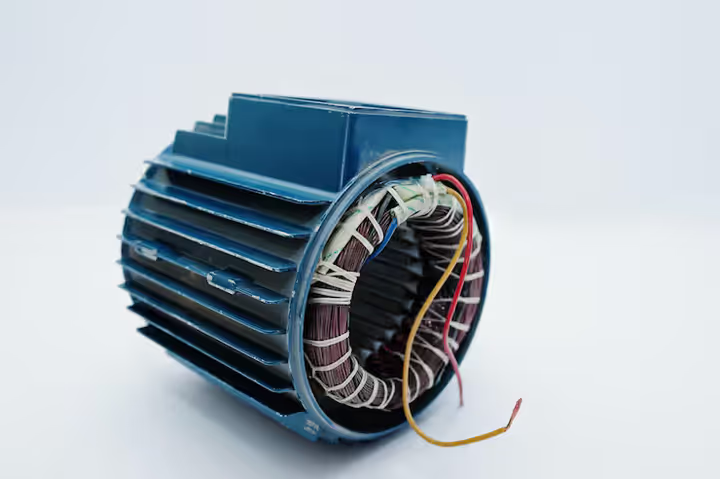
Industrial motors are essential components of modern manufacturing, infrastructure, and industrial operations. They convert electrical energy into mechanical power to operate machinery such as pumps, compressors, conveyors, fans, mixers, and production equipment.
From small industrial machines to large manufacturing systems, electric motors support a wide range of applications. As industries focus on automation, energy efficiency, and operational reliability, selecting the right industrial motor has become an important part of equipment planning.
This article explains industrial motor types, technologies, applications, efficiency classes, and important factors to consider when selecting an electric motor.
What Is an Industrial Motor?
An industrial motor is an electrical machine designed to convert electrical energy into mechanical movement. It provides the rotational or linear motion needed to operate industrial equipment.
Industrial electric motors are available in different power ratings, operating speeds, voltage levels, and construction designs. Their specifications depend on the application and operating environment.
Common industrial motor applications include:
Manufacturing machinery
Water pumps and pumping systems
Air compressors
Industrial fans and blowers
Conveyor systems
Packaging machinery
Material handling equipment
Mining and processing machinery
Heating, ventilation, and air conditioning systems
The correct motor selection depends on factors such as load requirements, operating hours, environmental conditions, and control requirements.
Why Industrial Motors Are Important in Manufacturing
Industrial motors play an important role in keeping production equipment operating. They provide the mechanical power needed for repetitive and continuous industrial processes.
Some of their main advantages include:
1. Support for Continuous Operations
Many industrial motors are designed for specific duty cycles and operating conditions. Correctly selected motors can support continuous or intermittent production activities according to their rated specifications.
2. Improved Energy Efficiency
Energy-efficient industrial motors can reduce electrical losses compared with less efficient alternatives. This is especially relevant in facilities where motors operate for long periods.
3. Support for Industrial Automation
Electric motors can work with programmable controllers, sensors, and variable frequency drives to support automated production processes.
4. Application Flexibility
Different motor designs are available for different industrial requirements, including high torque, variable speed, hazardous environments, and precision positioning.
5. Equipment Integration
Industrial motors can be integrated with gearboxes, pumps, fans, compressors, and conveyor systems to form complete mechanical systems.
Major Types of Industrial Motors
Industrial applications require different motor technologies. The choice depends on operating speed, torque, load characteristics, precision, and environmental requirements.
1. AC Induction Motors
AC induction motors are among the most widely used motors in industrial applications. They operate using alternating current and electromagnetic induction.
Three-phase induction motors are commonly used in manufacturing plants because they support a broad range of industrial power requirements.
Common applications include:
Industrial pumps
Compressors
Conveyor systems
Fans and blowers
Mixing equipment
Processing machinery
A three-phase motor is generally selected for applications where three-phase electrical power is available and the equipment requires a suitable industrial motor rating.
2. Three-Phase Motors
A three-phase motor operates using three alternating electrical phases. These motors are commonly found in industrial facilities and manufacturing plants.
They are available in different frame sizes, power ratings, speeds, and mounting arrangements.
When evaluating a three phase motor, businesses should consider rated power, voltage, frequency, efficiency class, speed, insulation, and enclosure protection.
3. DC Motors
DC motors operate using direct current. Depending on their design, they can provide useful speed-control and torque characteristics.
Industrial DC motors have applications in certain legacy systems, specialized machinery, and equipment that requires particular control characteristics.
Modern industrial installations may also use AC motors with electronic drives for applications that previously relied on DC motor technology.
4. Industrial Servo Motors
Servo motors are designed for applications requiring accurate positioning, speed control, and motion coordination.
They commonly operate with servo drives and feedback devices such as encoders.
Industrial servo motors are used in:
Robotics
CNC machinery
Automated assembly equipment
Printing machinery
Packaging systems
Precision manufacturing
Their selection depends on torque, speed, response, positioning accuracy, and drive compatibility.
5. Industrial Gear Motors
An industrial gear motor combines an electric motor with a gearbox. The gearbox changes output speed and torque according to its gear ratio and design.
Gear motors are commonly used in:
Conveyor systems
Material handling machinery
Industrial mixers
Packaging equipment
Processing plants
Automated production lines
Important selection factors include output torque, gear ratio, mounting arrangement, operating duty, and environmental protection.
6. Flameproof Motors
Flameproof motors are designed for specified hazardous environments where flammable gases or vapours may be present.
They are used in certain chemical plants, petroleum facilities, refineries, and other hazardous industrial locations.
The correct equipment must be selected according to the hazardous-area classification, gas group, temperature class, protection requirements, and applicable certification.
A standard industrial motor should not be substituted for a properly specified hazardous-area motor.
7. High-Voltage Industrial Motors
High-voltage motors are used in applications requiring substantial mechanical power.
They can be found in large industrial facilities, power plants, mining operations, cement production, and heavy processing industries.
Selection involves voltage level, power rating, starting method, insulation system, cooling arrangement, and operating conditions.
Understanding IE3 and IE4 Energy-Efficient Motors
Motor efficiency is an important factor in industrial equipment planning. International efficiency classes help users compare the energy performance of compatible motor designs.
Common efficiency classifications include:
IE1: Standard efficiency
IE2: High efficiency
IE3: Premium efficiency
IE4: Super premium efficiency
Higher efficiency classes generally indicate lower motor losses under the applicable testing conditions.
IE3 Industrial Motors
IE3 motors are designed to provide premium energy efficiency. They are used in industrial applications such as pumps, fans, compressors, and production machinery.
IE4 Industrial Motors
IE4 motors provide a higher efficiency level than IE3 motors under the relevant classification standards.
They may be considered for applications where operating hours, load patterns, energy consumption, and lifecycle performance justify their selection.
The actual energy savings from replacing an existing motor depend on motor loading, operating time, system design, and electricity consumption. A technical assessment is recommended before estimating savings.
Technologies Used in Modern Industrial Motors
Industrial motor systems increasingly combine electrical equipment with digital control and monitoring technologies.
Variable Frequency Drives
A variable frequency drive (VFD) controls the frequency and voltage supplied to an AC motor to regulate its speed.
VFDs are commonly used in pumps, fans, compressors, and conveyor systems.
In variable-load applications, appropriate speed control can reduce unnecessary energy consumption. However, drive selection must consider motor compatibility, load characteristics, harmonics, cooling, and electrical installation requirements.
Motor Control Systems
Motor control systems manage starting, stopping, speed regulation, and protection.
Common components include contactors, overload relays, circuit breakers, soft starters, and electronic motor protection devices.
Sensors and Condition Monitoring
Sensors can monitor vibration, temperature, current, and other operating parameters.
Condition monitoring helps maintenance teams identify unusual operating patterns and plan inspections. It does not eliminate the need for regular maintenance.
Industrial Automation Integration
Industrial motors can be connected with PLCs, HMIs, and factory automation systems.
This integration allows operators to coordinate machine functions, monitor production equipment, and manage motor operating conditions.
Industrial Motor Applications Across Different Industries
Manufacturing Industry
Manufacturing plants use industrial motors to operate production machinery, conveyors, cutting equipment, mixers, and automated assembly systems.
Motor specifications vary according to the machine, operating load, and production requirements.
Food and Beverage Industry
Motors operate pumps, mixers, filling equipment, refrigeration systems, conveyors, and processing machinery.
Equipment used in food production may require special hygiene, cleaning, and enclosure considerations.
Chemical and Pharmaceutical Industry
These industries use motors in mixing systems, pumps, ventilation equipment, and processing machinery.
Depending on the operating environment, motors may need suitable chemical resistance, protection, documentation, or hazardous-area certification.
Mining and Cement Industry
Mining and cement facilities use heavy-duty industrial motors for crushers, conveyors, fans, mills, and material processing systems.
Such applications may require attention to high starting torque, dust protection, vibration, cooling, and continuous-duty operation.
Water and Wastewater Industry
Industrial electric motors operate pumps, aeration systems, mixers, and water-treatment equipment.
Efficiency, corrosion protection, operating hours, and maintenance access are important selection considerations.
Packaging and Material Handling
Industrial motors power conveyor belts, packaging machines, sorting systems, lifting equipment, and automated handling systems.
Servo motors and gear motors may also be used where accurate positioning or controlled movement is required.
How to Choose the Right Industrial Motor
Selecting the right industrial motor involves more than comparing power ratings. The motor must match the mechanical load, electrical supply, environment, and operating requirements.
Consider these factors before selecting a motor:
Power rating: Determine the mechanical power required by the connected equipment.
Voltage and frequency: Confirm compatibility with the available electrical supply.
Motor speed: Review the required rotational speed and number of poles.
Torque requirements: Understand starting torque, operating torque, and load variation.
Efficiency class: Compare suitable IE efficiency classifications.
Operating duty: Identify whether the motor operates continuously, intermittently, or under variable load.
Mounting arrangement: Check whether foot-mounted, flange-mounted, or another configuration is required.
Enclosure protection: Consider dust, moisture, temperature, and other environmental conditions.
Control requirements: Determine whether a VFD, soft starter, or servo drive is needed.
Maintenance and support: Review spare-part availability, inspection requirements, and technical documentation.
A qualified electrical or mechanical engineer can help verify motor sizing and compatibility with the connected equipment.
Industrial Motor Manufacturers and Supplier Evaluation
Businesses researching industrial motor manufacturers or industrial motor suppliers should compare technical specifications and support capabilities rather than relying only on brand recognition.
Important evaluation points include:
Available motor types and power ratings
IE efficiency classifications
Voltage and speed options
Technical datasheets and test documentation
Applicable certifications and standards
Compatibility with existing machinery
Availability of replacement components
Warranty conditions and maintenance support
Delivery and installation requirements
Potential manufacturers in the Indian and international markets include established electrical equipment companies such as ABB, Siemens, CG Power, Bharat Bijlee, Kirloskar Electric, and WEG.
Their product ranges differ, so buyers should confirm the specific motor model, rating, application suitability, and current technical documentation before making a decision.
Industrial Motor Trends and Developments
The industrial motor sector is evolving as manufacturers focus on energy efficiency, factory automation, and improved equipment monitoring.
Growing Interest in IE3 and IE4 Motors
Manufacturers are increasingly considering higher-efficiency motor technologies to manage electricity consumption and support energy-management goals.
Integration with Variable Frequency Drives
VFDs are being used to regulate motor speed in applications such as pumping, ventilation, and material handling.
Smart Motor Monitoring
Connected sensors and monitoring systems can provide information about temperature, vibration, and operating performance.
Advanced Motor Designs
Brushless DC motors, permanent-magnet synchronous motors, servo motors, and other specialized technologies are used in applications requiring specific efficiency, control, or performance characteristics.
Indian Motor Industry Developments
In August 2026, CG Power announced its NEXORA range of IE3 and IE4 general-purpose motors. The initial range included selected low-voltage motor configurations, with additional portfolio expansion planned in phases.
This development reflects continuing attention to energy-efficient industrial motor technologies in the Indian market.
Safety and Regulatory Considerations
Industrial motors must be installed and operated according to applicable electrical safety requirements, manufacturer instructions, and relevant technical standards.
Important considerations include:
Correct motor protection and overload settings
Proper earthing and electrical connections
Suitable cable and circuit protection
Adequate ventilation and cooling
Appropriate machine guarding
Safe installation and maintenance procedures
Hazardous-area certification where required
Compliance with applicable Indian Standards and IEC requirements
Businesses should confirm the latest applicable requirements for their specific motor type and installation. Requirements may differ for general-purpose motors, hazardous-area motors, and specialized equipment.
Frequently Asked Questions
1. What is an industrial motor used for?
An industrial motor converts electrical energy into mechanical power. It operates equipment such as pumps, compressors, fans, conveyors, mixers, and manufacturing machinery.
2. What is the difference between an AC motor and a DC motor?
An AC motor operates using alternating current, while a DC motor operates using direct current. Their operating characteristics and control requirements differ, so selection depends on the application.
3. What is a three-phase industrial motor?
A three-phase industrial motor uses a three-phase electrical supply to produce rotational motion. It is widely used in industrial machinery, pumps, compressors, and manufacturing equipment.
4. What is the difference between IE3 and IE4 motors?
IE3 represents premium efficiency, while IE4 represents super premium efficiency under the relevant international classification. IE4 motors generally have lower losses, but actual energy savings depend on operating conditions.
5. What is an industrial gear motor?
An industrial gear motor combines an electric motor and gearbox. It provides an output speed and torque suitable for equipment such as conveyors, mixers, and material handling systems.
6. How do I select an industrial motor?
Consider power rating, voltage, frequency, speed, torque, duty cycle, efficiency, mounting, environmental conditions, and control requirements. Confirm the selection against the connected equipment specifications.
Conclusion
Industrial motors are fundamental to modern manufacturing and industrial infrastructure. Different motor types, including AC induction motors, three-phase motors, servo motors, gear motors, DC motors, and flameproof motors, support different operating requirements.
Energy-efficient designs such as IE3 and IE4 motors, together with variable frequency drives and monitoring technologies, are influencing industrial motor selection.
By evaluating motor specifications, application requirements, operating conditions, safety standards, and technical support, businesses can make informed decisions about industrial electric motors and their integration into production systems.