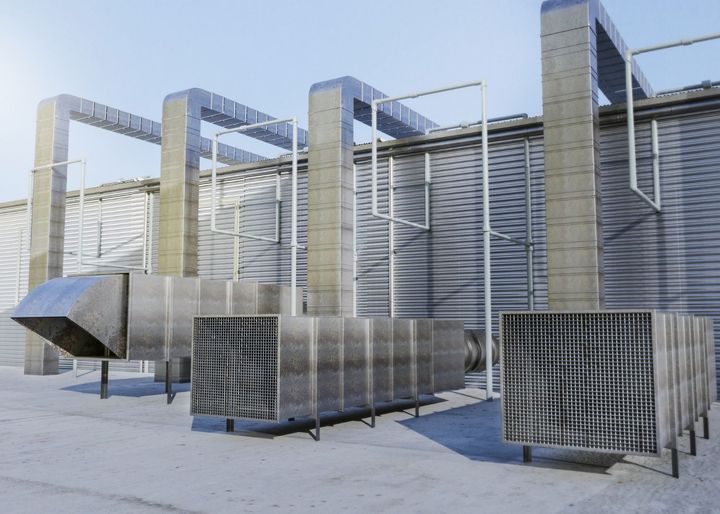
Industrial Chiller and HVAC System Guide: Explore Cooling Technology, Energy Efficiency, Maintenance Tips, and System Performance Insights
Industrial chiller and HVAC systems play an essential role in maintaining controlled temperatures across manufacturing facilities, commercial buildings, data centers, healthcare environments, and industrial plants. These systems are designed to remove excess heat, regulate indoor air quality, and support reliable equipment operation under varying environmental conditions.
Modern industrial chiller systems, commercial HVAC systems, and industrial cooling systems have evolved significantly through automation, smart sensors, energy-efficient technologies, and digital monitoring platforms. Whether cooling manufacturing equipment or maintaining comfortable indoor conditions, these systems contribute to operational stability, product quality, and energy management.
Many industries now integrate industrial HVAC solutions, industrial refrigeration systems, and intelligent monitoring technologies to improve system reliability while supporting sustainability goals.
Understanding Industrial Chiller and HVAC Systems
Industrial chillers remove heat from liquids or process equipment, while HVAC (Heating, Ventilation, and Air Conditioning) systems regulate indoor temperature, humidity, and ventilation.
Together, these technologies help maintain controlled environments for industrial production and commercial facilities.
A complete cooling system may include:
- Industrial chiller systems
- Commercial HVAC systems
- Industrial refrigeration systems
- Cooling towers
- Pumps and piping
- Heat exchangers
- Air handling units
- Compressors
- Cooling coils
- Smart controllers
- Building automation systems
- Industrial air conditioning systems
Modern facilities increasingly connect these components through digital monitoring platforms that improve operational visibility and maintenance planning.
Why Industrial Cooling and HVAC Systems Matter
Temperature control directly affects equipment performance, workplace comfort, manufacturing consistency, and energy consumption.
Industries depending on cooling technology include:
| Industry | Primary Cooling Requirement |
|---|---|
| Manufacturing | Process equipment cooling |
| Food Processing | Product preservation |
| Pharmaceuticals | Controlled production environments |
| Data Centers | Server cooling |
| Healthcare | Air quality and temperature control |
| Chemical Processing | Process temperature management |
| Commercial Buildings | Indoor comfort and ventilation |
Industrial cooling systems help address several operational challenges:
- Equipment overheating
- Production downtime
- Product quality consistency
- Indoor air quality
- Humidity control
- Energy efficiency
- Environmental compliance
Well-maintained systems also contribute to longer equipment life and more predictable facility operations.
Types of Industrial Chillers and HVAC Systems
Different facilities require different cooling technologies depending on operating conditions, climate, and process requirements.
| System Type | Common Applications |
|---|---|
| Water Cooled Chiller | Large industrial plants, hospitals, data centers |
| Air Cooled Chiller | Commercial buildings, medium-sized facilities |
| Scroll Chillers | Light industrial operations |
| Screw Chillers | Continuous industrial cooling |
| Centrifugal Chillers | High-capacity cooling plants |
| Absorption Chillers | Facilities utilizing waste heat |
| Packaged HVAC Systems | Commercial buildings |
| Central HVAC Systems | Offices, institutions, hospitals |
| Variable Refrigerant Flow (VRF) Systems | Multi-zone commercial buildings |
| Industrial Refrigeration Systems | Food processing and cold storage |
Water Cooled Chiller
A water cooled chiller removes heat using water circulated through cooling towers. These systems are commonly selected for facilities requiring continuous, large-scale cooling.
Air Cooled Chiller
An air cooled chiller dissipates heat directly through ambient air using condenser fans. These systems are generally easier to install where cooling tower infrastructure is not available.
Industrial Refrigeration Systems
Industrial refrigeration systems maintain low temperatures for food processing, cold storage, pharmaceutical manufacturing, and chemical processing.
Commercial HVAC Systems
Commercial HVAC systems regulate heating, ventilation, cooling, and humidity while supporting occupant comfort and indoor air quality.
Benefits and Applications
Industrial chiller systems provide several operational advantages across multiple industries.
Improved Equipment Performance
Stable operating temperatures help manufacturing equipment perform efficiently and reduce unexpected shutdowns.
Better Energy Management
Modern industrial HVAC solutions use intelligent controls, variable-speed drives, and energy monitoring technologies to improve system performance.
Enhanced Product Quality
Temperature-sensitive manufacturing processes benefit from consistent cooling conditions.
Improved Indoor Air Quality
Commercial HVAC systems circulate filtered air while controlling humidity and ventilation.
Reduced Maintenance Interruptions
Predictive monitoring can identify developing issues before they affect production.
Common industrial applications include:
- Plastic injection molding
- Metal processing
- Food manufacturing
- Pharmaceutical production
- Semiconductor fabrication
- Chemical processing
- Data center cooling
- Medical facilities
- Commercial office buildings
- Warehouse climate control
- Beverage production
- Printing operations
Leading Industrial Chiller and HVAC Companies
Several manufacturers continue advancing cooling technology through improved efficiency, digital controls, and environmentally responsible refrigerants.
| Company | Known For |
|---|---|
| Carrier | Commercial HVAC systems and industrial cooling technologies |
| Trane Technologies | Building climate systems and energy-efficient HVAC equipment |
| Daikin | Air conditioning systems, industrial HVAC solutions, VRV technology |
| Johnson Controls | Building automation and industrial cooling management |
| Mitsubishi Electric | Commercial HVAC systems and advanced cooling technologies |
These companies continue investing in energy optimization, intelligent controls, and environmentally responsible cooling technologies.
Recent Industry Developments
The industrial cooling industry has experienced several notable developments during 2025–2026.
Recent trends include:
- Increased adoption of low-global-warming-potential (low-GWP) refrigerants to support environmental objectives.
- Greater use of AI-assisted building management systems that optimize cooling performance based on real-time operating conditions.
- Expansion of smart sensors for predictive maintenance within industrial chiller systems.
- Growing implementation of digital twins for HVAC performance analysis.
- Higher adoption of variable-speed compressors and intelligent pump controls to improve energy efficiency.
- Wider deployment of industrial IoT technologies connecting HVAC equipment with centralized monitoring platforms.
- Increased focus on sustainable cooling strategies that reduce electricity consumption and environmental impact.
These developments continue supporting more efficient industrial cooling systems while improving operational reliability.
Regulations and Policy Considerations
Industrial cooling equipment is influenced by environmental, energy efficiency, and workplace safety regulations.
Common standards include:
- ISO 50001 Energy Management Systems
- ASHRAE HVAC design standards
- ISO environmental management guidelines
- Refrigerant management regulations
- Building energy efficiency codes
- Occupational health and workplace ventilation requirements
Many countries have introduced policies encouraging energy-efficient buildings, reduced greenhouse gas emissions, and environmentally responsible refrigerants.
Organizations implementing industrial HVAC solutions generally evaluate:
- Refrigerant compliance
- Equipment efficiency ratings
- Indoor air quality standards
- Preventive maintenance documentation
- Electrical safety
- Environmental reporting
- Building energy performance requirements
Regulatory requirements vary by country, climate, industry, and facility type. Organizations typically consult current national building codes, environmental regulations, and engineering standards before installing or upgrading cooling systems.
Helpful Tools and Learning Resources
Engineers, facility managers, and students have access to numerous educational tools for industrial cooling systems.
| Resource Type | Examples |
|---|---|
| HVAC Load Calculation Software | Carrier HAP, Trane Trace 3D Plus |
| Building Energy Modeling | EnergyPlus, OpenStudio |
| CAD Software | AutoCAD, Revit MEP |
| Building Automation Platforms | Niagara Framework, Siemens Desigo |
| Monitoring Software | SCADA systems, industrial IoT dashboards |
| Energy Analysis | Chiller performance calculators, energy benchmarking tools |
| Technical Documentation | ASHRAE Handbooks, ISO standards |
| Learning Resources | HVAC engineering guides, industrial refrigeration references, manufacturer technical manuals |
Helpful learning topics include:
- Industrial chiller systems
- Commercial HVAC systems
- Water cooled chiller operation
- Air cooled chiller maintenance
- Industrial refrigeration systems
- Industrial HVAC solutions
- Building automation
- Refrigeration cycle fundamentals
- Energy efficiency optimization
- Preventive maintenance planning
Industrial Cooling System Overview
Heat Generated
       │
       ▼
Industrial Equipment
       │
       ▼
Industrial Chiller Systems
       │
 ┌─────┴─────┐
 │           │
 ▼           ▼
Water Cooled Chiller   Air Cooled Chiller
 │           │
 └─────┬─────┘
       ▼
Heat Exchanger
       │
       ▼
Commercial HVAC Systems
       │
       ▼
Industrial Air Conditioning Systems
       │
       ▼
Controlled Indoor Environment
       │
       ▼
Performance Monitoring & Energy Management
Frequently Asked Questions
What is an industrial chiller system?
An industrial chiller system removes heat from machinery, production processes, or circulating liquids to maintain stable operating temperatures and improve equipment performance.
What is the difference between a water cooled chiller and an air cooled chiller?
A water cooled chiller uses cooling water and cooling towers to reject heat, while an air cooled chiller transfers heat directly to outdoor air using condenser fans. The appropriate choice depends on facility requirements, available infrastructure, and environmental conditions.
Why are commercial HVAC systems important?
Commercial HVAC systems regulate indoor temperature, humidity, ventilation, and air quality, supporting occupant comfort, equipment reliability, and healthy indoor environments.
How can industrial cooling systems improve energy efficiency?
Energy efficiency can improve through variable-speed drives, smart controls, regular maintenance, optimized operating schedules, high-efficiency compressors, and continuous performance monitoring.
What industries commonly use industrial refrigeration systems?
Industrial refrigeration systems are widely used in food processing, beverage manufacturing, pharmaceutical production, cold storage, chemical processing, and logistics facilities requiring temperature-controlled environments.
Conclusion
Industrial chiller systems and commercial HVAC systems remain fundamental technologies for maintaining reliable manufacturing processes, indoor environmental quality, and energy-efficient facility operations. Advances in industrial cooling systems, industrial HVAC solutions, water cooled chiller technology, air cooled chiller design, and industrial refrigeration systems continue improving performance through intelligent monitoring, automation, and environmentally responsible engineering.
As industries pursue sustainability and digital transformation, integrating smart controls, predictive maintenance, and energy management practices will remain central to achieving dependable cooling performance and operational efficiency.
Informational Disclaimer: This article is intended for educational purposes only. Equipment specifications, estimated project budgets, implementation approaches, and any package-related information can vary depending on facility size, climate, engineering requirements, local regulations, and project scope.