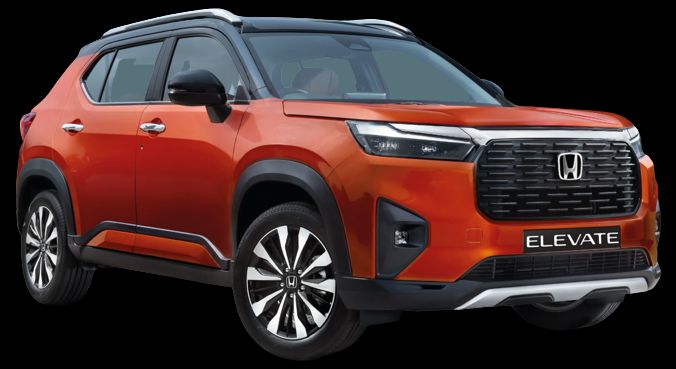
Honda Elevate EV Guide: Discover Expected Price, Range, Launch Insights, Tips, and Key Detail
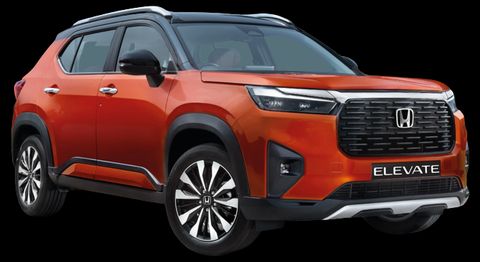
The Honda Elevate EV is commonly used as a reference for Honda’s upcoming electric SUV for India. However, Honda has not officially confirmed that the production model will carry the “Elevate EV” name.
In December 2024, Honda Cars India confirmed that an Elevate-based battery-electric SUV was planned for India, while stating that the electric model would use a different nameplate and design. In March 2026, Honda began pan-India public-road testing of its first upcoming BEV SUV, with India and Japan identified as key markets for the FY2026–27 global introduction.
This makes the Honda Elevate EV keyword useful for understanding Honda’s upcoming electric SUV, but readers should distinguish confirmed information from estimates and media expectations.
What the Honda Elevate EV Represents
The expected Honda Electric SUV is being developed for India’s growing electric vehicle market. The programme is connected with Honda’s next-generation EV direction and is intended to combine electric driving, connected technology, safety assistance, battery efficiency, and SUV practicality.
Honda’s March 2026 testing programme covers highways, urban roads and challenging terrain, while engineers are evaluating durability, ride comfort, handling, efficiency, reliability and charging performance under Indian conditions.
Because production specifications have not been fully announced, figures such as battery capacity, official range, charging time and final variant details should currently be treated as unconfirmed.
Why the Honda EV India Programme Matters
The development is significant because it represents Honda’s move into India’s full-electric passenger SUV segment. Honda already has electrified experience through hybrid technology, but a battery-electric SUV represents a different technology approach.
For Indian drivers, the Honda Electric SUV could be relevant to:
- Urban commuters looking for an electric SUV platform
- Families seeking a practical five-seat electric vehicle
- Drivers interested in EV Battery Technology
- Users who regularly travel between cities
- Technology-focused drivers interested in connected vehicle systems
- Buyers comparing ADAS SUV features and electric vehicle insurance requirements
India’s EV ecosystem is also expanding. The government’s PM E-DRIVE programme supports selected EV categories and charging infrastructure, although its current demand-incentive structure is not a general passenger-car subsidy.
Possible Types and Technology Configurations
The exact Honda Elevate Electric configuration has not yet been officially disclosed. However, electric SUVs can generally be understood through several technology categories.
| EV Type | Basic Explanation | Relevance to Honda EV |
|---|---|---|
| Battery Electric Vehicle | Uses a battery and electric motor without a petrol engine | The upcoming Honda SUV is confirmed as a BEV |
| Single-Motor EV | Usually uses one electric motor driving one axle | Possible configuration, but unconfirmed |
| Dual-Motor EV | Uses motors on two axles for additional traction | Not confirmed for the Honda SUV |
| Fast-Charging EV | Supports higher-power DC charging | Charging capability is being tested by Honda |
| Connected Electric SUV | Combines vehicle connectivity, software and smartphone functions | Likely technology area, but final features are unconfirmed |
The production vehicle could differ significantly from early prototypes, so technical specifications should be checked against Honda’s official announcement when released.
Benefits and Applications
A battery-electric SUV can provide several practical advantages when the vehicle, charging network and driving pattern are appropriate.
Electric driving: A BEV uses an electric motor instead of a conventional petrol engine for propulsion. This can provide smooth acceleration and quiet operation.
Urban application: Electric SUVs can be particularly suitable for regular city journeys when home or workplace charging is accessible.
Fast charging: A Fast Charging EV can reduce charging downtime compared with conventional AC charging, although actual charging speed depends on the vehicle, charger, battery temperature and charging conditions.
Connected technology: A Connected Electric SUV can potentially integrate navigation, vehicle status information, smartphone connectivity and software-based functions.
Driver assistance: Honda already uses Honda Sensing technologies such as collision mitigation braking, lane keeping assistance and adaptive cruise control on selected models. The final ADAS SUV specification of the upcoming BEV should not be assumed until Honda confirms it.
Insurance planning: Electric vehicle insurance may require attention to battery-related coverage, electrical components, accident damage and applicable policy terms. Policy features can vary by insurer and vehicle.
Leading Companies in India’s Electric SUV Market
The Indian electric SUV market includes several established automotive companies developing or producing EVs.
- Honda Cars India – Developing its first upcoming BEV SUV for India, with public-road verification beginning in March 2026.
- Tata Motors – Has established a significant presence in India’s electric passenger-vehicle segment.
- Mahindra & Mahindra – Has expanded its electric SUV portfolio through models developed around dedicated EV architectures.
- Hyundai Motor India – Participates in India’s electric SUV segment with its global EV technology portfolio.
- JSW MG Motor India – Has introduced electric passenger vehicles and continues to participate in India’s growing EV market.
These companies represent useful comparison points for readers researching Electric SUV India options.
Recent Updates and Developments
The Honda EV programme has moved beyond an early announcement into public-road testing.
December 2024: Honda Cars India confirmed plans for an Elevate-based battery-electric vehicle for India. The company indicated that the electric SUV would have a different nameplate and design rather than simply becoming an electric version of the existing Elevate.
2025: Honda presented the Honda 0 α concept at the Japan Mobility Show, establishing the design and technology direction associated with its next-generation electric SUV programme.
March 16, 2026: Honda Cars India officially began pan-India public-road verification testing of its upcoming BEV SUV. Testing includes different road conditions, climate conditions and charging environments.
May 22, 2026: Honda expanded its electrified India portfolio with the launch of the new Honda City and the India debut of the ZR-V e hybrid SUV. This demonstrates that Honda’s Indian strategy includes multiple electrification technologies rather than relying only on battery-electric vehicles.
July 2026: Honda’s official press-release archive continued to list the upcoming electric SUV programme among its recent electrification developments, while the company also introduced the ZR-V e to the Indian market.
Expected Price and Range: What Is Known
No final Honda Elevate EV price or official driving range has been announced by Honda. Various automotive publications have published estimates, with some reports placing the expected electric SUV in the approximate ₹18 lakh-plus range and suggesting a possible range around 400–450 km. These figures are estimates rather than Honda-certified specifications.
| Item | Current Information |
| Expected price | Approximately ₹18 lakh or higher according to published estimates |
| Official price | Not announced |
| Expected range | Around 400–450 km has been reported as an estimate |
| Official range | Not announced |
| Powertrain | Battery-electric SUV |
| Launch window | FY2026–27 global introduction planned |
| India production | Honda has stated the vehicle will be manufactured in India |
| Battery capacity | Not officially announced |
| Fast charging | Charging performance is under testing |
Laws, Policies and EV Regulations in India
India’s electric mobility framework includes central policies covering EV adoption, manufacturing and charging infrastructure.
The PM E-DRIVE Scheme was originally notified in September 2024. In August 2025, the Ministry of Heavy Industries announced that the scheme would continue until March 31, 2028. Its eligible categories primarily include electric two-wheelers, three-wheelers, buses, ambulances, trucks and charging infrastructure; passenger electric SUVs are not automatically entitled to a consumer demand incentive under the current structure.
India also issued the Guidelines for Installation and Operation of Electric Vehicle Charging Infrastructure-2024. These guidelines cover private, semi-restricted and public charging locations and aim to improve safety, reliability, accessibility and charging-network development.
Vehicle registration, taxation, insurance and state-level EV incentives can vary by location. Therefore, prospective EV users should verify applicable rules with the relevant government authority and insurer before making financial decisions.
Helpful Tools and Resources
Readers researching the Honda Electric SUV can use several information resources:
- Honda Cars India official website: For confirmed announcements, specifications and model updates.
- Honda press releases: Useful for tracking official launch and testing information.
- PM E-DRIVE portal: For government scheme details and approved EV information.
- Vahan-related registration information: Helpful for understanding vehicle registration records.
- EV charging-location applications: Useful for identifying compatible public charging points.
- EMI and EV ownership calculators: Helpful for comparing estimated monthly financial commitments.
- Electric vehicle insurance comparison tools: Useful for reviewing policy coverage, exclusions and deductibles.
- Battery range calculators: Helpful for estimating practical driving range based on distance, weather and driving conditions.
The most reliable approach is to use independent calculations alongside manufacturer-certified specifications once they become available.
Frequently Asked Questions
Is the Honda Elevate EV officially confirmed?
Honda has confirmed an upcoming battery-electric SUV for India, but the company has indicated that the production vehicle will have a different nameplate and design. “Honda Elevate EV” is therefore commonly used as an informal reference rather than a confirmed production name.
What could be the Honda Elevate EV range?
A 400–450 km range has been reported as an expectation by automotive publications, but Honda has not announced an official certified range.
When could the Honda electric SUV launch in India?
Honda has planned global introduction during FY2026–27, with India identified as a key market. The exact Indian launch date should be treated as unconfirmed until Honda announces it.
Will it have fast charging?
Honda is testing charging performance and compatibility with different charging infrastructure during its India road-verification programme. Final charging specifications have not yet been announced.
Will the Honda EV include ADAS?
Honda already uses Honda Sensing ADAS technology on several models, but the exact ADAS package for the upcoming electric SUV has not been officially detailed. Buyers should wait for the final specification sheet.
Conclusion
The Honda Elevate EV is best understood today as a reference to Honda’s upcoming first battery-electric SUV for India rather than a confirmed production name. Honda has moved from strategic planning to real-world testing, with its March 2026 pan-India verification programme covering roads, climate conditions, vehicle durability and charging performance.
Expected price, range, battery capacity, fast-charging capability and ADAS specifications remain subject to official confirmation. For anyone researching Honda EV India developments, Electric SUV India trends, EV Battery Technology, Connected Electric SUV systems, ADAS SUV features or electric vehicle insurance, the most useful approach is to separate confirmed Honda information from media estimates and update the comparison once the production specifications are officially announced.
Information disclaimer: The price and range figures above are informational estimates based on publicly reported expectations. They are not official Honda specifications and may change substantially before the production model is announced.