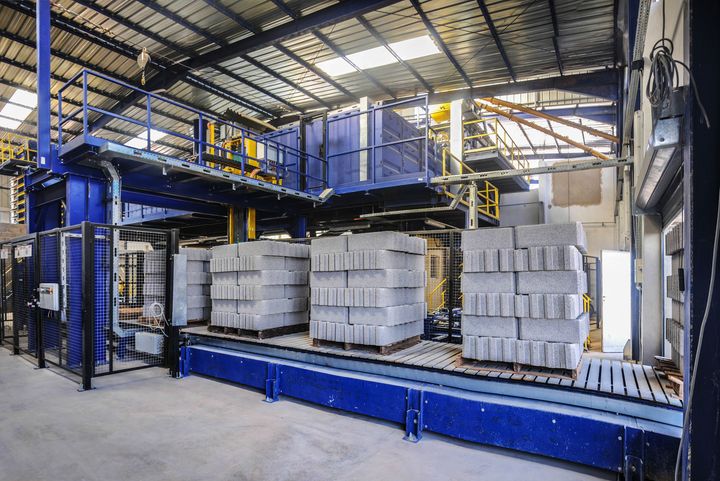
AAC blocks are known for their low weight, thermal insulation properties, dimensional accuracy, and ease of installation. Their growing popularity reflects broader trends toward sustainable construction, resource efficiency, and modern building technologies.
This guide explores AAC blocks, manufacturing processes, material characteristics, structural advantages, applications, and industry trends from an educational perspective. It does not provide engineering, architectural, legal, regulatory, construction, financial, or professional advice.
Understanding AAC Blocks
AAC (Autoclaved Aerated Concrete) blocks are precast building materials manufactured using a combination of cementitious materials, water, and aerating agents.
The production process creates millions of microscopic air pockets throughout the material, resulting in a lightweight structure compared to conventional masonry products.
AAC blocks are commonly used for:
-
External walls
-
Internal partitions
-
Commercial buildings
-
Residential construction
-
Industrial facilities
-
Institutional projects
Their suitability varies according to project requirements and engineering specifications.
The Evolution of Lightweight Construction Materials
Construction materials have evolved significantly to address changing building needs.
Key industry objectives often include:
-
Faster construction
-
Reduced structural loads
-
Improved insulation
-
Enhanced sustainability
-
Resource efficiency
-
Better construction productivity
AAC technology emerged as one solution supporting these objectives.
Raw Materials Used in AAC Block Manufacturing
AAC blocks are typically produced using several primary ingredients.
Common materials may include:
-
Cement
-
Lime
-
Sand or fly ash
-
Water
-
Aluminum powder or aerating agents
The exact formulation varies according to manufacturing processes and regional standards.
AAC Block Manufacturing Process
The production of AAC blocks generally involves multiple stages.
Raw Material Preparation
Materials are measured and prepared according to production requirements.
Mixing
Ingredients are blended into a uniform slurry.
Aeration
Aerating agents generate gas bubbles that create the material's cellular structure.
Molding
The mixture is poured into molds and allowed to expand.
Cutting
Partially hardened material is cut into block dimensions.
Autoclaving
Blocks undergo high-pressure steam curing in specialized autoclaves.
Finishing and Packaging
Finished products are inspected, prepared, and packaged for transportation.
Manufacturing methods vary among production facilities.
What Makes AAC Blocks Lightweight?
One of the defining characteristics of AAC blocks is their cellular internal structure.
The material contains numerous microscopic air pockets that reduce overall density while maintaining structural functionality.
Benefits of reduced weight may include:
-
Easier handling
-
Simplified transportation
-
Faster installation
-
Reduced dead load on structures
Performance characteristics depend on engineering design and project requirements.
Structural Advantages of AAC Blocks
AAC blocks offer several characteristics valued in modern construction.
Potential advantages may include:
-
Lower structural weight
-
Dimensional consistency
-
Improved workability
-
Reduced material handling effort
-
Construction efficiency
Specific project outcomes vary depending on design, workmanship, and site conditions.
Thermal Insulation Properties
AAC blocks are often recognized for their thermal performance characteristics.
The cellular structure may help reduce heat transfer through building envelopes.
Potential benefits may include:
-
Improved indoor comfort
-
Reduced temperature fluctuations
-
Energy-conscious building design
-
Enhanced thermal efficiency
Actual performance depends on climate, design, and construction methods.
Sound Insulation Characteristics
The material structure may also contribute to acoustic performance.
Applications where sound management is important may include:
-
Residential buildings
-
Educational facilities
-
Healthcare environments
-
Commercial spaces
Acoustic performance varies according to wall design and building specifications.
Fire Resistance Considerations
Fire resistance is often an important factor in building material selection.
AAC materials are commonly recognized for their non-combustible characteristics.
Fire performance depends on:
-
Wall thickness
-
Assembly design
-
Construction methods
-
Applicable regulations
Project-specific requirements should be evaluated by qualified professionals.
Construction Efficiency
Ease of installation is frequently cited as a benefit of AAC construction systems.
Potential advantages may include:
-
Faster wall construction
-
Reduced labor effort
-
Simplified cutting and shaping
-
Efficient handling on site
Construction productivity depends on project conditions and workforce experience.
Dimensional Accuracy
Manufacturing precision often contributes to consistent product dimensions.
Benefits may include:
-
Improved alignment
-
Reduced material waste
-
Easier installation
-
Better finishing quality
Dimensional consistency can support construction efficiency.
Sustainability and Environmental Considerations
Environmental performance is increasingly important in construction.
Areas often associated with AAC construction include:
-
Resource efficiency
-
Reduced material consumption
-
Lightweight transportation benefits
-
Energy-conscious building design
-
Waste reduction opportunities
Sustainability outcomes vary according to manufacturing practices and project implementation.
AAC Blocks vs Traditional Masonry Materials
Different building materials offer distinct characteristics.
Comparisons may involve:
-
Weight
-
Installation methods
-
Thermal performance
-
Acoustic properties
-
Structural considerations
-
Construction efficiency
Material selection depends on engineering requirements and project goals.
Applications of AAC Blocks
AAC blocks are used across numerous construction sectors.
Examples include:
Residential Construction
Used for homes, apartments, and housing developments.
Commercial Buildings
Applied in offices, retail facilities, and mixed-use projects.
Industrial Facilities
Utilized in factories, warehouses, and production buildings.
Institutional Projects
Found in schools, hospitals, and public infrastructure.
Application suitability should be determined through professional evaluation.
Machinery Used in AAC Block Production
Modern AAC manufacturing facilities often utilize specialized equipment.
Common systems may include:
-
Material batching systems
-
Mixing equipment
-
Molding systems
-
Cutting machines
-
Autoclaves
-
Handling equipment
-
Quality control systems
Automation levels vary among manufacturers.
Automation and Smart Manufacturing
Manufacturing facilities increasingly incorporate digital technologies.
Examples may include:
-
Automated batching
-
Process monitoring
-
Production analytics
-
Quality tracking systems
-
Equipment diagnostics
Automation supports consistency and operational efficiency.
Construction Industry Trends in 2026
Several developments continue influencing building material technologies.
Current trends include:
-
Lightweight construction solutions
-
Sustainable building practices
-
Energy-efficient materials
-
Smart manufacturing systems
-
Resource optimization
-
Modular construction methods
-
Digital construction workflows
-
Environmentally conscious design strategies
These trends reflect broader transformations occurring throughout the construction sector.
Frequently Asked Questions
What are AAC blocks?
AAC blocks are lightweight building materials produced through a controlled manufacturing process involving aerated concrete technology.
Why are AAC blocks lightweight?
Their cellular structure contains numerous microscopic air pockets that reduce density.
Where are AAC blocks used?
They are commonly used in residential, commercial, industrial, and institutional construction projects.
Do AAC blocks provide insulation?
AAC materials are often recognized for thermal and acoustic insulation characteristics.
What equipment is used to manufacture AAC blocks?
Production facilities may utilize mixers, molds, cutting machines, autoclaves, material handling systems, and quality control equipment.
Conclusion
AAC blocks have become an important component of modern construction due to their lightweight nature, thermal performance, dimensional consistency, and construction efficiency. By combining innovative manufacturing processes with practical building applications, AAC technology supports evolving industry demands for sustainability, productivity, and performance.
As construction practices continue advancing, AAC blocks are expected to remain a significant material option within energy-conscious, resource-efficient, and modern building projects worldwide.
Disclaimer
This article is intended solely for informational and educational purposes. It does not provide engineering, architectural, construction, legal, regulatory, financial, environmental, or professional advice. It does not endorse, recommend, compare, rank, review, market, or promote any manufacturer, supplier, contractor, building material, technology provider, or construction service. Material performance, structural suitability, regulatory requirements, costs, and project outcomes vary according to design specifications, site conditions, local regulations, and construction practices. Readers should consult qualified professionals before making construction or engineering decisions.